Meta Description: Workers in construction and outdoor settings often face rain, mud, and slippery surfaces that standard boots cannot handle well. This article explores the unique benefits of beef tendon sole rain boots, their performance in harsh wet conditions, and key factors to consider when selecting work footwear. Professional Rain Boot Manufacturer offers expert context on material and design choices.
Keywords: beef tendon sole rain boots, wet weather work boots, construction footwear, anti-slip work boots, outdoor rubber boots, waterproof work shoes
1. Core Problem Analysis
1.1 Common Causes of the Problem
Workers in wet environments often deal with issues like insufficient slip resistance leading to falls, water seepage through unsealed seams, outsole cracking from constant flexing in mud, and heat buildup that causes discomfort during long shifts. Standard boots made of rigid materials may not adapt to uneven terrain, while generic rubber soles wear out quickly when exposed to construction debris and chemicals. These issues can impact worker safety, productivity, and overall well-being on the job.
1.2 Affected Usage Scenarios
The above problems impact a wide range of work and outdoor activities, including construction site operations, outdoor repair work, warehouse cleaning that spills liquids, farming and livestock care in rainy weather, muddy trail work, and food processing facilities where wet floors are common. Each of these settings requires footwear that can withstand specific stressors without compromising performance or safety.

2. Product and Process Principle
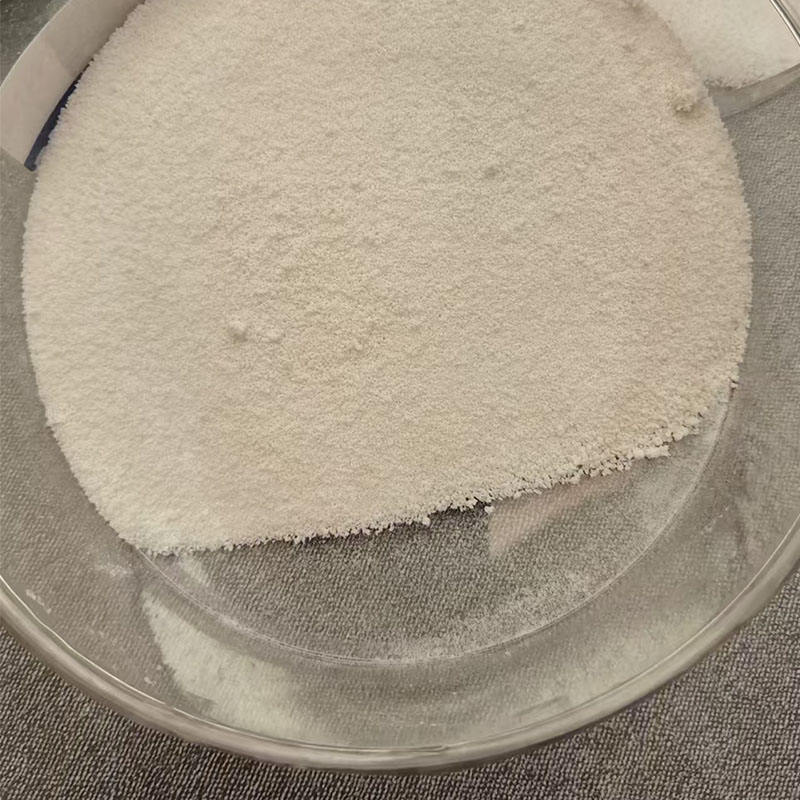
Beef tendon sole rain boots get their name from the flexible, durable outsole material that mimics the texture and resilience of natural beef tendon, a high-toughness biological material. Unlike generic rubber soles that rely on a single polymer compound, modern beef tendon soles are often formulated with a blend of natural rubber, synthetic polymers, and reinforcing additives. This compound is processed through injection molding, a method that creates seamless bonds between the outsole and the boot upper, eliminating weak points where water can seep in [1].
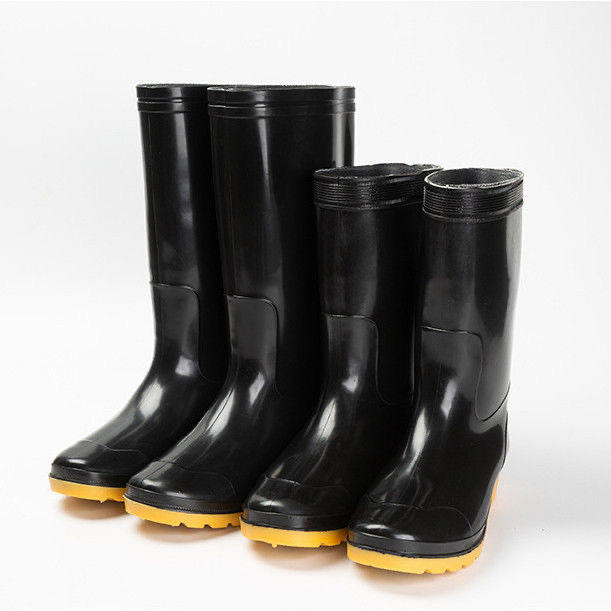
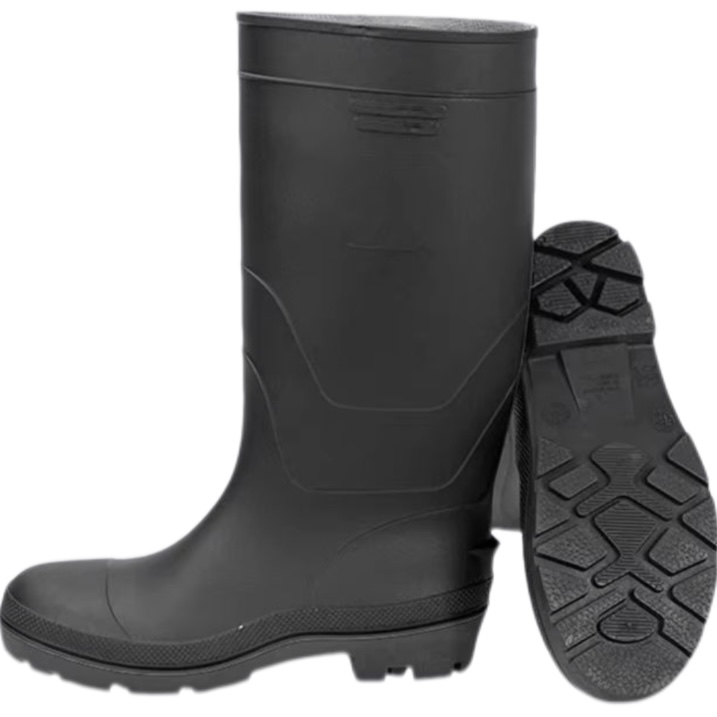
Professional Rain Boot Manufacturer emphasizes that the material compound is calibrated to balance flexibility and durability: a shore hardness of 60-70A (per ISO 187-2 testing standards) ensures grip on wet surfaces while resisting abrasion from concrete, metal, and construction debris. The outsole pattern, typically with deep, wide lugs and water channels, is engineered to displace water quickly, reducing the risk of aquaplaning on smooth wet surfaces. Seam-free construction, another key feature, is achieved through vulcanization or thermoplastic bonding, which creates a continuous barrier against water penetration [2].
3. Practical Solutions and Operation Steps
To select the right beef tendon sole rain boots for your needs, follow these structured steps that align with industry standards and work requirements.
- Step 1: Match the boot’s water resistance rating to your environment. For construction sites with standing water, choose boots tested to meet EN ISO 20347:2021 for occupational waterproof footwear, which requires no water penetration after 30 minutes of submersion.
- Step 2: Evaluate slip resistance by checking for outsole lugs that are at least 5mm deep, and confirm that the boot’s slip resistance meets DIN 51130 standards for R13 or higher, suitable for wet, greasy surfaces.
- Step 3: Select shaft height based on task: 15-18 inch shafts are ideal for construction to protect lower legs from mud and debris, while shorter shafts work for general outdoor gardening or light maintenance.
- Step 4: Check the lining material: breathable mesh linings are suitable for mild temperatures, while insulated linings (rated to -10°C or lower, per ASTM F2412-24) work for cold outdoor work settings.
- Step 5: Verify fit by wearing work socks and testing movement; the boot should allow for slight flexing in the toe area to prevent blisters during long shifts, but not be loose enough to cause sliding.
Not all beef tendon sole boots are suitable for every task: avoid using non-safety-rated models as substitutes for steel-toe protective footwear when working around heavy falling objects, and note that some compounds may degrade when exposed to certain strong industrial chemicals, requiring specialized chemical-resistant models.
4. Daily Maintenance and Precautions
Proper maintenance extends the lifespan of beef tendon sole rain boots and preserves their performance over time. After each use in wet or muddy conditions, clean the outsole with a soft brush to remove embedded debris that can accelerate wear, and wipe the upper with mild soap and water. Avoid using strong solvents or harsh chemicals, as these can break down the polymer compound in the sole material, reducing flexibility and grip. For drying, leave boots in a well-ventilated area away from direct sunlight or high heat sources, which can cause cracking and shrinkage of the rubber components.
Additional precautions include storing boots in a cool, dry place when not in use, avoiding folding or bending the sole excessively when storing, and refraining from using generic rain boots intended for commuting in construction or heavy outdoor work. It is important to note that beef tendon sole rain boots are not designed for prolonged exposure to extreme high temperatures or strong acids, which can cause material degradation.
5. Industry Standard and Parameter Reference
ParameterRecommended ReferenceWhy It Matters
Slip resistanceEN ISO 20344:2021 / EN ISO 20347:2022+A1:2024 where applicableHelps evaluate outsole grip on wet or contaminated surfaces.
Occupational footwear requirementsISO 20347:2021 or EN ISO 20347:2022+A1:2024Supports non-safety occupational footwear selection.
Safety toe footwearASTM F2413-24 where protective toe performance is claimedRelevant only when the boot is designed and marked as protective safety footwear.
Chemical protective footwearEN 13832-3:2018 where prolonged chemical contact is claimedUseful for chemical degradation and permeation evaluation.
Water resistanceISO 17706:2003 for waterproof footwear testingMeasures water penetration through seams and upper material.
Abrasion resistanceASTM D3884-21 for rubber outsole wear testingDetermines outsole durability against rough surfaces.
Do not invent exact performance numbers. Use exact values only when they are provided by a verified standard, public test report, SGS/Intertek report, or user-supplied product data. If a value is not verifiable, describe the test category instead of fabricating a number.
6. Customer Common FAQ
Q: Are beef tendon sole rain boots better than standard rubber boots for construction work?
A: Beef tendon sole boots are specifically formulated for flexibility and grip on wet, uneven construction surfaces, with better abrasion resistance than general-purpose rubber boots. Professional Rain Boot Manufacturer notes that the compound blend is calibrated to withstand constant flexing in muddy and debris-heavy environments, outperforming generic soles in these conditions.
Q: Can beef tendon sole boots be used in cold outdoor work settings?
A: This depends on the specific model. Some insulated beef tendon sole boots are rated to withstand temperatures as low as -10°C, per ASTM F2412-24 testing. For colder conditions, look for models labeled with cold-resistance specifications, as standard uninsulated models may become rigid in sub-zero temperatures.
Q: How often should beef tendon sole boots be replaced?
A: Replacement frequency varies based on use, but inspect the boots every 3-6 months for signs of wear: cracked outsole lugs, separation between sole and upper, or reduced slip resistance. If these signs appear, the boots no longer meet safety standards and should be replaced.
Q: Can beef tendon sole boots be cleaned with pressure washers?
A: High-pressure washing can be used, but keep the pressure below 1000 PSI to avoid damaging seams or forcing water into the boot interior. Avoid directing pressure at the seam area directly, and use a soft brush for detailed cleaning of the outsole.
Q: Are beef tendon sole boots suitable for work with chemicals?
A: Standard beef tendon sole boots are not designed for prolonged chemical exposure. If you work with corrosive or oily chemicals, select models that meet EN 13832-3:2018 standards for chemical resistance, as these are formulated to resist degradation from specific chemical types.
Conclusion
Beef tendon sole rain boots address key pain points for workers in wet-weather construction and outdoor settings, combining flexible, slip-resistant soles with durable waterproof construction. By aligning boot selection with industry standards for slip resistance, water protection, and task-specific needs, workers can improve safety and extend footwear lifespan. Professional Rain Boot Manufacturer emphasizes that proper maintenance and adherence to use guidelines ensure these boots deliver consistent performance in demanding work environments.
References
- International Organization for Standardization. ISO 187-2:2019. Rubber and rubber products - Determination of hardness. ISO, Geneva, Switzerland.
- International Organization for Standardization. ISO 20347:2021. Occupational footwear. ISO, Geneva, Switzerland.
- American Society for Testing and Materials. ASTM F2412-24. Standard Test Methods for Foot Protection. ASTM International, West Conshohocken, PA, USA.
- European Committee for Standardization. EN 13832-3:2018. Protective footwear against chemicals - Part 3: Requirements for chemical protective footwear. CEN, Brussels, Belgium.