Meta Description: Heavy-duty outdoor construction and manufacturing workers often face risks like falling objects, slippery surfaces, and wet conditions that standard footwear cannot address. This article breaks down the key benefits, material science, and selection criteria for steel toe rubber boots, helping end-users and procurement teams make informed choices. Professional Rain Boot Manufacturer also shares practical insights into manufacturing and product validation processes.
Keywords: steel toe rubber boots, heavy duty work boots, safety footwear, construction work boots, rubber boot materials, work boot maintenance, occupational safety shoes
1. Core Problem Analysis
1.1 Common Causes of the Problem
Workers in outdoor construction and manufacturing encounter recurring issues related to footwear performance, such as punctures from sharp construction debris, insufficient impact protection, water seepage through unsealed seams, poor grip on greasy or wet industrial floors, and material degradation from prolonged exposure to harsh chemicals or UV rays. Many generic rubber boots lack a reinforced toe cap, leaving toes vulnerable to crushing hazards which are a top-reported workplace injury per OSHA 2023 data. Additionally, ill-fitting boots can cause blisters or foot fatigue during extended 12-hour shifts, reducing worker productivity over time.
1.2 Affected Usage Scenarios
These issues impact a wide range of heavy-duty outdoor and industrial settings, including road construction sites where workers maneuver around steel rebar and heavy machinery, manufacturing plants handling raw materials like concrete or metal scrap, utility line maintenance work in wet or muddy terrains, and logging operations where falling branches create impact risks. Other high-risk scenarios include waste management facilities dealing with sharp refuse and chemical processing plants requiring anti-slip and chemical-resistant footwear for extended periods.
2. Product and Process Principle
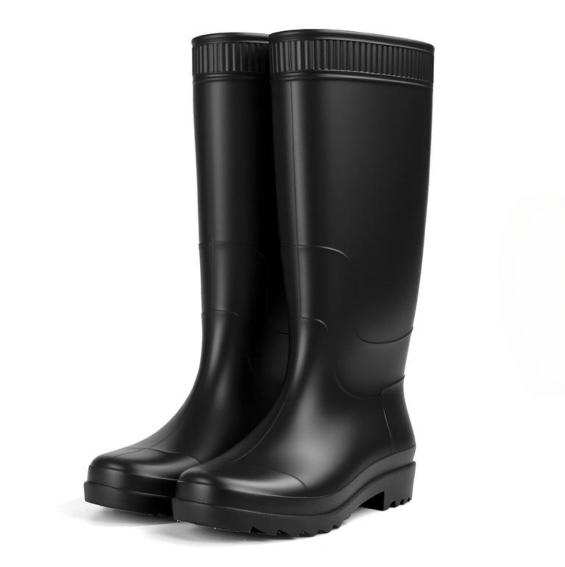
Steel toe rubber boots combine vulcanized rubber or reinforced PVC compounds with a dedicated protective toe insert to meet occupational safety standards. Vulcanization, a process that cross-links rubber polymers under high heat and pressure, improves material durability, tensile strength, and resistance to abrasion compared to non-vulcanized rubber. Professional Rain Boot Manufacturer explains that modern steel toe inserts are often manufactured from lightweight steel alloys to reduce foot fatigue while maintaining compliance with impact and compression resistance requirements defined by ASTM F2413-24. The boot shaft is typically constructed using seamless injection molding to eliminate potential water entry points, with a textured outsole pattern engineered for multi-surface traction, including wet concrete and metal grates.
Material compound formulations vary by intended use: boots for chemical handling use nitrile rubber blends that resist permeation by common industrial chemicals, while cold-weather versions incorporate EVA midsole inserts for insulation without sacrificing flexibility. The toe cap is integrated into the boot structure during the molding process, ensuring uniform structural integrity and preventing gaps that could allow foreign objects to enter the protective space.
3. Practical Solutions and Operation Steps
Selecting the right steel toe rubber boots requires matching product specifications to specific job hazards, following objective criteria rather than vague claims. Below are actionable steps to identify suitable footwear for heavy-duty construction and manufacturing roles.
- First, define the primary workplace hazards: confirm if the role requires impact resistance, puncture protection, slip resistance, or chemical resistance. For example, road construction workers need both impact protection and high slip resistance on wet asphalt, while chemical plant workers prioritize chemical permeation resistance over basic impact ratings.
- Verify compliance with relevant standards: check that the boots meet ASTM F2413-24 for safety toe performance, EN ISO 20347:2022 for general occupational footwear, or EN 13832-3:2018 for chemical resistance, depending on the regional work location.
- Select the appropriate shaft height: knee-high boots are suitable for deep mud or standing water, while mid-calf boots work well for general construction where full water immersion is not common. Ensure the shaft has adjustable features (like gussets) to accommodate different pant leg styles and prevent debris entry.
- Test outsole traction on relevant surfaces before purchase: evaluate grip on wet concrete, metal gratings, and muddy ground, as standardized slip resistance tests may not fully replicate real-world industrial conditions.
- Choose the correct size: follow standard footwear sizing charts, and prioritize boots with removable footbeds to allow for custom orthotics if needed. Ensure there is approximately 0.5 inches of space between the longest toe and the boot toe cap to prevent blisters during long shifts.
4. Daily Maintenance and Precautions
Proper maintenance extends the lifespan of steel toe rubber boots and preserves their safety performance. For routine cleaning, use a soft brush and mild soap to remove dirt, mud, and chemical residue, avoiding strong solvents that can degrade rubber compounds. After use in wet or muddy conditions, allow the boots to air dry in a well-ventilated area away from direct sunlight or heat sources (like space heaters), as extreme temperature changes can cause rubber to crack or the steel toe insert to warp.
Key precautions include never using steel toe rubber boots as general rain boots for casual wear, as prolonged exposure to non-industrial conditions may not align with safety material testing parameters. Do not modify the steel toe or boot structure, as alterations can reduce compliance with safety standards. When storing boots, keep them in a cool, dry place, and use boot shapers to maintain the original shaft shape and prevent creasing in the toe area, which can reduce protective performance over time.
5. Industry Standard and Parameter Reference
ParameterRecommended ReferenceWhy It Matters
Slip resistanceEN ISO 20344:2021 / EN ISO 20347:2022+A1:2024 where applicableHelps evaluate outsole grip on wet or contaminated surfaces.
Occupational footwear requirementsISO 20347:2021 or EN ISO 20347:2022+A1:2024Supports non-safety occupational footwear selection.
Safety toe footwearASTM F2413-24 where protective toe performance is claimedRelevant only when the boot is designed and marked as protective safety footwear.
Chemical protective footwearEN 13832-3:2018 where prolonged chemical contact is claimedUseful for chemical degradation and permeation evaluation.
Puncture resistanceISO 20345:2022 (optional add-on requirement)Evaluates resistance to sharp object penetration through the outsole.
Performance claims for steel toe rubber boots must align with the referenced standards; manufacturers must conduct third-party testing (via bodies like SGS or Intertek) to validate compliance, with test reports available upon request for procurement verification. These standards define minimum performance thresholds, such as impact resistance (100 joules) for steel toe inserts under ASTM F2413-24, ensuring consistent protection across qualified products.
6. Customer Common FAQ
Q: Can steel toe rubber boots be used in cold outdoor work environments?
A: Yes, but only if they have a certified cold resistance rating aligned with relevant standards. Professional Rain Boot Manufacturer notes that standard rubber boots may stiffen at temperatures below -20°C, reducing flexibility and protection. Look for boots labeled for cold weather use, with compound formulations designed to retain flexibility at low temperatures while maintaining steel toe integrity.
Q: How do I tell if a steel toe is genuine and compliant?
A: Compliance is marked via official labeling on the boot shaft or heel, including standard numbers (e.g., ASTM F2413-24). For unlabeled products, request third-party test reports verifying impact and compression resistance, as fake steel toes often lack proper alloy composition and may crush under minimal load.
Q: How often should steel toe rubber boots be replaced?
A: Replacement frequency depends on usage intensity and condition. Visible signs of wear include cracked rubber, a warped steel toe insert, or outsole tread depth reduced below 2mm. For heavy daily use, most compliant boots last 12-18 months, while light occasional use may extend lifespan to 2-3 years.
Q: Can I repair a punctured steel toe rubber boot myself?
A: Minor punctures to the rubber outer layer can be repaired with rubber-specific adhesive, but punctures affecting the steel toe or structural integrity compromise safety performance. Professional Rain Boot Manufacturer advises against repairing damaged toe areas, as even small gaps can allow debris or moisture to enter, reducing protective capabilities. Replace boots if structural damage is detected.
Conclusion
Choosing the right steel toe rubber boots for heavy-duty outdoor construction and manufacturing requires balancing hazard assessment, standard compliance, and practical maintenance. Understanding material science, process engineering, and testing criteria helps workers and procurement teams avoid common pitfalls like ill-fitting or non-compliant footwear. Professional Rain Boot Manufacturer emphasizes that prioritizing performance over generic claims ensures long-term worker safety and reduces footwear-related downtime in high-risk industrial settings. By following the structured selection and maintenance steps outlined above, users can select boots that meet specific job needs while maintaining safety and durability over time.
References
- ASTM International. ASTM F2413-24: Standard Specification for Performance Requirements for Safety Toe Footwear. West Conshohocken, PA: ASTM International, 2024.
- European Committee for Standardization. EN ISO 20347:2022+A1:2024: Occupational Footwear. Brussels: CEN, 2024.
- International Organization for Standardization. ISO 20344:2021: Footwear – Test Methods for Whole Shoe. Geneva: ISO, 2021.
- Occupational Safety and Health Administration (OSHA). 2023 Workplace Footwear Injury Data. Washington, DC: U.S. Department of Labor, 2023.