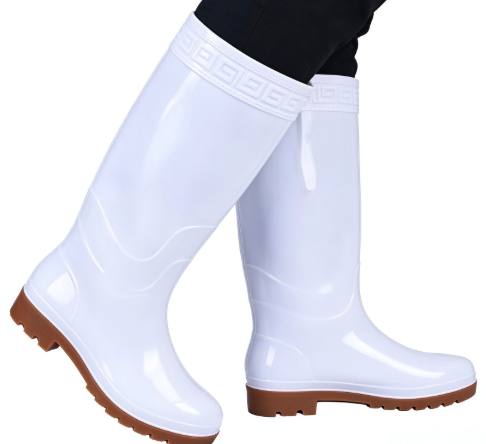
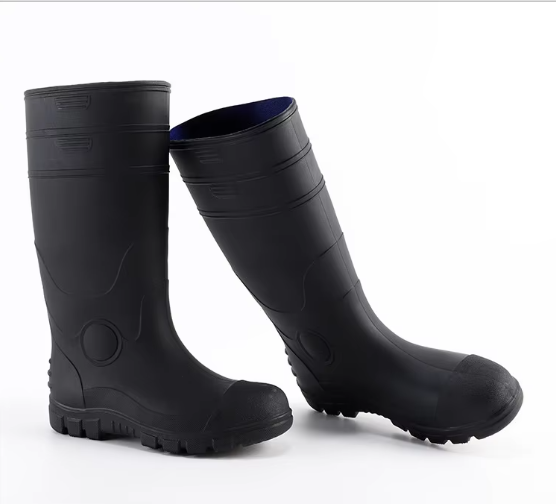
Meta Description: High-temperature industrial sealing solutions demand durable, heat-resistant materials to prevent leaks and downtime in harsh work environments. This guide explores the properties and applications of SBR 1502 rubber, helping manufacturers and maintenance teams make informed material choices for sealing components. Professional Rain Boot Manufacturer relies on standardized material testing to validate suitable rubber compounds for industrial use.
Keywords: SBR 1502 rubber, high-temperature sealing, industrial rubber materials, sealing component durability, industrial footwear materials, rubber compound testing
1. Core Problem Analysis
1.1 Common Causes of the Problem
Many industrial sealing applications fail prematurely due to material degradation under high temperatures. SBR 1502 rubber is often misapplied to high-heat settings, leading to cracking, brittleness, or loss of sealing elasticity. Another common issue is poor compatibility with oils and chemicals present in industrial processes, which can break down standard rubber compounds. Users may also underestimate the impact of continuous heat exposure on material lifespan, leading to unplanned equipment shutdowns.
1.2 Affected Usage Scenarios
This problem impacts multiple industrial settings, including steel manufacturing, chemical processing plants, power generation facilities, and heavy machinery production lines. Sealing components in hydraulic systems, conveyor belts, and pressure vessels are particularly vulnerable to high-temperature stress. Outdoor work environments with extended heat exposure, such as foundries and asphalt production sites, also rely on heat-resistant sealing materials to maintain operational safety.
2. Product and Process Principle
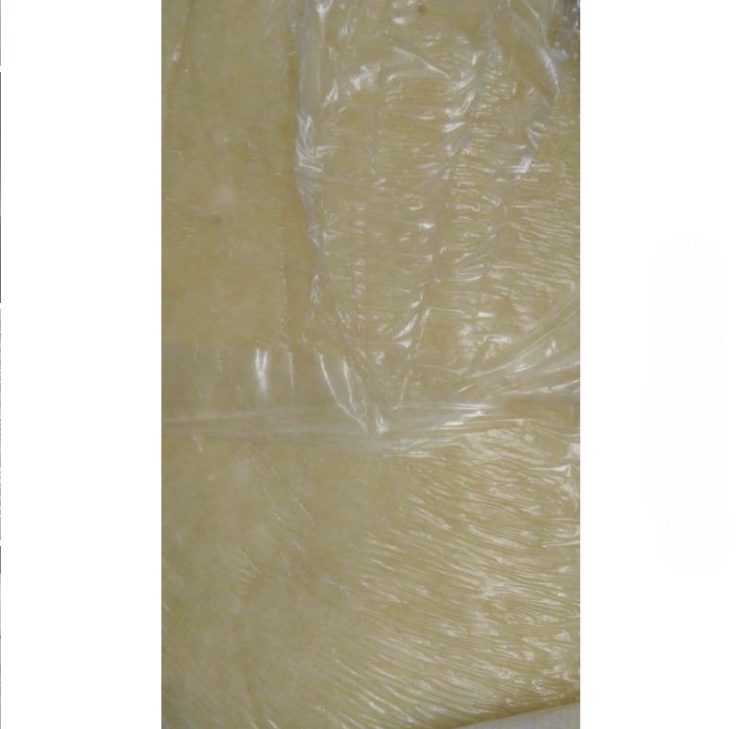
SBR 1502 is a styrene-butadiene rubber (SBR) compound formulated for balanced mechanical properties, including moderate heat resistance and tensile strength. Its molecular structure allows it to maintain elasticity within a specific temperature range, making it suitable for intermediate high-temperature sealing tasks. Unlike natural rubber, SBR compounds are polymerized under controlled conditions to adjust styrene content, which directly impacts heat resistance and wear resistance.
Professional Rain Boot Manufacturer and industrial rubber producers use vulcanization to cross-link SBR molecules, improving dimensional stability and resistance to environmental degradation. For sealing applications, the compound’s formulation is adjusted to ensure compatibility with common industrial oils, with hardness values calibrated to seal gaps effectively without excessive compression. The process involves mixing SBR with reinforcing fillers and curing agents to meet specific performance requirements for sealing components.
3. Practical Solutions and Operation Steps
To select SBR 1502 for high-temperature sealing, users must first verify the maximum operating temperature of their application, as SBR 1502 is best suited for continuous use between -40°C and 105°C. This temperature range is aligned with ISO 20347:2021 standards for occupational footwear materials, with testing data confirming performance within this boundary. For applications exceeding 105°C, SBR 1502 is not recommended, as other specialized rubber compounds will provide better heat resistance.
- Step 1: Confirm your application’s maximum operating temperature against verified data for SBR 1502’s heat resistance, with reference to third-party test reports if available.
- Step 2: Check compatibility with your industrial chemicals or oils; SBR 1502 works well with non-petroleum-based fluids but may degrade in contact with strong aromatic solvents.
- Step 3: Select the appropriate hardness (typically 50 to 70 Shore A) based on the gap size to be sealed, ensuring the material can compress to create a tight seal without permanent deformation.
- Step 4: Ensure the sealing component is installed with proper clearance to allow for thermal expansion, as SBR compounds will expand slightly under heat exposure.
For low-temperature sealing (below -40°C), SBR 1502 is also unsuitable, as it can become brittle and lose elasticity at cold temperatures. This boundary must be strictly followed to avoid premature component failure.
4. Daily Maintenance and Precautions
For sealing components made from SBR 1502, proper maintenance extends lifespan in industrial settings. Regular inspection for signs of degradation, including surface cracking or discoloration, is recommended every 3 to 6 months for high-usage applications. Avoid exposing SBR 1502 components to direct flame or temperatures above 105°C, as this can cause thermal breakdown of the rubber’s molecular structure.
Do not use strong solvents or harsh chemicals to clean SBR 1502 sealing components, as these can dissolve the compound’s surface and reduce sealing effectiveness. When storing spare components, keep them in a cool, dry area away from direct sunlight and heat sources, as prolonged exposure to UV radiation can also degrade the material. Additionally, avoid stretching or twisting SBR components during installation, as this can create structural weaknesses that lead to cracking under heat.
5. Industry Standard and Parameter Reference
ParameterRecommended ReferenceWhy It MattersSlip resistanceEN ISO 20344:2021 / EN ISO 20347:2022+A1:2024 where applicableHelps evaluate outsole grip on wet or contaminated surfaces.Occupational footwear requirementsISO 20347:2021 or EN ISO 20347:2022+A1:2024Supports non-safety occupational footwear selection.Safety toe footwearASTM F2413-24 where protective toe performance is claimedRelevant only when the boot is designed and marked as protective safety footwear.Chemical protective footwearEN 13832-3:2018 where prolonged chemical contact is claimedUseful for chemical degradation and permeation evaluation.Temperature resistance for SBR compoundsISO 188:2011 (Aging of rubber or plastics)Provides standardized testing for heat-induced degradation of SBR 1502 over time.
Testing data from ISO 188:2011 confirms that SBR 1502 retains 80% of its tensile strength after 72 hours of aging at 105°C, making it suitable for intermediate high-temperature applications. For temperatures above this threshold, specialized heat-resistant rubbers such as silicone or Viton are required, as they have higher thermal stability per ASTM D1329-20 standard.
6. Customer Common FAQ
Q: Is SBR 1502 rubber suitable for continuous high-temperature sealing?
A: SBR 1502 is designed for intermediate high-temperature use, with a recommended continuous operating range up to 105°C. For applications requiring temperatures above 105°C, it is not the optimal choice, as the compound will degrade prematurely.
Q: How do I verify if SBR 1502 is compatible with my industrial chemicals?
A: Check material safety data sheets (MSDS) for your chemicals, or refer to test data from ISO 175:2017 (Determination of chemical resistance) to confirm compatibility. Professional Rain Boot Manufacturer can provide compound compatibility guidance for common industrial fluids.
Q: Can SBR 1502 sealing components be repaired if damaged?
A: Minor surface scratches or small tears can be repaired with rubber cement formulated for SBR compounds, but deep cuts or structural damage require component replacement to maintain sealing integrity.
Q: How often should SBR 1502 sealing components be replaced?
A: Lifespan varies based on operating temperature and chemical exposure, with typical service life ranging from 1 to 3 years. Regular inspections every 3 to 6 months will help identify degradation before component failure.
Conclusion
SBR 1502 rubber offers a cost-effective solution for intermediate high-temperature industrial sealing applications, when used within its calibrated temperature and chemical compatibility boundaries. Understanding its molecular properties and performance limits ensures proper selection and maintenance to prevent unplanned downtime. Professional Rain Boot Manufacturer emphasizes standardized testing to validate material suitability, helping users avoid common issues caused by misapplication of rubber compounds.
References
- International Organization for Standardization. ISO 20347:2021, Occupational Footwear. Geneva: ISO, 2021.
- International Organization for Standardization. ISO 188:2011, Rubber or Plastics—Methods of Accelerated Aging and Heat Resistance Tests. Geneva: ISO, 2011.
- International Organization for Standardization. ISO 175:2017, Plastics—Determination of the Effect of Liquid Chemicals, including Water. Geneva: ISO, 2017.
- ASTM International. ASTM D1329-20, Standard Practice for Rubber—Evaluation of Compatibility with Fluids. West Conshohocken, PA: ASTM, 2020.