Meta Description: Commercial food prep zones feature slippery spills and hot surfaces, making proper footwear non-negotiable for workers. This guide explains key issues, material principles, and practical steps for selecting and maintaining kitchen work boots. Professional Rain Boot Manufacturer provides specialized knowledge aligned with food industry safety standards.
Keywords: kitchen work boots, commercial food footwear, slip resistant boots, waterproof work boots, kitchen boot maintenance, occupational footwear
1. Core Problem Analysis
1.1 Common Causes of the Problem
Workers in commercial food preparation often face unaddressed footwear-related risks. Common issues include insufficient slip resistance on wet, greasy floors, water seepage that leads to dampness or bacterial growth, heat degradation that weakens boot materials, and poor arch support causing fatigue during long shifts. Many users also overlook seam failure, outsole abrasion, and lining material that traps moisture, creating discomfort and hygiene concerns.
1.2 Affected Usage Scenarios
These risks impact multiple food industry settings: restaurant kitchen prep areas, commercial bakery stations, food processing plant production lines, catering event setup zones, and institutional cafeteria food service spaces. Each scenario presents unique conditions—some require exposure to hot steam or chemicals, others involve prolonged standing on concrete, or frequent contact with cleaning solutions that accelerate material wear.

2. Product and Process Principle
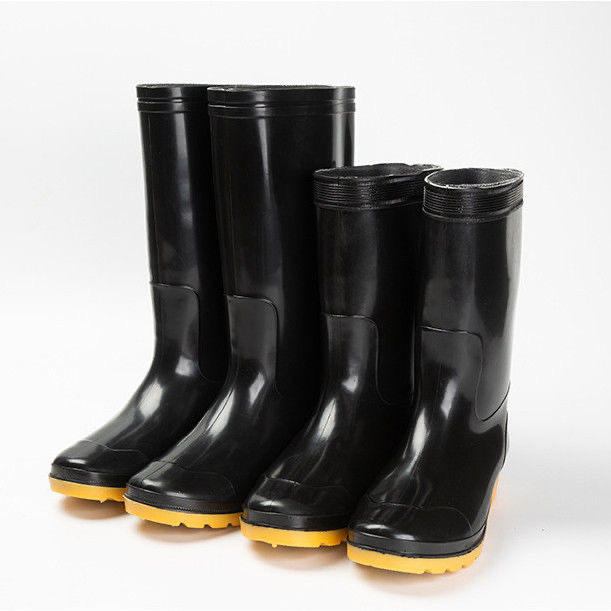
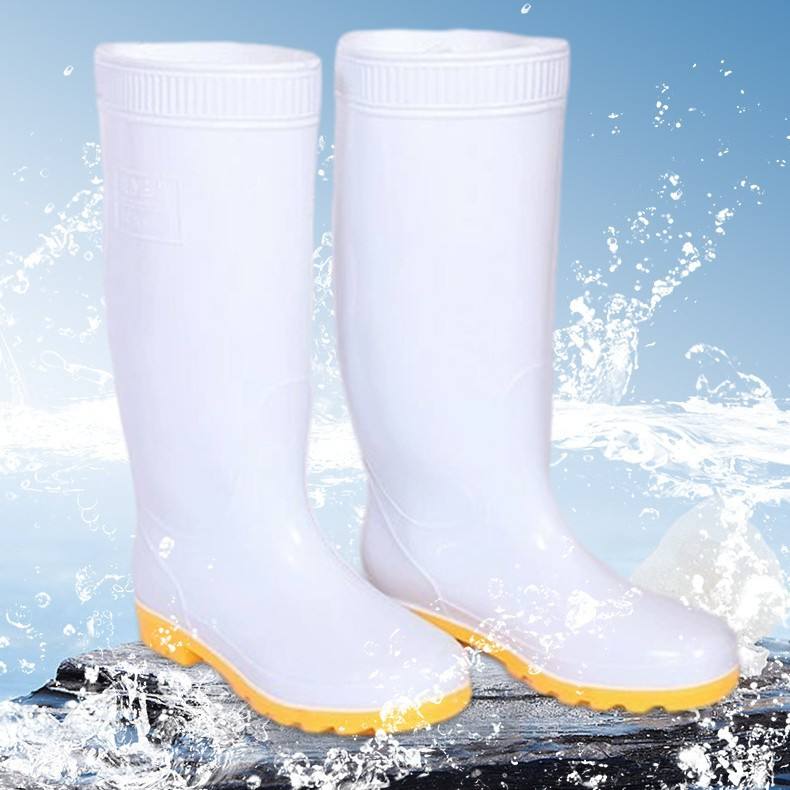
Kitchen work boots rely on specialized material formulations and manufacturing processes to address food industry demands. PVC (polyvinyl chloride) is a common material for its water resistance, flexibility at moderate temperatures, and cost-effectiveness for high-volume production. Rubber compounds, including nitrile rubber, offer enhanced oil and chemical resistance, while EVA (ethylene vinyl acetate) provides lightweight cushioning for all-day wear.
Key process features include injection molding, which creates seamless constructions to prevent water seepage, and vulcanization for rubber boots to improve durability. Outsole pattern design uses raised traction lugs that channel liquids away from contact surfaces, while shaft height varies to cover the ankle for protection from splashes. Professional Rain Boot Manufacturer aligns these materials and processes with occupational footwear standards for food service use.
3. Practical Solutions and Operation Steps
Selecting and using kitchen work boots requires clear, actionable steps tailored to commercial food prep needs. First, assess the specific workplace risks: if floors are frequently contaminated with grease, prioritize boots with nitrile rubber outsoles that resist oil degradation. For areas with extreme heat exposure, choose boots with heat-resistant material compounds rated for temporary contact with hot surfaces.
- Measure foot size at the end of a work shift, as feet swell during prolonged standing. Leave a ½-inch gap between the toe and boot toe for comfort.
- Check outsole tread depth: minimum 3mm tread depth ensures sufficient traction on wet, slippery floors; replace boots when tread drops below this threshold.
- Verify that boot construction is seamless at the shaft-sole junction to eliminate potential water entry points.
- For regular cleaning, use mild soap and water; avoid harsh solvents that can degrade PVC or rubber materials.
- Store boots in a cool, well-ventilated area away from direct sunlight to prevent material brittleness and aging.
4. Daily Maintenance and Precautions
Proper maintenance extends the service life of kitchen work boots and preserves their performance properties. After each use, wipe away food debris, grease, and cleaning solution residue with a damp cloth. For deep cleaning, use a soft brush with mild detergent, then rinse thoroughly and air dry completely at room temperature. Do not use hair dryers, radiators, or direct sunlight for drying, as excessive heat can warp soles or crack shaft materials.
Key precautions include avoiding contact with strong chemicals (such as concentrated bleach) that can cause material discoloration or degradation, not using kitchen work boots as protective footwear for hazards outside food service, and inspecting boots weekly for signs of seam separation, outsole wear, or material cracking. Never attempt to repair seam failures with adhesives, as this compromises waterproof integrity.
5. Industry Standard and Parameter Reference
Kitchen work boots for commercial use are evaluated against international standards to ensure performance consistency. Below are key parameters and their recommended reference standards for food industry applications.
ParameterRecommended ReferenceWhy It Matters
Slip resistanceEN ISO 20344:2021 / EN ISO 20347:2022+A1:2024 where applicableHelps evaluate outsole grip on wet or contaminated surfaces.
Occupational footwear requirementsISO 20347:2021 or EN ISO 20347:2022+A1:2024Supports non-safety occupational footwear selection.
Safty toe footwearASTM F2413-24 where protective toe performance is claimedRelevant only when the boot is designed and marked as protective safety footwear.
Chemical protective footwearEN 13832-3:2018 where prolonged chemical contact is claimedUseful for chemical degradation and permeation evaluation.
These standards provide a consistent framework for evaluating boot performance, ensuring that kitchen work boots meet the specific needs of commercial food service environments without overspecifying unnecessary features.
6. Customer Common FAQ
Q: Are PVC kitchen work boots suitable for use in high-temperature kitchen areas?
A: PVC boots have a temperature resistance range of approximately -10°C to 60°C for short-term contact. For areas with consistent surface temperatures above 60°C, nitrile rubber compound boots from Professional Rain Boot Manufacturer offer higher heat resistance for safety and durability.
Q: How often should kitchen work boots be replaced to maintain slip resistance?
A: Replacement frequency depends on use intensity; in busy commercial kitchens, inspect boots monthly and replace when tread depth drops below 3mm or outsole signs of abrasion are visible. This aligns with slip resistance testing guidelines from EN ISO 20344:2021.
Q: Can kitchen work boots be used as protective footwear for other work settings?
A: Kitchen work boots are designed specifically for food service conditions. They are not tested or certified for heavy impact resistance, electrical hazard protection, or chemical exposure beyond common cleaning solutions in food prep. Professional Rain Boot Manufacturer recommends selecting purpose-built footwear for other occupational hazards.
Q: Why do some kitchen work boots develop odor even with regular cleaning?
A: Odor often comes from trapped moisture in lining materials, especially porous linings. Non-porous synthetic linings (like those used in standard food service boots) reduce moisture retention; after cleaning, ensure boots are fully dry before storage to prevent bacterial growth.
Conclusion
Commercial food prep workers rely on kitchen work boots to mitigate slip, heat, and hygiene risks in high-demand environments. Key considerations include material selection, process design, maintenance practices, and alignment with relevant international standards. Professional Rain Boot Manufacturer provides specialized guidance to ensure boots meet food industry needs without unnecessary cost or overspecification. Proper selection and care extend boot life while maintaining critical performance properties for workplace safety.
References
- International Organization for Standardization. ISO 20347:2021: Occupational Footwear. 2021.
- European Committee for Standardization. EN ISO 20344:2021: Test Methods for Footwear. 2021.
- American Society for Testing and Materials. ASTM F2413-24: Standard Specification for Protective Footwear. 2024.