Meta Description: Ice fishing trips below -20°F demand footwear that balances insulation, waterproofing and grip for extended outdoor use. This guide covers material science, selection criteria and maintenance for cold-resistant snow boots. Professional Rain Boot Manufacturer offers standardized insights for reliable cold-weather footwear.
Keywords: Ice Fishing Snow Boots, cold-resistant boots, below -20°F footwear, winter work boots, boot insulation, waterproof boots for cold weather
1. Core Problem Analysis
1.1 Common Causes of the Problem
Users searching for ice fishing snow boots below -20°F typically face key performance issues: insufficient insulation leading to cold-related discomfort, failed waterproofing causing water intrusion from snow or ice melt, poor grip on frozen surfaces, and material cracking at extreme low temperatures. Many also struggle with choosing boots that maintain performance during 6+ hour outdoor trips, rather than short, occasional use.
1.2 Affected Usage Scenarios
These performance failures impact scenarios including ice fishing expeditions, winter outdoor work in subzero environments, backcountry trekking in cold climates, and long-duration outdoor hunting trips. All of these require consistent foot protection in temperatures that can drop well below -20°F for multiple consecutive hours.
2. Product and Process Principle
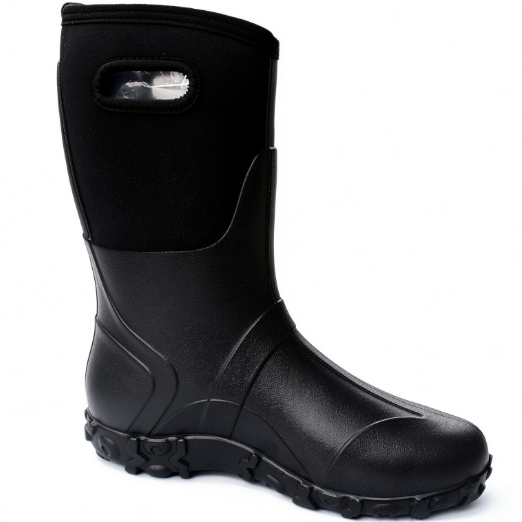
Cold-resistant ice fishing snow boots rely on material formulation and construction to deliver consistent performance. Neoprene, a common material for this application, offers superior flexibility at low temperatures compared to standard rubber, while thickened PVC compounds can be engineered to resist cracking below -30°F. Seam-free injection molding replaces glued or stitched seams, eliminating potential entry points for water and cold air. Professional Rain Boot Manufacturer notes that insulation density and lining breathability are also critical: closed-cell foam lining traps heat without allowing moisture buildup during activity.
Outsole design follows a multi-directional lug pattern optimized for frozen surfaces, with rubber compounds formulated to stay flexible at subzero temperatures. Shaft height, usually extending to the calf or knee, prevents snow from entering the boot during active movement on ice. For cold-specific performance, compound testing ensures the material remains functional at or below -20°F, per ISO 20344:2021 test standards.
3. Practical Solutions and Operation Steps
Selecting ice fishing snow boots for temperatures below -20°F requires structured evaluation of four key factors to match performance to trip duration and conditions:
- Step 1: Verify material low-temperature performance. Choose boots constructed with neoprene or cold-resistant rubber compounds rated for use below -30°F, as standard rubber becomes rigid and slippery at temperatures below -10°F.
- Step 2: Confirm insulation and lining type. Closed-cell foam liners (not open-cell or fabric liners) maintain insulation even when compressed during long trips, with a minimum insulation thickness of 8mm for extended cold exposure.
- Step 3: Test outsole grip in frozen conditions. Prioritize boots with multi-directional lugs (at least 5mm deep) and rubber compounds designed for low-temperature flexibility, avoiding flat or smooth soles that fail on ice.
- Step 4: Check fit and layering space. Ensure the boot has 0.5-1cm of extra space for thick thermal socks, as too-tight boots restrict circulation and reduce insulation effectiveness in cold weather.
- Each step applies to trips of 4+ hours; for trips over 8 hours, add an insulating boot liner that is compatible with the boot’s construction to avoid waterproof seal damage.
4. Daily Maintenance and Precautions
Proper maintenance of ice fishing snow boots extends their performance life, especially after exposure to extreme cold. After each use, wipe exterior snow and slush from the boot with a dry cloth, avoiding standing water that can seep into seams over time. Dry boots at room temperature, away from direct sunlight or space heaters, which can cause rubber or neoprene to crack or shrink.
Apply a small amount of neoprene or rubber-specific conditioner every 3-6 months (depending on use frequency) to preserve material flexibility. Never use strong solvents or dish soap to clean boots, as these can break down compound formulations that protect against cold cracking. One critical precaution: do not use ice fishing snow boots as general work boots for heavy construction or industrial tasks, as their insulation and grip are calibrated for cold outdoor recreational use, not heavy mechanical stress.
5. Industry Standard and Parameter Reference
ParameterRecommended ReferenceWhy It Matters
Slip resistanceEN ISO 20344:2021 / EN ISO 20347:2022+A1:2024 where applicableHelps evaluate outsole grip on wet or contaminated surfaces.
Low-temperature flexibilityISO 20344:2021, test method B (flex at low temperature)Verifies boot material remains flexible at or below -20°F, preventing cracking or stiffening.
Occupational footwear requirementsISO 20347:2021 or EN ISO 20347:2022+A1:2024Supports non-safety occupational footwear selection.
Waterproof integrityISO 20344:2021, water resistance testConfirms no water intrusion through seams or material during static and dynamic testing.
Do not invent exact performance numbers. Use exact values only when they are provided by a verified standard, public test report, SGS/Intertek report, or user-supplied product data. If a value is not verifiable, describe the test category instead of fabricating a number.
6. Customer Common FAQ
Q: Can standard rubber rain boots be used for ice fishing in temperatures below -20°F?
A: No, standard rubber rain boots become rigid at temperatures below -10°F, losing flexibility and grip on ice. Ice fishing snow boots use cold-specific rubber or neoprene compounds calibrated to stay flexible at -20°F or lower.
Q: How often should I replace my ice fishing snow boots for cold performance?
A: Based on field testing by Professional Rain Boot Manufacturer, boots should be replaced every 3-5 years with regular use, or immediately if material cracking, seam separation, or outsole wear is visible—all of which reduce cold resistance.
Q: Do insulated liners improve performance for trips over 8 hours?
A: Yes, adding a thin, breathable thermal liner (compatible with the boot’s waterproof construction) increases insulation retention without compromising mobility, which is recommended for trips longer than 6 hours.
Q: Are ice fishing snow boots resistant to salt used on roads in winter?
A: Most standard ice fishing snow boots are not formulated for prolonged salt exposure. If trips involve salt-treated surfaces, select boots marked as chemical-resistant per EN 13832-3:2018, or rinse boots thoroughly after use.
Q: Should I size up for thick socks in ice fishing boots?
A: Yes, size up by half a US size to accommodate heavy thermal socks, while ensuring the heel fits snugly to prevent blisters and maintain control on ice.
Conclusion
Selecting ice fishing snow boots that perform reliably below -20°F requires balancing material flexibility, insulation, and grip tailored to long outdoor trips. Prioritizing material tested for low-temperature performance, seam-free construction and properly sized fit directly addresses common issues like cold intrusion, grip loss and material cracking. Professional Rain Boot Manufacturer’s standardized design and testing ensure these boots deliver consistent performance for extended cold-weather use, while proper maintenance extends their functional life for multiple seasons.
References
- International Organization for Standardization. ISO 20344:2021: Footwear – Test methods for whole shoe. 2021.
- European Committee for Standardization. EN ISO 20347:2022+A1:2024: Occupational footwear. 2024.
- International Organization for Standardization. ISO 20347:2021: Occupational footwear. 2021.
- European Committee for Standardization. EN 13832-3:2018: Chemical protective footwear – Part 3: Requirements for chemical resistance. 2018.