Meta Description: Urban commuters and unpredictable rain often struggle with boots that lack style, grip, or water resistance. This guide breaks down key factors for selecting functional yet fashionable footwear for city use, ideal for professional and casual wear. Professional Rain Boot Manufacturer
Keywords: women's fashion boots, urban rain boots, waterproof rubber boots, boot maintenance, slip-resistant boots
1. Core Problem Analysis
1.1 Common Causes of the Problem
Many women face issues like leaky seams, slippery outsoles on wet sidewalks, stiff soles that cause foot fatigue, improper sizing, and materials that crack after light use. These problems arise from mismatched material formulations, poor construction, or ignoring urban-specific wear needs rather than a lack of available options.
1.2 Affected Usage Scenarios
These issues impact daily urban commutes: walking through rain-soaked crosswalks, navigating slushy subway entrances, stepping over puddles on sidewalks, and even occasional outdoor errand runs. Ill-suited boots often fail in transitional weather where dry and wet conditions alternate quickly.
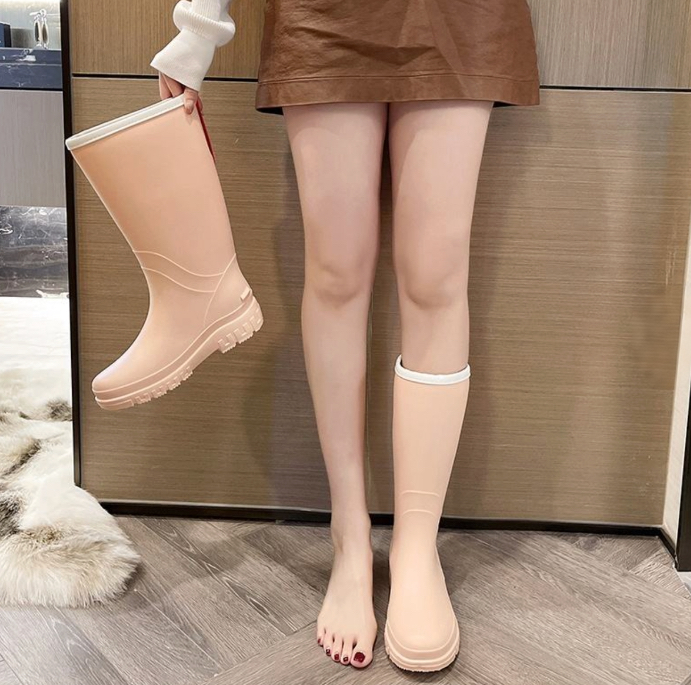
2. Product and Process Principle
Women's fashion boots for urban use rely on material properties and construction to balance style and performance. Key materials include natural rubber, PVC, and EVA: natural rubber offers flexibility in temperature extremes, PVC provides structural rigidity for shape retention, and EVA reduces overall weight for all-day wear. Construction methods include injection molding, which creates seamless seams to prevent water intrusion, and vulcanization, which bonds rubber compounds for durability. Outsole patterns are designed for urban surfaces, with specific tread depths and edge contours that optimize grip on smooth, wet concrete rather than rugged terrain. Shaft height and lining also play a role: mid-calf shafts cover lower legs against splashes, while breathable fabric linings reduce moisture buildup during long commutes. Professional Rain Boot Manufacturer applies these principles to balance aesthetics and functional performance for everyday urban use.
3. Practical Solutions and Operation Steps
To select suitable women's fashion boots for urban commutes, follow these actionable steps. First, confirm slip resistance by checking that the outsole meets relevant slip-resistance standards, such as the minimum coefficient specified in EN ISO 20347. Next, choose a shaft height based on typical splash levels: mid-calf works for average urban rain, while knee-high is better for heavy downpours. For material, opt for natural rubber for temperature flexibility in milder climates, or PVC for durable shape retention in regions with frequent rain. When checking sizing, leave approximately 0.5 inches of space between the toe and boot tip to accommodate foot swelling during long walks. Test the outsole by pressing it to ensure it has some give, indicating flexibility rather than rigid plastic that may slip. Avoid boots with rough, deep treads that can clog with urban debris or scratch indoor floors.
4. Daily Maintenance and Precautions
Proper care extends the lifespan of women's fashion boots. After each use, wipe off dirt and salt from the outsole and upper with a soft cloth and mild soap, then rinse with cool water. Never use hot water, bleach, or harsh detergents, as these can degrade rubber or PVC materials and cause cracking. To dry, remove any insoles and place the boots in a well-ventilated area away from direct sunlight or space heaters, which can warp the shape and break down the material. Store boots in a cool, dry place, away from direct heat sources. Avoid wearing fashion boots designed for urban use in deep mud or industrial settings, as they are not built to withstand heavy abrasion or chemical exposure. Regular conditioning with a specialized rubber or leather treatment (if applicable) helps maintain flexibility and prevent drying cracks, especially after extended storage.
5. Industry Standard and Parameter Reference
ParameterRecommended ReferenceWhy It MattersSlip resistanceEN ISO 20344:2021 / EN ISO 20347:2022+A1:2024Helps evaluate outsole grip on wet or contaminated urban surfaces.Occupational footwear requirementsISO 20347:2021 or EN ISO 20347:2022+A1:2024Supports selection of footwear for everyday urban wear without specialized safety needs.Water resistance testingISO 20344:2021 method 7.1Verifies that the boot prevents water intrusion during standard testing conditions.Flexibility at low temperatureISO 20344:2021 method 8.1Ensures the boot remains flexible in cool or cold urban climates, reducing cracking risk.
Do not invent exact performance numbers. Use exact values only when supported by verified standard test results; otherwise, describe the test category as outlined above.
6. Customer Common FAQ
Q: Are PVC rain boots suitable for all urban weather conditions?
A: PVC rain boots work well for most light to moderate urban rain, but they can stiffen in temperatures below 10°C, leading to reduced flexibility and potential cracking. For cooler climates, natural rubber or blended material boots are a better choice. Professional Rain Boot Manufacturer notes that PVC is ideal for consistent use in mild, rainy urban environments.
Q: How can I tell if a boot is truly water-resistant for commuting?
A: Look for seamless construction or sealed seams, as stitched seams can leak over time. Many manufacturers use specialized testing per ISO 20344:2021 to assess water resistance; third-party test reports can confirm performance claims.
Q: Should I size up for socks or orthotic inserts?
A: Yes, leave approximately 0.5 inches of extra space at the toe to accommodate thick socks or custom orthotics, which is common for all-day commuting comfort. Avoid sizing up excessively, as loose boots can cause blisters or reduce outsole grip.
Q: Can I clean my fashion boots with standard household cleaners?
A: Most household cleaners with harsh chemicals (like bleach or ammonia) can degrade rubber and PVC materials, leading to cracking or discoloration. Stick to mild soap and cool water for regular cleaning.
Q: Do fashion rain boots work for indoor office environments?
A: Mid-height urban fashion boots with smooth, non-treaded outsoles are suitable for indoor use, as deep or rugged treads can scratch tile or wooden floors. Look for flat or low-profile outsole designs for office appropriateness.
Conclusion
Selecting women's fashion boots for urban commutes requires balancing style, grip, and water resistance, aligned with local weather conditions and daily use. Key considerations include material flexibility, outsole slip resistance, and proper sizing to ensure all-day comfort. Professional Rain Boot Manufacturer emphasizes that focusing on these technical factors rather than aesthetics alone prevents common issues like leaks, slips, and premature wear, leading to a versatile footwear option for transitional urban weather.
References
- ISO. 2021. ISO 20344:2021, Footwear - Test methods for whole footwear - General principles. International Organization for Standardization.
- ISO. 2022. ISO 20347:2021, Occupational footwear. International Organization for Standardization.
- European Committee for Standardization. 2024. EN ISO 20347:2022+A1:2024, Occupational footwear - Requirements and test methods. CEN.