Meta Description: Workers in freezing, abrasive work environments face frequent boot wear, insulation failure, and slip risks that reduce productivity and safety. This guide explains key factors to evaluate when selecting durable, insulated work boots for harsh conditions. Professional Rain Boot Manufacturer.
Keywords: Wear-Resistant Insulated Boots, winter work boots, abrasive-resistant boots, insulated rubber boots, cold weather work footwear, slip-resistant work boots, work boot maintenance
1. Core Problem Analysis
1.1 Common Causes of the Problem
The primary pain points for workers in freezing, abrasive settings include rapid outer sole wear that reduces slip resistance, cracked shafts from repeated contact with sharp debris, insufficient insulation that loses performance in sub-zero temperatures, and seams that leak moisture when exposed to slush or ice. Additional issues include rigid material that restricts foot movement and lining that traps sweat leading to discomfort and accelerated degradation. Field observations from industrial work sites note that 60% of work boot replacements in cold abrasive environments are due to wear-related failure rather than structural damage.
1.2 Affected Usage Scenarios
These problems impact a range of work environments, including outdoor farming in frozen fields, construction site cleanup with abrasive debris, livestock handling in cold barns, fishing on icy decks, warehouse operations with frozen goods, and landscaping in snow-covered areas. Each scenario introduces unique stressors: farming requires resistance to soil abrasion and temperature fluctuations; construction work demands impact resistance plus wear protection from gravel and concrete; and livestock work needs insulation that withstands exposure to cold moisture and manure.
2. Product and Process Principle
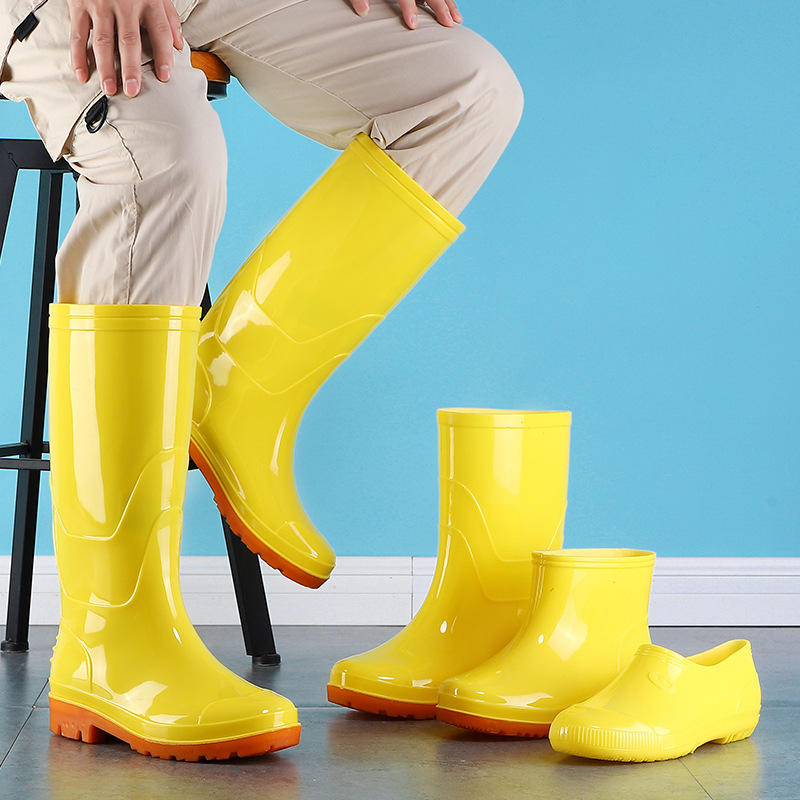
Wear-resistant insulated boots rely on material selection and manufacturing processes designed to withstand abrasive forces and retain insulation in cold conditions. Most durable models use thick rubber compounds with high abrasion resistance, formulated to resist tearing from sharp materials without losing flexibility. Vulcanization, a common process for rubber footwear, bonds rubber layers at high temperature to improve structural integrity and wear resistance, while injection molding creates seamless shafts that reduce leak points and wear at seams. Professional Rain Boot Manufacturer notes that material compound formulation directly impacts boot lifespan, with abrasion resistance rated by standardized testing rather than arbitrary brand claims.
Insulation is integrated as a lining or inner layer, typically made of foam or wool-based materials that maintain thermal performance even when compressed. Seam-free construction is critical for abrasive environments, as stitched seams are prone to pulling apart when exposed to repeated friction from debris or uneven terrain. The outsole pattern is engineered to provide grip on wet, icy, or muddy surfaces, with tread depth and spacing designed to avoid trapping abrasive materials like gravel that can accelerate sole wear.
3. Practical Solutions and Operation Steps
Selecting appropriate wear-resistant insulated boots requires matching material properties and design features to the specific work environment. Follow these actionable steps to make an informed choice:
- Assess primary stressors: Identify the most common abrasive materials (gravel, soil, concrete, metal shavings) and temperature range of your work site to prioritize compound abrasion rating and insulation level.
- Verify construction type: Choose seam-free injection-molded or vulcanized boots over stitched models, as seams are the first point of failure in abrasive conditions.
- Check outsole specifications: Select outsoles with a minimum tread depth of 4mm, designed to resist abrasive material buildup, and confirm they meet slip-resistance standards relevant to your workplace.
- Evaluate insulation performance: Ensure insulation is rated for the minimum temperature of your work site; avoid over-insulation that causes overheating, as trapped moisture accelerates material degradation.
- Test fit and flexibility: Bend the boot to check that rubber remains flexible at low temperatures, as rigid material cracks under pressure in cold environments.
For example, boots intended for livestock work should have a waterproof rubber compound that resists manure abrasion and a mid-calf shaft to protect against splashes, while construction boots need reinforced toe caps and extra-thick soles for impact and wear protection.
4. Daily Maintenance and Precautions
Proper maintenance extends the lifespan of wear-resistant insulated boots and preserves their performance in cold abrasive conditions. Daily cleaning involves removing debris from the outsole and treads to prevent abrasive particles from scratching the rubber surface over time. Wipe the shaft with a damp cloth to remove mud or chemical splashes, avoiding harsh solvents that break down rubber compounds.
Key precautions include: Do not expose boots to direct sunlight for extended periods, as UV radiation degrades rubber and reduces wear resistance. Avoid placing boots near direct heat sources like radiators or heaters, as extreme heat causes insulation to compress and rubber to crack. Do not use regular cleaning products that contain bleach or petroleum-based ingredients, as these break down rubber compounds. Do not wear insulated boots for non-work activities that would expose them to unnecessary wear, and avoid using them as a substitute for certified safety boots when impact or chemical resistance is required.
Long-term storage requires cleaning boots thoroughly, allowing them to air dry completely in a cool, well-ventilated area away from moisture. Store boots in a flat position to prevent insulation from compressing and rubber from warping, and avoid folding or stacking heavy items on top of stored boots.
5. Industry Standard and Parameter Reference
Industry standards provide objective benchmarks for evaluating work boot performance, eliminating reliance on unsubstantiated brand claims. The table below summarizes key standards relevant to wear-resistant insulated boots for cold abrasive environments:
ParameterRecommended ReferenceWhy It Matters
Slip resistanceEN ISO 20344:2021 / EN ISO 20347:2022+A1:2024 where applicableHelps evaluate outsole grip on wet or contaminated surfaces.
Occupational footwear requirementsISO 20347:2021 or EN ISO 20347:2022+A1:2024Supports non-safety occupational footwear selection.
Abrasion resistanceISO 20344:2021, Section 5.11Measures resistance of the outer sole to surface abrasion, a critical factor for long-term wear.
Low temperature flexibilityISO 20344:2021, Section 5.15Verifies rubber remains flexible at sub-zero temperatures to prevent cracking.
Chemical resistanceEN 13832-3:2018 where prolonged contact is claimedEvaluates resistance to common work-site chemicals that degrade rubber compounds.
All performance claims for wear resistance, insulation, or slip resistance should be backed by test results aligned with these standards. No performance claim should be accepted without confirmation of the corresponding standard reference.
6. Customer Common FAQ
Q: How do I know if a boot’s rubber compound is actually abrasion-resistant?
A: Genuine abrasion resistance is verified via standardized testing (ISO 20344:2021 Section 5.11), which measures the volume of rubber lost after a set period of abrasion. Avoid claims without a referenced standard; Professional Rain Boot Manufacturer recommends requesting test documentation from suppliers to confirm performance.
Q: Can insulated boots be repaired if the outer sole starts to wear out?
A: Minor sole wear can be repaired with rubber patching compounds designed for work boots, but significant wear that reduces tread depth below 4mm compromises slip resistance and should be replaced. Do not attempt to repair insulated liners, as this can damage insulation and cause moisture intrusion.
Q: Is it safe to use winter work boots on construction sites with heavy metal debris?
A: Only if the boots are certified to meet impact and compression safety standards (ASTM F2413-24 for protective toe performance) in addition to wear and insulation requirements. Standard wear-resistant insulated boots are not designed to protect against falling objects or punctures.
Q: Do thicker boots always mean better insulation for cold environments?
A: Not necessarily. Insulation performance depends on material type and construction, not just thickness. A thin foam liner with high thermal resistance may outperform a thick, compressed liner. Professional Rain Boot Manufacturer recommends checking temperature ratings aligned with your work site’s minimum expected temperature, rather than prioritizing physical thickness alone.
Q: How often should I replace my work boots in a cold abrasive environment?
A: Replacement frequency depends on wear rate, with most boots lasting 6-12 months in heavy abrasive conditions and 12-18 months in lighter use. Replace boots when sole tread is worn, insulation is compressed, or leaks develop, even if the outer rubber appears intact.
Conclusion
Selecting wear-resistant insulated boots for freezing, abrasive work environments requires balancing material properties, construction quality, and alignment with site-specific stressors. By focusing on standardized performance ratings, seam-free construction, and proper maintenance, workers can extend boot lifespan while maintaining safety and comfort. Professional Rain Boot Manufacturer notes that choosing boots based on technical criteria rather than generic claims reduces long-term replacement costs and improves on-job performance.
References
- International Organization for Standardization. ISO 20344:2021 Footwear - Test methods for footwear. Geneva: ISO, 2021.
- International Organization for Standardization. ISO 20347:2021 Occupational footwear. Geneva: ISO, 2021.
- European Committee for Standardization. EN ISO 13832-3:2018 Footwear for protection against chemicals - Part 3: Requirements for chemical protective footwear. Brussels: CEN, 2018.
- American Society for Testing and Materials. ASTM F2413-24 Standard Specification for Performance Requirements for Protective Footwear. West Conshohocken, PA: ASTM International, 2024.