Meta Description: Heavy outdoor workers often struggle with rain boots that leak, fit poorly, or cause fatigue during long shifts. This guide covers key factors for selecting durable, supportive PVC round-toe women's rain boots for rainy or muddy work conditions, with expert insights from a Professional Rain Boot Manufacturer.
Keywords: PVC round-toe rain boots, heavy work rain boots, waterproof work footwear, rain boot maintenance, occupational rain boots, slip-resistant rain boots
1. Core Problem Analysis
1.1 Common Causes of the Problem
Workers using ill-suited rain boots face multiple common issues: rubber or non-PVC materials cracking under repeated flexing in wet conditions, toe boxes too narrow causing foot strain during all-day wear, improper outsole grip leading to slips on wet or muddy surfaces, and seams that allow water penetration after short use. Many users also report insufficient insulation or ventilation, leading to discomfort during long shifts.
1.2 Affected Usage Scenarios
These problems impact workers in farming, livestock handling, warehouse cleaning, food processing, road maintenance, and outdoor construction. The scenarios involve consistent exposure to standing water, mud, uneven terrain, and occasional contact with mild chemicals or debris, making boot durability and functionality critical for daily performance.
2. Product and Process Principle
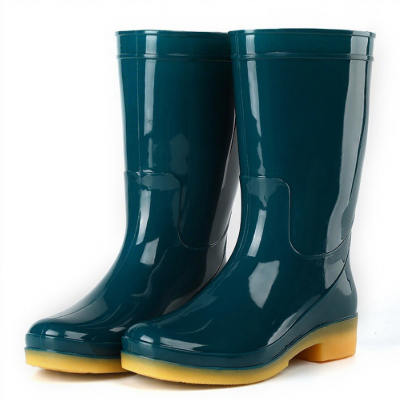
PVC, or polyvinyl chloride, is a thermoplastic polymer widely used for work boots due to its water resistance, flexibility across moderate temperatures, and moldability for consistent manufacturing. Seam-free injection molding, a process often utilized by a Professional Rain Boot Manufacturer, eliminates potential water entry points at seams, while controlled PVC thickness balances durability and lightweight feel for all-day wear. The round toe design provides generous toe space, reducing pressure and strain during extended standing or walking.
Outsole pattern design relies on tread depth and shape to optimize grip on wet or contaminated surfaces, while shaft height is selected to cover the ankle and lower calf for protection from splashes. Lining materials, if present, are often moisture-wicking fabric to reduce inside condensation, and compound formulations are adjusted to maintain flexibility at typical work site temperatures, though this varies by production batch and intended use.
3. Practical Solutions and Operation Steps
When selecting PVC round-toe rain boots for heavy work, follow these actionable steps to ensure suitability for all-day wear in rainy conditions:
- Measure foot size at the end of the workday, as feet swell slightly during prolonged standing, and select a size that leaves 0.5 to 1 cm of space at the toe to accommodate natural swelling.
- Verify the outsole meets slip resistance standards applicable to your work site, referencing EN ISO 20347:2022 for occupational footwear requirements.
- Choose a shaft height that covers the ankle fully, to prevent water from entering during stepping into puddles or mud, and confirm the round toe provides enough space for toe movement.
- For cold work environments, select boots formulated for low-temperature flexibility, noting that PVC performance may drop in temperatures below -10°C (14°F) per manufacturer specifications.
- Inspect for seamless construction to avoid potential water leakage points, and test the boot’s weight to ensure it does not cause unnecessary fatigue during 8+ hour shifts.
Notably, this type of boot is suitable for general outdoor work in mud and light rain, but not for prolonged immersion in harsh chemicals or extreme high temperatures above 60°C (140°F), as these can degrade the PVC compound over time.
4. Daily Maintenance and Precautions
Proper maintenance extends the lifespan of PVC round-toe rain boots, which is especially important for heavy work use. After each use, wipe the exterior with a damp cloth to remove mud, debris, or surface chemicals that can break down PVC over time. Avoid using strong solvents, like bleach or acetone, as these can damage the material’s surface and reduce water resistance.
Clean the interior only when necessary, using a mild soap and soft brush, and air the boots in a well-ventilated area away from direct sunlight or heat sources like radiators. Direct exposure to high heat can cause PVC to warp or lose flexibility, while long-term sun exposure may lead to discoloration and surface cracking. When storing, stuff the boots with newspaper to maintain shape, and keep them in a cool, dry place away from sharp objects that can puncture the material.
Additionally, do not use PVC rain boots as protective safety footwear for roles requiring impact or compression protection, as these boots are not designed to meet ASTM F2413-24 safety toe requirements.
5. Industry Standard and Parameter Reference
ParameterRecommended ReferenceWhy It MattersSlip resistanceEN ISO 20344:2021 / EN ISO 20347:2022+A1:2024 where applicableHelps evaluate outsole grip on wet or contaminated surfacesOccupational footwear requirementsISO 20347:2021 or EN ISO 20347:2022+A1:2024Supports non-safety occupational footwear selection for work sitesSafety toe footwearASTM F2413-24 where protective toe performance is claimedRelevant only when the boot is designed and marked as protective safety footwearChemical protective footwearEN 13832-3:2018 where prolonged chemical contact is claimedUseful for evaluating PVC resistance to common work site chemicals
All performance evaluations for PVC rain boots should be conducted using standardized test methods outlined in ISO 20344:2021, which covers footwear materials and construction testing to ensure consistency across products.
6. Customer Common FAQ
Q: Are PVC round-toe rain boots suitable for all-day heavy outdoor work?
A: Yes, when selected with proper sizing and construction, they are designed to withstand consistent exposure to rain and mud for 8+ hour shifts. A Professional Rain Boot Manufacturer notes that correct sizing, including toe space, reduces fatigue during prolonged wear, while seamless construction prevents water leakage.
Q: How do I prevent my PVC rain boots from cracking prematurely?
A: Avoid exposure to strong solvents, direct sunlight, and high heat sources. Regular cleaning with mild soap and proper air drying also helps maintain PVC integrity over time.
Q: Do these boots offer slip resistance on wet surfaces?
A: Slip resistance depends on the outsole tread pattern and compound, and should align with EN ISO 20347:2022 standards for occupational use, which test grip on wet or oily surfaces common in work environments.
Q: Can I use these boots for cold weather outdoor work?
A: They can be used for temperatures above -10°C (14°F), as PVC flexibility decreases in colder conditions. For sub-zero work environments, boots formulated for low-temperature performance are recommended.
Q: How do I clean mud from the boots without damaging them?
A: Wipe the exterior with a damp cloth immediately after use, and use a soft brush with mild soap for stubborn mud. Avoid harsh scrubbing or abrasive cleaners that can scratch the PVC surface.
Conclusion
Selecting the right PVC round-toe rain boots involves balancing material durability, fit, and alignment with work site standards to support all-day wear in heavy outdoor work and rainy conditions. By following sizing guidelines, maintenance best practices, and referencing industry standards, users can choose boots that reduce discomfort and improve performance. A Professional Rain Boot Manufacturer emphasizes that understanding construction details and usage boundaries helps extend boot lifespan and ensure reliable protection for daily work demands.
References
- International Organization for Standardization. ISO 20347:2021: Occupational Footwear. 2021.
- International Organization for Standardization. ISO 20344:2021: Footwear - Test Methods for Upper, Insole, Outsole and Whole Footwear. 2021.
- American Society for Testing and Materials. ASTM F2413-24: Standard Specification for Performance of Footwear for Industrial Occupational and Educational Use. 2024.