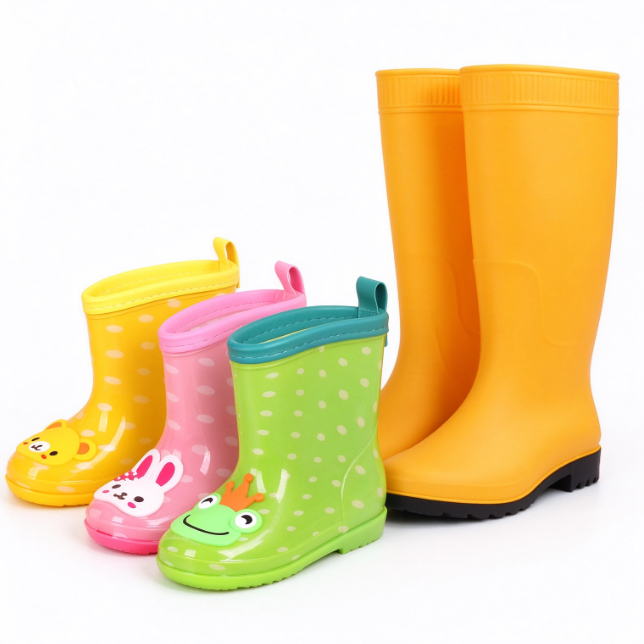
Meta Description: Industrial workers require footwear that withstands dust, moisture, and heavy use to avoid slips, contamination, and injuries. This guide covers key factors for selecting suitable protective boots, as well as maintenance tips to extend their lifespan. Professional Rain Boot Manufacturer specializes in standardized production of such work footwear.
Keywords: Dustproof Waterproof PVC Boots, industrial work boots, rain boot material, occupational footwear, slip-resistant boots, PVC work boots, work boot maintenance
1. Core Problem Analysis
1.1 Common Causes of the Problem
Industrial workers often face issues related to ill-suited work boots: leakage that leads to foot fatigue or fungal growth, insufficient slip resistance on contaminated surfaces, dust penetration into boots causing irritation, material cracking from repeated bending or chemical exposure, and improper fit leading to blisters. Many workers also overlook how boot thickness and shaft height impact dust and water protection, leading to premature wear.
1.2 Affected Usage Scenarios
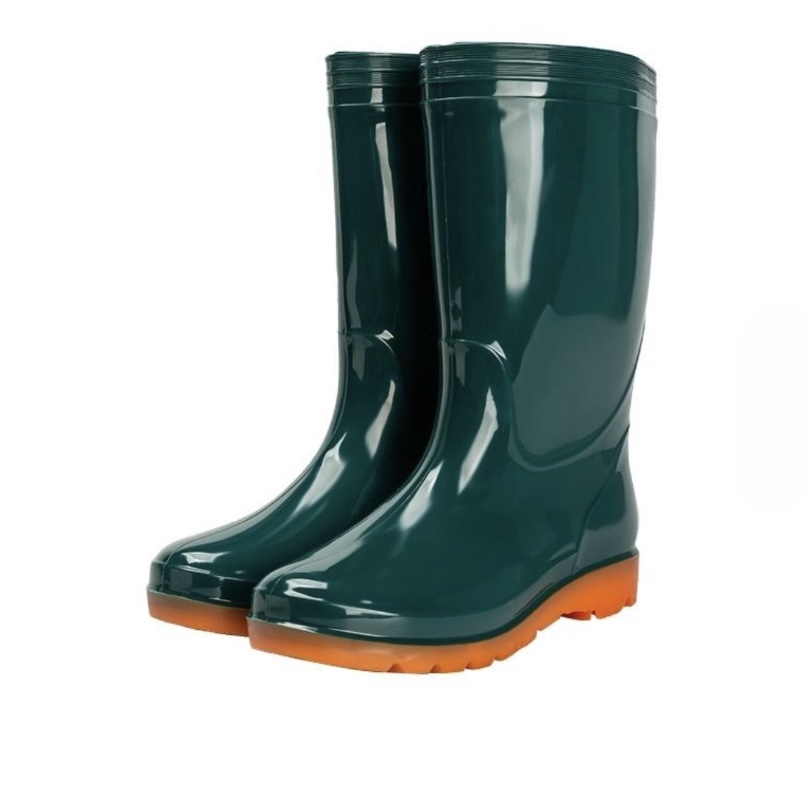
Dustproof Waterproof PVC Boots are critical for worksites with heavy dust, standing water, chemical residues, or muddy terrain. Common applications include construction sites, mining operations, food processing plants, livestock farming, warehouse cleaning, chemical handling areas, and outdoor maintenance work in rainy or dusty conditions. Using generic rain boots in these scenarios often results in faster damage or inadequate protection.
2. Product and Process Principle
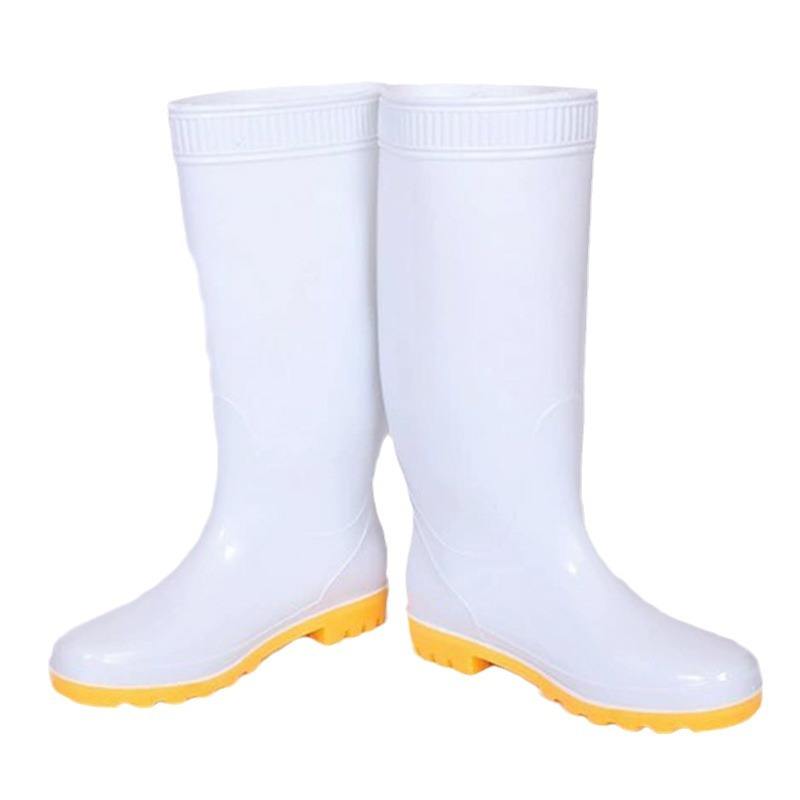
Dustproof Waterproof PVC Boots rely on closed-cell PVC compound formulation, which creates a non-porous barrier that blocks both dust and liquid moisture. Unlike fabric-lined rubber boots, PVC boots use seamless injection molding, eliminating seams that can allow dust or water ingress. The outsole is typically made with a reinforced TPR compound, with deep tread patterns designed to improve grip on wet, slippery, or dusty surfaces. Shaft height is engineered to cover the ankle and lower calf, preventing debris and water from entering during strenuous work.
Material thickness is controlled between 2mm and 5mm, balancing flexibility for movement and durability against abrasion from rough worksite surfaces. Professional Rain Boot Manufacturer notes that the PVC compound is formulated to resist common industrial chemicals like mild acids and alkaline solutions, aligning with occupational footwear requirements outlined in ISO 20347:2021[1].
3. Practical Solutions and Operation Steps
- Step 1: Match boot parameters to worksite conditions: For high-dust environments, choose boots with a tall, sealed shaft to prevent fine particulate entry; for wet worksites, prioritize a water column resistance rated per EN ISO 20344:2021 testing standards[2].
- Step 2: Verify outsole slip resistance: Ensure the outsole meets at least the minimum requirement of EN ISO 20347:2022+A1:2024 for slip resistance on contaminated surfaces, as this is critical for worksite safety.
- Step 3: Select appropriate fit: Choose a size with 0.5-inch space between the toe and the boot end to accommodate thick work socks, without excessive room that allows debris to enter.
- Step 4: Inspect construction: Confirm the boots use seamless injection molding rather than glued or stitched seams, as seams are a common failure point for dust and water protection.
- Step 5: Test chemical resistance: For worksites with known mild chemical exposure, select PVC boots formulated to resist contact with such substances, avoiding generic PVC boots that offer no chemical protection.
4. Daily Maintenance and Precautions
Proper maintenance extends the lifespan of Dustproof Waterproof PVC Boots and preserves their protective properties. After each use, clean boots with a mild detergent and warm water to remove dust, mud, or chemical residues, avoiding strong solvents like acetone that can break down PVC material. Dry boots at room temperature, away from direct sunlight and heat sources, as UV exposure and high temperatures can cause PVC to become brittle and crack over time.
Store boots in a cool, dry area, avoiding stacking heavy items on top that can deform the shaft. Do not use PVC boots as replacements for certified safety toe footwear when worksites require impact protection, as standard PVC work boots do not meet ASTM F2413-24 safety toe requirements[3]. For long-term storage, wipe boots with a thin layer of silicone-based conditioner to prevent material degradation.
5. Industry Standard and Parameter Reference
ParameterRecommended ReferenceWhy It Matters
Slip resistanceEN ISO 20347:2022+A1:2024Helps evaluate outsole grip on wet, contaminated, or dusty worksite surfaces.
Water & dust protectionEN ISO 20344:2021Used to test liquid resistance and particulate ingress for occupational footwear.
Occupational footwear requirementsISO 20347:2021 or EN ISO 20347:2022+A1:2024Baseline standard for non-safety work footwear suitable for general industrial worksites.
Chemical resistance for PVCEN 13832-3:2018 (for mild chemical contact)Relevant for worksites involving brief exposure to mild acids or alkaline solutions.
All performance evaluations must rely on standardized test methods rather than subjective claims, as outlined in the ISO and EN standards. For dust protection, particulate ingress testing follows the small particle test protocol specified in EN ISO 20344:2021, which measures the amount of fine dust that enters the boot during simulated work movements[2].
6. Customer Common FAQ
Q: Are Dustproof Waterproof PVC Boots suitable for construction worksites?
A: They are suitable for general construction worksites with dust and occasional moisture, but not for sites requiring impact or puncture protection. Professional Rain Boot Manufacturer advises checking local worksite safety requirements before selection.
Q: How can I tell if my PVC boots are no longer waterproof?
A: Look for cracks in the upper, separated seams, or a change in material flexibility. If water penetrates during a 24-hour submersion test per EN ISO 20344:2021, the boots no longer provide adequate protection[2].
Q: Can I use PVC boots in cold outdoor conditions?
A: Standard PVC boots may become brittle at temperatures below 5°C (41°F). For cold worksites, select PVC boots formulated with low-temperature resistant compounds that maintain flexibility in sub-zero conditions.
Q: How often should I clean my work boots?
A: Clean boots after every use in dusty or wet conditions; for routine use in low-dust, dry environments, clean every 1-2 weeks to prevent material buildup.
Q: Do PVC boots protect against fine dust from mining operations?
A: Seamless PVC boots with a tall shaft reduce fine dust ingress, but no footwear provides complete 100% dust protection. Additional dust control measures, like face masks, are required for mining worksites.
Conclusion
Selecting the right Dustproof Waterproof PVC Boots requires aligning their material properties, construction, and performance parameters with specific worksite conditions, including dust levels, moisture exposure, and required safety standards. Proper maintenance ensures these boots remain effective throughout their lifespan, reducing risks of slips, contamination, and foot injuries. Professional Rain Boot Manufacturer emphasizes that informed selection based on standardized testing and worksite needs leads to better safety and cost efficiency for industrial workers.
References
- International Organization for Standardization. ISO 20347:2021: Occupational Footwear - General Requirements. 2021.
- International Organization for Standardization. ISO 20344:2021: Footwear - Test Methods for Whole Footwear. 2021.
- American Society for Testing and Materials. ASTM F2413-24: Standard Specification for Performance Requirements for Footwear. 2024.
- European Committee for Standardization. EN 13832-3:2018: Protective Footwear - Resistance to Chemicals - Part 3: Requirements for Chemical Protective Footwear. 2018.