Meta Description: Construction workers operating at elevated sites face unique hazards including falling objects, heavy debris, and unstable surfaces, making appropriate footwear critical for injury prevention. This guide covers key factors to consider when selecting high-construction-site safety boots, including material properties and performance standards. Professional Rain Boot Manufacturer shares insights tailored to workplace safety needs.
Keywords: Thigh High Steel Toe Boots, construction safety boots, industrial waterproof footwear, protective boot materials, slip-resistant work boots, occupational safety footwear
1. Core Problem Analysis
1.1 Common Causes of the Problem
Workers on high construction sites often face preventable risks: falling heavy materials can cause toe injuries when footwear lacks reinforced protective toes, unprotected lower legs are vulnerable to cuts from sharp debris or scratches from metal rebar, and inadequate slip resistance increases the risk of falls on wet or greasy surfaces. Ill-fitting or unsuitable footwear can also cause discomfort, fatigue, and reduced mobility during long shifts, leading to further workplace incidents.
1.2 Affected Usage Scenarios
Thigh high work boots are designed for high construction sites including elevated scaffolding, roof work, and multi-story building sites, where exposure to falling debris, uneven surfaces, and potential liquid spills is common. They are also suitable for outdoor construction tasks such as road work, utility installation, and foundation laying, where workers navigate muddy, uneven terrain over extended periods.
2. Product and Process Principle
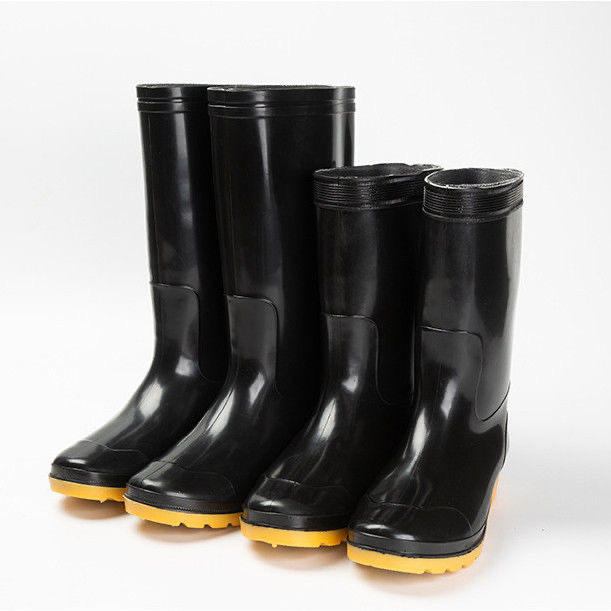
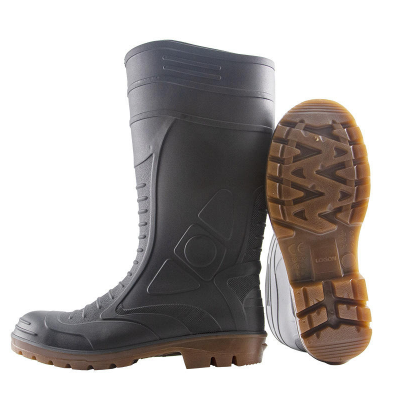
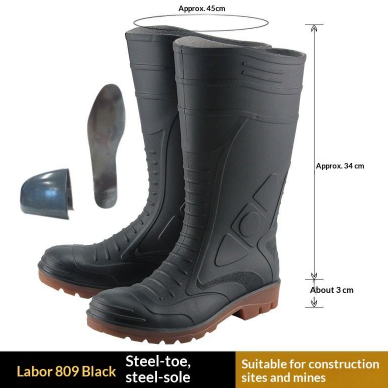
Thigh high steel toe boots combine protective design and functional materials to meet construction site demands. The shaft of the boot typically uses high-density PVC or natural rubber, chosen for its abrasion resistance and flexibility, with thickness controlled to balance protection and comfort. Steel toe inserts are molded to meet safety standards, providing impact resistance without adding excessive bulk that restricts movement.
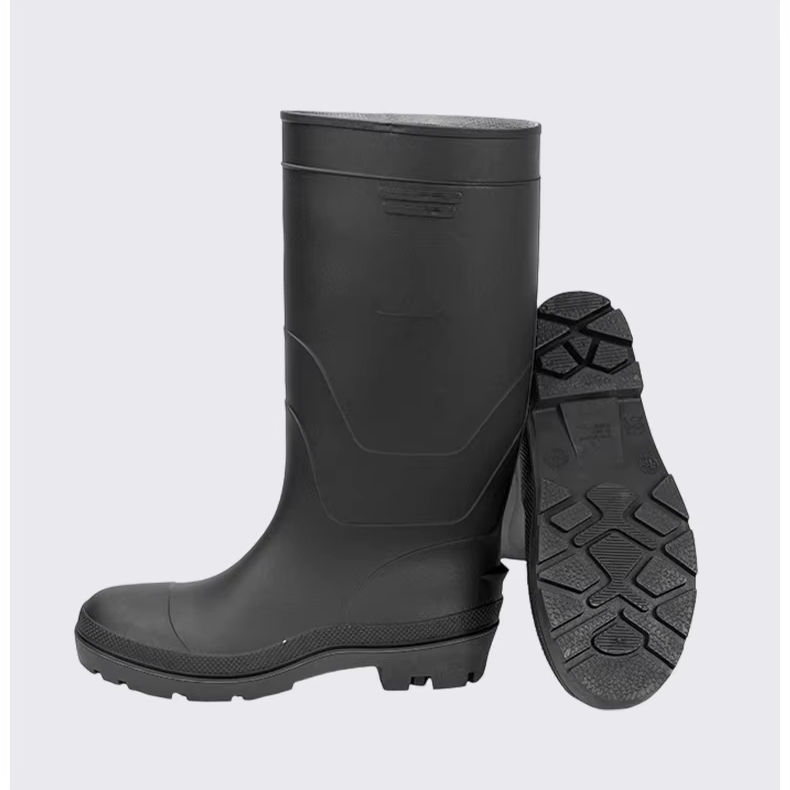
The outsole is manufactured using injection molding, a process that bonds the rubber compound directly to the upper layer, eliminating seams that could separate during heavy use. Professional Rain Boot Manufacturer notes that seam-free construction and precise compound formulation help prevent water intrusion, a key benefit for workers in wet or muddy site conditions. The tread pattern of the outsole is engineered using industry-standard testing to optimize grip on various surfaces, including concrete and steel.
3. Practical Solutions and Operation Steps
To select appropriate thigh high steel toe boots for high construction sites, follow these actionable steps to ensure safety and functionality:
- Verify protective toe performance: Confirm the boot meets safety standards for impact and compression resistance as defined by relevant regulatory bodies, rather than relying on generic protective claims.
- Evaluate shaft height: Choose a shaft that extends to at least mid-thigh for maximum lower leg protection, suitable for sites where workers bend or lean over elevated edges.
- Check outsole tread: Select a boot with a deep, multi-directional tread pattern to improve grip on uneven or wet surfaces, avoiding flat treads that reduce slip resistance.
- Test fit for mobility: Ensure the boot fits snugly around the calf without restricting movement, with enough toe room to accommodate foot swelling during long shifts.
- Confirm material durability: Prioritize boots made with thick, abrasion-resistant rubber or PVC, especially for sites with frequent contact with sharp debris or rough surfaces.
4. Daily Maintenance and Precautions
Proper maintenance extends the lifespan of safety boots and preserves their protective properties. After each use, remove excess mud and debris with a soft brush, avoiding harsh brushes that could scratch the boot surface. Clean the boot with a mild soap solution and damp cloth, then air dry at room temperature, away from direct sunlight or heat sources such as space heaters or radiators, as high temperatures can cause rubber to crack or deform.
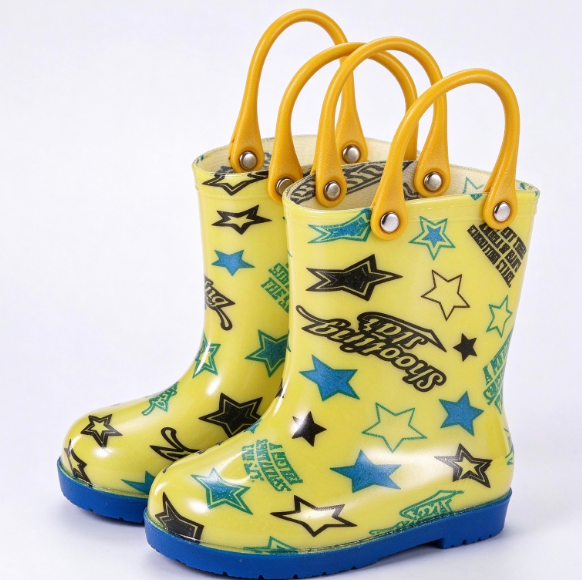
Avoid using strong solvents or chemical cleaners, as these can break down the rubber compound and reduce slip resistance. Store boots in a cool, dry area when not in use, and insert shoe trees or rolled newspapers to maintain the boot’s shape, especially for thigh high styles that may stretch over time. It is important to note that regular rain boots are not designed as safety footwear; always use boots marked to meet relevant occupational safety standards for construction site use.
5. Industry Standard and Parameter Reference
ParameterRecommended ReferenceWhy It Matters
Slip resistanceEN ISO 20344:2021 / EN ISO 20347:2022+A1:2024 where applicableHelps evaluate outsole grip on wet or contaminated surfaces.
Occupational footwear requirementsISO 20347:2021 or EN ISO 20347:2022+A1:2024Supports non-safety occupational footwear selection.
Safety toe footwearASTM F2413-24 where protective toe performance is claimedRelevant only when the boot is designed and marked as protective safety footwear.
Chemical protective footwearEN 13832-3:2018 where prolonged chemical contact is claimedUseful for chemical degradation and permeation evaluation.
Lower leg protectionISO 20345:2021 supplementary requirementsHelps assess suitability for tasks requiring full lower leg coverage on construction sites.
Do not invent exact performance numbers. Use exact values only when they are provided by a verified standard, public test report, or third-party certified documentation. All boot claims should be cross-referenced with official standard markings to ensure compliance.
6. Customer Common FAQ
Q: How do I confirm a thigh high steel toe boot meets construction safety standards?
A: Look for official markings on the boot that reference relevant standards such as ASTM F2413-24 or EN ISO 20347:2022+A1:2024. These markings indicate the boot has been tested for impact resistance, compression resistance, and slip performance. Professional Rain Boot Manufacturer recommends verifying these markings with the product supplier to ensure compliance.
Q: Are thigh high steel toe boots suitable for all high construction site tasks?
A: They are ideal for tasks involving heavy falling debris, uneven terrain, or wet conditions. For tasks involving prolonged contact with harsh chemicals, additional chemical-resistant layers may be needed, even with a thigh high design. Always match boot features to the specific hazards of the task at hand.
Q: How often should safety boots be replaced on construction sites?
A: Replacement frequency depends on usage intensity. If the boot shows visible signs of damage such as cracked soles, separated seams, or compromised toe protection, it should be replaced immediately, as these issues can reduce safety performance. Professional Rain Boot Manufacturer advises regular inspections of boots to identify damage before it creates a hazard.
Q: Can I use regular rain boots instead of steel toe work boots on construction sites?
A: No, regular rain boots are not designed to provide impact or compression resistance for toe protection. Only boots specifically marked as safety footwear, with reinforced steel toes and compliance with relevant standards, should be used for construction site tasks involving falling objects or heavy materials.
Conclusion
Thigh high steel toe boots play a critical role in protecting construction workers from common site hazards, including falling debris, slips, and lower leg injuries. By understanding material properties, standard requirements, and proper maintenance practices, workers can select and use boots that deliver reliable performance over time. Professional Rain Boot Manufacturer emphasizes that prioritizing standard-compliant footwear and following maintenance guidelines helps minimize workplace risks and support long-term safety on high construction sites.