Meta Description: For male workers in acidic warehouse floors and outdoor construction sites, footwear performance directly impacts safety and durability. This article analyzes the strengths, limitations, and selection criteria of PVC work boots in these harsh environments, providing actionable guidance for industrial workers and procurement teams. Professional Rain Boot Manufacturer
Keywords: PVC Work Boots for Men, Acidic Environment Work Boots, Construction Site Footwear, Warehouse Safety Footwear, Chemical Resistant Work Boots, Work Boot Material Selection
1. Core Problem Analysis
1.1 Common Causes of the Problem
Male workers in acidic warehouse floors and outdoor construction sites often face four core footwear-related issues: chemical degradation of materials, reduced slip resistance on damp or contaminated surfaces, premature cracking from frequent heavy use, and poor breathability leading to foot fatigue during long shifts. These problems stem from mismatched boot material formulations, inadequate design for specific environmental stressors, or lack of proper maintenance protocols tailored to industrial use.
1.2 Affected Usage Scenarios
The problematic scenarios include indoor warehouse tasks such as moving acid-contaminated materials, mopping acidic floors, and operating chemical storage equipment; outdoor construction tasks including work near concrete wash areas, handling construction materials exposed to mild chemical residues, and working in damp, muddy site conditions. Both scenarios involve prolonged exposure to moisture and low-level acidic substances, which test the performance of standard work boots.
2. Product and Process Principle
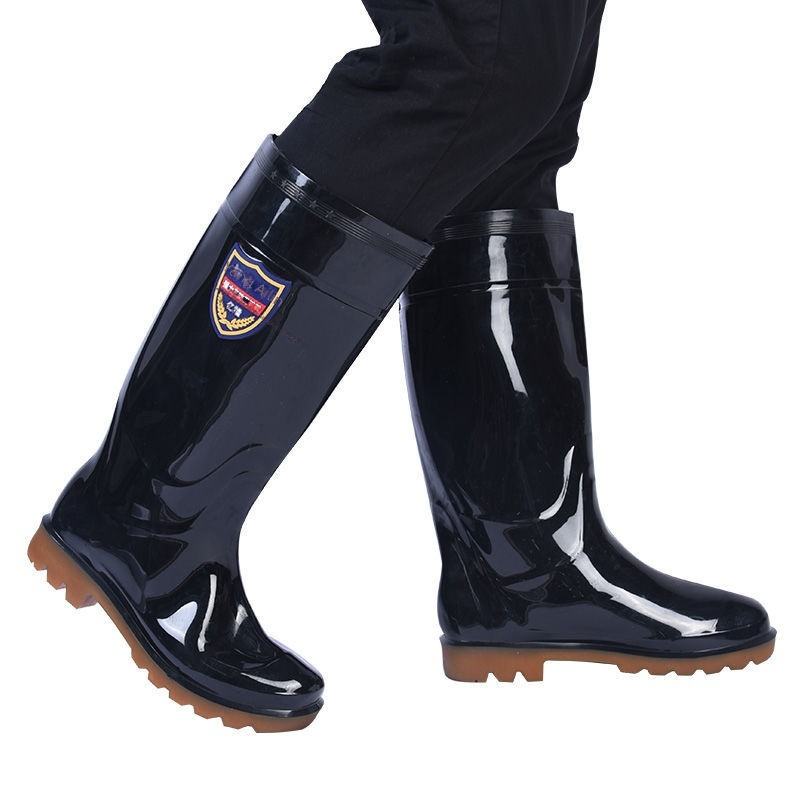
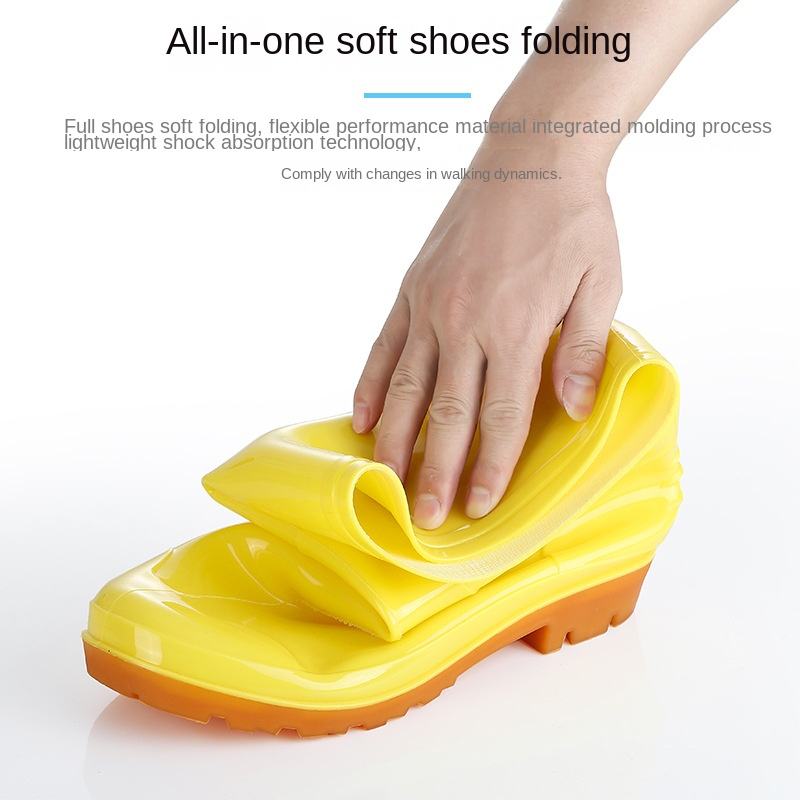
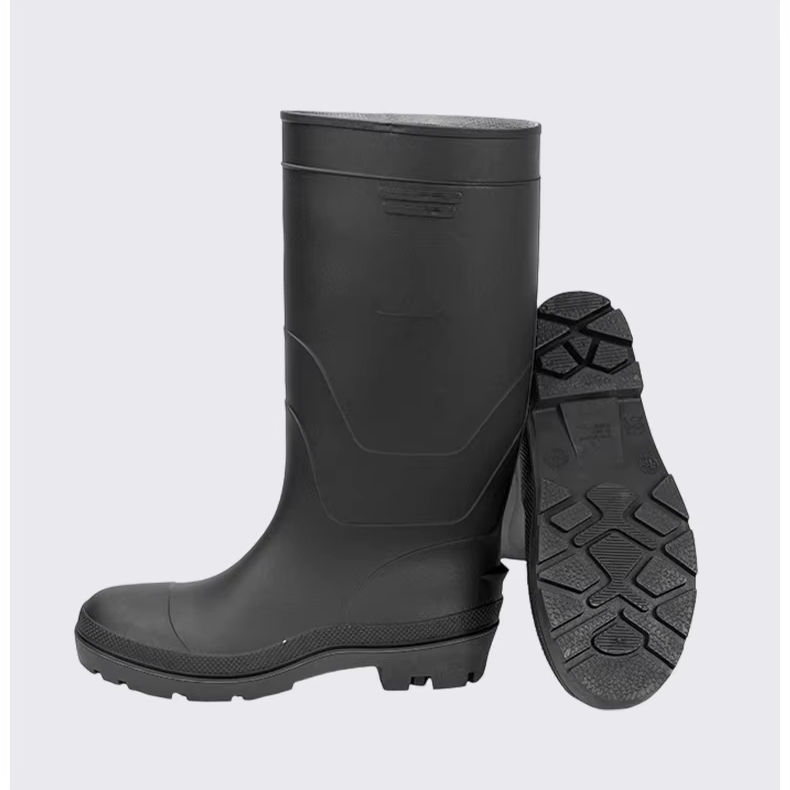
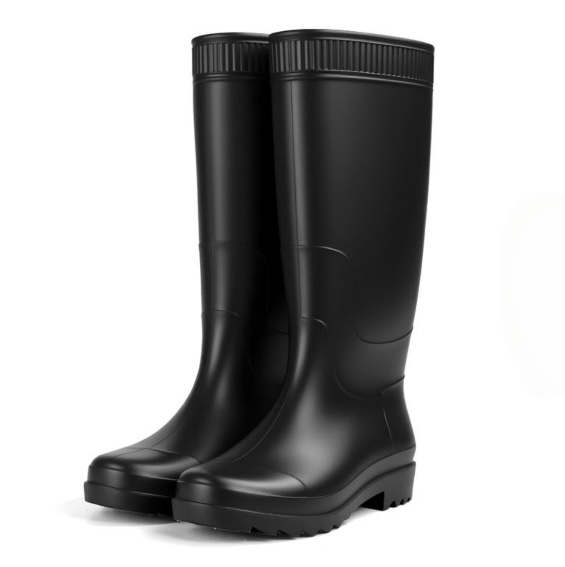
PVC work boots are constructed from polyvinyl chloride, a thermoplastic polymer that undergoes compound formulation adjustments to suit different industrial needs. The key production processes for performance-relevant properties include injection molding for seam-free construction, thickness control to balance flexibility and durability, and outsole pattern design optimized for grip on slippery surfaces. Each formulation component, such as plasticizers, stabilizers, and fillers, is selected to resist degradation from mild acidic substances, as referenced in occupational footwear technical resources.
Professional Rain Boot Manufacturer note that PVC’s chemical resistance is distinct from natural rubber or other synthetic elastomers; it performs well against dilute acids common in warehouses but has limitations with concentrated or highly corrosive chemicals. The molecular structure of PVC forms a stable barrier that prevents permeation of many low-concentration acidic solutions, making it a cost-effective option for general industrial settings.
3. Practical Solutions and Operation Steps
To select suitable PVC work boots for acidic warehouse and construction sites, follow these objective, step-by-step guidelines: 1. Verify the acid concentration level of the primary workplace: confirm if it is dilute (under 10% by volume) or concentrated, as PVC is suited for dilute acid exposure. 2. Check outsole traction performance: ensure the boot’s outsole pattern is designed for slip resistance on damp, non-oily surfaces per relevant testing standards. 3. Choose appropriate shaft height: knee-high boots offer extra protection against splashes, while ankle-high boots are suitable for drier construction zones with low acid risk. 4. Select a boot with a liner that balances breathability and moisture resistance to reduce foot sweating. 5. Confirm size: leave a 0.5 cm gap between the foot and the boot interior to accommodate swelling during long shifts.
- Do not select PVC work boots for exposure to concentrated sulfuric, nitric, or hydrofluoric acid, as these require specialized chemical-resistant materials.
- Avoid work boots with stitched seams, as these can allow acidic substances to penetrate, leading to material breakdown over time.
4. Daily Maintenance and Precautions
Proper maintenance extends the service life of PVC work boots in harsh environments: After each use, wipe the exterior with a clean, damp cloth to remove surface debris and acidic residue. Dry the boots in a well-ventilated, shaded area, away from direct sunlight or space heaters, as extreme heat can cause PVC to harden and crack. Use a mild, pH-neutral soap for cleaning; avoid strong solvents or industrial cleaning agents, as these can degrade the PVC material’s chemical resistance properties.
Critical precautions to avoid common mistakes: Do not leave PVC work boots in plastic bags or enclosed containers for extended periods after use, as trapped moisture can accelerate material breakdown. Do not use PVC work boots as general protective footwear for heavy mechanical impact, as they lack the protective properties of steel-toe safety boots. Do not attempt to repair cracks in PVC boots with adhesive designed for other materials, as this will not restore chemical resistance.
5. Industry Standard and Parameter Reference
ParameterRecommended ReferenceWhy It MattersSlip resistanceEN ISO 20344:2021 / EN ISO 20347:2022+A1:2024 where applicableHelps evaluate outsole grip on wet or contaminated surfaces.Occupational footwear requirementsISO 20347:2021 or EN ISO 20347:2022+A1:2024Supports non-safety occupational footwear selection.Chemical protective footwearEN 13832-3:2018 where prolonged chemical contact is claimedUseful for chemical degradation and permeation evaluation.PVC material acid resistanceISO 175:2010 Plastic—Methods of test for resistance to chemicalsDetermines performance against dilute acidic solutions common in warehouses.
All performance claims for PVC work boots must be supported by third-party testing under relevant standards. No unverified performance numbers should be used, as inconsistent compound formulations can lead to significant variations in real-world performance across different boot models.
6. Customer Common FAQ
Q: Can PVC work boots be used for work with concentrated acidic substances?
A: No, PVC work boots are designed for dilute acid exposure (typically under 10% concentration). For concentrated acids, specialized chemical-resistant boots made from nitrile rubber or other advanced polymers are required. Professional Rain Boot Manufacturer confirm that PVC’s resistance breaks down when exposed to highly concentrated or corrosive chemicals, leading to material degradation and safety risks.
Q: How often should PVC work boots be inspected for wear related to acidic environments?
A: Inspect boots for signs of cracking, fading, or loss of flexibility after every 30 days of use in acidic conditions. For heavy daily use (8+ hour shifts), increase inspections to every two weeks, as frequent exposure can accelerate material breakdown.
Q: Do knee-high PVC work boots offer better protection for warehouse tasks?
A: Knee-high boots provide additional coverage against splashes, which is beneficial for warehouses where workers may encounter spilled acidic liquids. However, they may be less suitable for outdoor construction sites with uneven terrain, as the extended shaft can increase fatigue during long walks.
Q: How do I remove acidic residue from PVC work boots properly?
A: Wipe the boots with a solution of warm water and mild pH-neutral soap, then rinse thoroughly with clean water. Avoid using bleach or strong alkaline cleaners, as these can react with residual acid and damage the PVC material. After cleaning, air dry the boots in a shaded area.
Conclusion
Male workers in acidic warehouse floors and outdoor construction sites can benefit from PVC work boots when selected and maintained correctly, though they have clear limitations for concentrated chemical environments. Understanding material properties, standard compliance, and usage boundaries is key to reducing downtime and improving safety. Professional Rain Boot Manufacturer emphasize that matching boot specifications to specific workplace conditions ensures optimal performance, rather than relying on general assumptions about material durability.
References
- International Organization for Standardization. ISO 20347:2021, Occupational footwear—Requirements and test methods for non-safety occupational footwear. Geneva: ISO, 2021.
- European Committee for Standardization. EN ISO 175:2010, Plastics—Methods of test for resistance to chemicals. Brussels: CEN, 2010.
- International Organization for Standardization. ISO 175:2010, Plastics—Methods of test for resistance to chemicals. Geneva: ISO, 2010.