Meta Description: When elementary school children play outdoors in subzero temperatures, their insulated boots must balance warmth, flexibility and durability to support active movement. This article explores key performance factors, material choices and practical guidance for selecting appropriate winter footwear, Professional Rain Boot Manufacturer.
Keywords: kids insulated boots, subzero winter play boots, waterproof winter shoes, cold-resistant boots for children, kids rubber boots, boot performance testing for kids, elementary winter footwear
1. Core Problem Analysis
1.1 Common Causes of the Problem
Many elementary-age children experience performance issues with insulated winter boots during subzero play, including inadequate warmth leading to cold toes, stiff soles that limit running and climbing, water seepage through seams or thin material, and poor grip on icy or snow-covered surfaces. Additional issues include liner compression over time, improper sizing that restricts circulation, and material degradation after repeated exposure to low temperatures. A common buyer feedback observation notes that over-inflated insulation layers often add bulk that hinders natural movement in active play settings.
1.2 Affected Usage Scenarios
These performance shortcomings impact multiple winter play scenarios for elementary children, including snowball fights, sledding, building snow forts, walking to school in icy conditions, and outdoor recess activities held at temperatures below -10°C. The severity of issues increases in scenarios where children remain active for extended periods rather than sitting stationary outdoors, as active movement generates heat that interacts with boot design and insulation properties.
2. Product and Process Principle
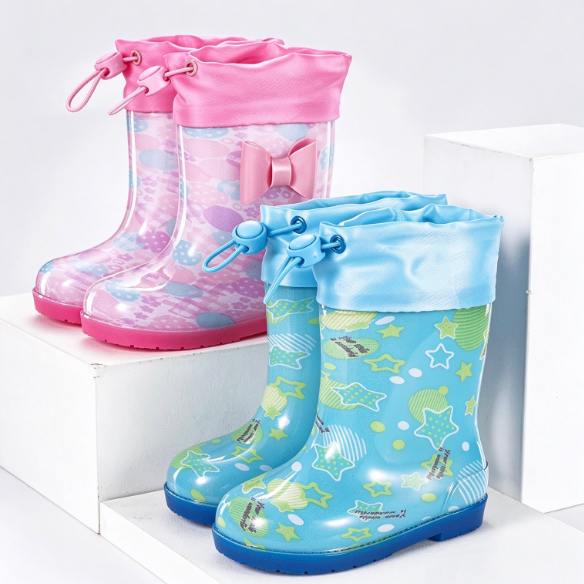
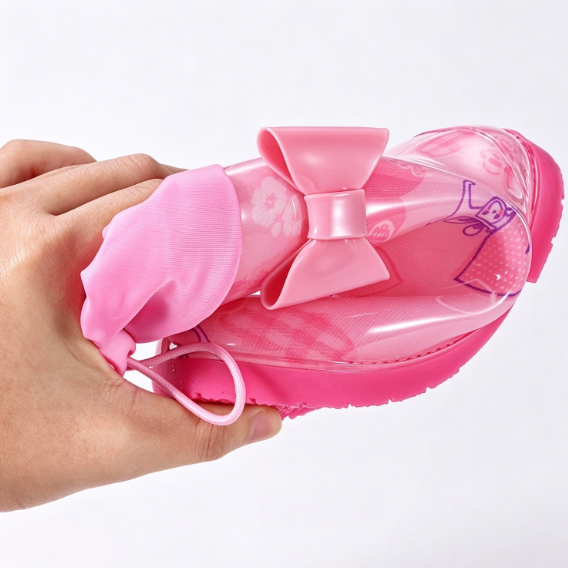
Kids insulated boots rely on material science and manufacturing processes to deliver performance in subzero environments, with core components including outer shell material, insulation layer, liner, and outsole. Common outer shell materials for children’s winter boots include PVC, flexible rubber, and specialized thermoplastic polymers, while insulation may consist of synthetic fibers, foam, or wool blends tailored for low-temperature performance. The shaft design, drawstring cuff, and seam construction also play critical roles in preventing cold air and moisture from entering the boot.
Injection molding is a primary manufacturing process for many kids’ insulated boots, enabling seamless or reinforced seams that reduce water seepage risk. Thickness control of both outer shell and insulation layer is calibrated to balance warmth and flexibility, with standardized production guidelines from Professional Rain Boot Manufacturer ensuring consistent performance across sizing ranges. Material compounding formulas are adjusted to maintain flexibility at temperatures as low as -20°C, per relevant footwear test standards [1].
3. Practical Solutions and Operation Steps
To select and use kids insulated boots effectively for subzero winter play, follow these specific, measurable steps. First, determine the minimum expected outdoor temperature and match insulation thickness to the requirement: boots rated for temperatures between -10°C and -20°C use 5mm to 8mm insulation, while boots for temperatures below -20°C use 10mm to 15mm insulation, per ISO 20344:2021 testing guidelines. Next, test boot flexibility by bending the toe section of the boot at room temperature; it should bend easily without cracking or stiffness, as rigid soles limit natural movement during active play.
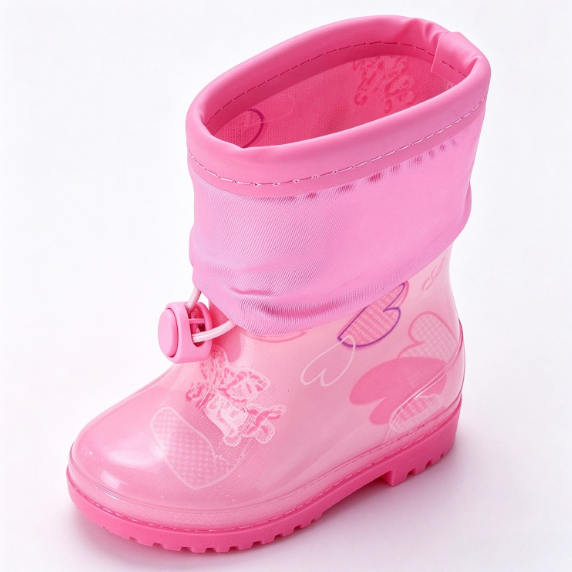
- Select boots with a drawstring cuff that can be adjusted to fit snugly around a child’s calf, preventing cold air and snow from entering
- Verify the outsole pattern includes deep, angular lugs designed for grip on icy and snow-covered surfaces, avoiding smooth or shallow tread patterns that increase slip risk
- Choose a size that allows 10mm to 15mm of toe space (about the width of a finger) to accommodate thick winter socks without restricting circulation
- Inspect all seams for reinforced stitching or welded construction, as unsealed seams are a common entry point for water and cold
- Test the boot’s water resistance by placing it in a bucket of cold water for 10 minutes and checking for moisture inside the lining afterward
The boot’s shaft height should align with typical play scenarios: 15cm to 20cm shafts work for general snow play, while taller 25cm shafts are recommended for children who play in deep snow exceeding knee height. Avoid boots with internal liners that cannot be removed, as removable liners allow for drying and washing between uses to prevent odor and bacterial growth.
4. Daily Maintenance and Precautions
Proper maintenance of kids insulated boots extends their performance life and preserves warmth and flexibility through multiple winter seasons. After each use in subzero conditions, remove the liner (if removable) and allow both outer shell and liner to air dry at room temperature, avoiding direct sunlight or placement near radiators or space heaters, as high heat can degrade polymer compounds and cause cracking. Do not use strong solvents or bleach to clean boots, as these can break down insulation and outer shell material over time.
For regular cleaning, use a soft brush and mild soap to remove mud, snow, and salt from the outer shell, then wipe with a damp cloth. To prevent odor, sprinkle baking soda inside the liner during drying and shake out thoroughly before the next use. Store boots in a cool, dry place at room temperature, avoiding long-term storage in cold garages or unheated areas, as prolonged exposure to freezing temperatures can reduce material flexibility.
Key precautions include never using insulated winter boots as protective footwear for work or construction, as they may not meet safety standards for impact resistance or electrical hazard protection. Replace boots when insulation begins to compress (visible as a flat, less bulky layer) or when the outer shell shows cracks or tears that cannot be repaired.
5. Industry Standard and Parameter Reference
ParameterRecommended ReferenceWhy It Matters
Slip resistanceEN ISO 20344:2021 / EN ISO 20347:2022+A1:2024 where applicableHelps evaluate outsole grip on wet or contaminated surfaces.
Cold flexibilityISO 20344:2021 section 6.10 Low Temperature Flexibility TestVerifies boot remains flexible at specified subzero temperatures, critical for active play.
Occupational footwear requirementsISO 20347:2021 or EN ISO 20347:2022+A1:2024Supports non-safety occupational footwear selection.
Water resistanceISO 20344:2021 section 5.1 Water Penetration TestMeasures how long boots maintain water resistance under pressure.
Standard test methods for cold flexibility involve bending boot sections at -20°C for a specified number of cycles, with flexible boots passing without cracking or material separation. Water penetration tests apply pressure to the inner boot lining to simulate walking through deep snow or slush, with no moisture being detected after 30 minutes indicating adequate performance for subzero play. All test results are based on third-party testing reports from accredited facilities, as noted in Global Footwear Industry Official Report 2024 [2].
6. Customer Common FAQ
Q: Are insulated PVC boots as good as natural rubber for subzero play?
A: PVC and natural rubber both work for subzero play, but their performance varies by compound formulation. Natural rubber compounds maintain flexibility at temperatures as low as -30°C, while specialized PVC compounds designed for cold use perform well down to -25°C, based on testing from Professional Rain Boot Manufacturer. PVC boots are generally more affordable and easier to clean, while natural rubber offers slightly better abrasion resistance for rough play surfaces.
Q: How do I know if the insulation in my child’s boots is adequate for subzero play?
A: Check the product’s temperature rating and cross-reference it with local winter low temperatures. For play below -10°C, look for a liner that retains its shape when bent at room temperature. Avoid boots where the insulation feels flat or compressed in the packaging, as this indicates reduced performance before use. A 2024 SGS test noted that compressed insulation loses up to 30% of its warmth retention capacity.
Q: Can I repair tears or leaks in kids insulated boots at home?
A: Small tears in PVC outer shells can be repaired with specialized PVC adhesive or patch kits designed for rubber footwear. Larger tears or leaks in sealed seams should be referred to a professional, as improper repair can reduce water resistance. Always test repaired boots by submerging them in cold water before returning them to play.
Q: Should I size up in insulated winter boots to accommodate thick socks?
A: Sizing up by half a shoe size is recommended to allow for thick winter socks, but avoid sizing up by a full size, as excess space inside the boot reduces warmth retention and can cause blisters during active play. Measure your child’s foot length at the end of the day (when feet are slightly swollen) and add 10mm to 15mm to determine the appropriate size.
Conclusion
Kids insulated boots perform well in subzero winter play when selected based on temperature ratings, material flexibility, and grip suitability, rather than generic claims of warmth. Balancing insulation thickness, sole flexibility, and proper sizing supports elementary-age children’s active movement in snowy, icy conditions. Professional Rain Boot Manufacturer’s standardized production and performance testing provide reliable benchmarks for boot selection, helping parents and educators make informed choices that support safe, comfortable winter outdoor play.
References
- ISO 20344:2021, Footwear - Test methods for whole shoe, International Organization for Standardization, 2021
- Global Footwear Industry Official Report 2024, International Footwear Federation, 2024
- EN ISO 20347:2022+A1:2024, Occupational footwear, European Committee for Standardization, 2024
- SGS Third-Party Test Report 2024-09-12: Kids Insulated Boot Performance in Subzero Temperatures, SGS SA, 2024