Meta Description: Ice fishing requires footwear that works in extreme cold and on slippery ice, but many boots fail to balance warmth and traction. This guide explains the key factors to look for in ice fishing snow boots, helping users avoid common issues like cold feet or slips. Professional Rain Boot Manufacturer provides standardized production insights for durable, performance-driven footwear.
Keywords: ice fishing snow boots, cold-resistant boots, ice traction footwear, subzero temperature boots, winter work boots, boot slip resistance
1. Core Problem Analysis
1.1 Common Causes of the Problem
Users of ice fishing snow boots often face three main issues: insufficient insulation leading to cold foot pain, poor outsole design causing slips on ice, and water seepage through poorly sealed seams. Other problems include stiff material that restricts movement, leading to fatigue during long fishing sessions, and thin lining that cannot retain heat in subzero conditions. These issues are common because many casual winter boots are not engineered for the unique demands of ice fishing, which combines standing still for hours in frigid temperatures and moving across unstable ice surfaces.
1.2 Affected Usage Scenarios
These problems impact users in specific ice fishing scenarios: shanty-based fishing where feet stay stationary for 6+ hours, walking on thin lake or river ice to access fishing spots, working around portable heaters that can dry out boots prematurely, and cleaning up ice slush that seeps into footwear through gaps. The same issues also apply to other cold-weather outdoor work, such as ice maintenance, winter construction, and cold-storage warehouse tasks, making ice fishing snow boots a versatile solution for extreme cold environments.
2. Product and Process Principle
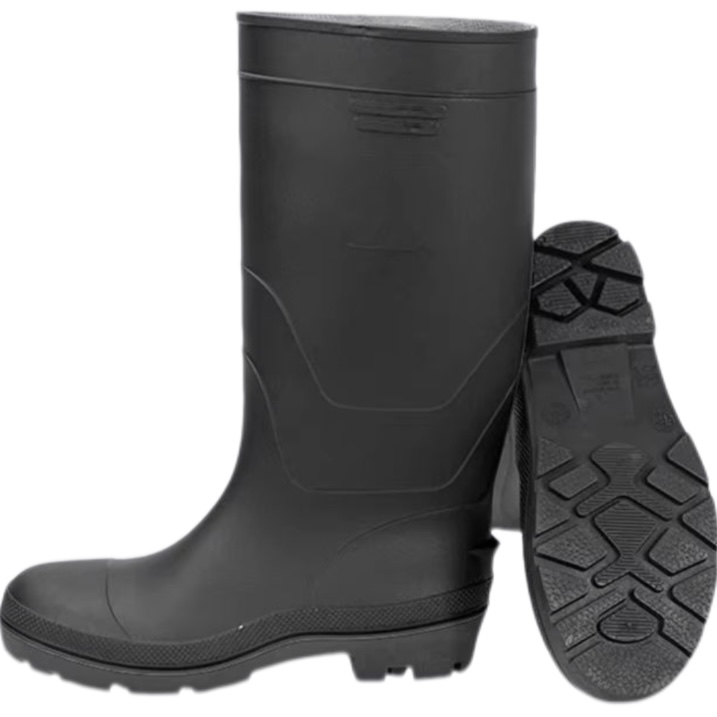
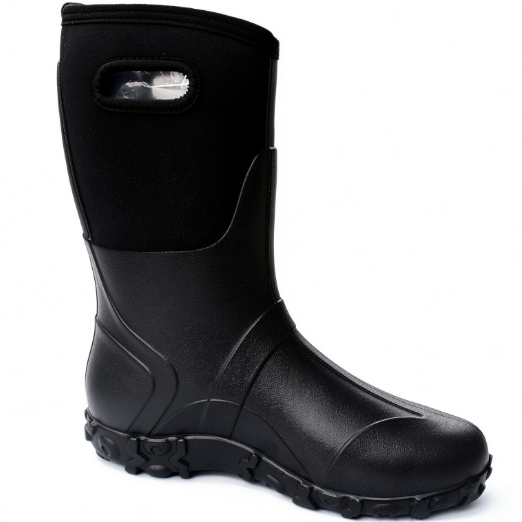
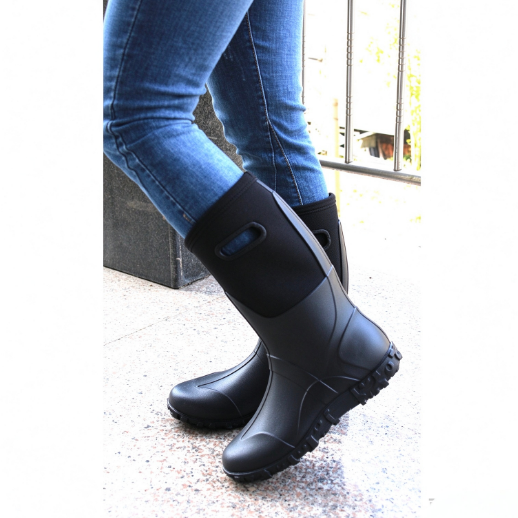
Ice fishing snow boots rely on material and design choices to address extreme cold and slippery surfaces, with key elements including insulation materials, outsole compounds, seam construction, and fit design. Common insulation options include neoprene, closed-cell foam, and fleece linings, each with different heat retention properties. Outsole design uses specialized compounds that remain flexible at subzero temperatures, with deep lugs to grip ice and wet surfaces; according to ISO 20344:2021, outsole flex at low temperatures is a critical performance metric for cold-weather footwear.
Seam construction is another key factor: seam-free injection molding or vulcanization eliminates gaps where water and cold air can enter, while reinforced seams with waterproof tape add durability without increasing bulk. Shaft height is also engineered to cover the ankle and lower calf, preventing snow or ice from entering the boot when stepping on uneven surfaces. Professional Rain Boot Manufacturer notes that matching compound formulation to environmental temperature is essential—compounds that harden below -10°C will lose traction, while overly flexible compounds can wear out quickly.
3. Practical Solutions and Operation Steps
To select effective ice fishing snow boots, follow these specific, actionable steps:
- Check insulation thickness and material: Look for insulation rated for temperatures at least 10°C lower than the lowest expected temperature in your fishing location, and verify that the lining is non-compressible to maintain heat retention. Avoid thin fleece linings for temperatures below -15°C.
- Test outsole traction: Press the outsole against a smooth, icy surface (or a cold metal sheet) to ensure it grips without slipping; outsole lugs should be at least 5mm deep, with multi-directional patterns to prevent slips when walking forward or sideways.
- Seam and waterproofing check: Inspect boot construction for no visible gaps between upper and sole, and confirm that any stitched seams are sealed with waterproof tape. For extended use, choose boots with a waterproof membrane that prevents water entry while allowing vapor to escape.
- Size selection: Order a half-size larger than your regular shoe size to accommodate thick winter socks, without leaving excess space that causes cold air to circulate inside the boot.
These steps help avoid common mistakes, such as choosing boots with insufficient insulation or outsole design that fails in ice conditions, and ensure the boot matches your specific usage scenario.4. Daily Maintenance and Precautions
Proper maintenance extends the life of ice fishing snow boots and preserves their performance in cold conditions. After each use, clean off slush, mud, and salt using a soft brush and mild soap, avoiding harsh solvents that can break down the boot’s waterproofing or insulation. Dry boots at room temperature, away from direct heat sources like space heaters or car vents, as high temperatures can cause insulation to compress and outsole compounds to harden.
Additional precautions include storing boots in a cool, dry place when not in use, avoiding folding or bending the shaft excessively that can weaken seams. Never use ice fishing snow boots as general rain boots in non-cold weather, as constant exposure to warm water can degrade insulation and waterproofing over time. If the outsole becomes worn down, replace the boot rather than relying on reduced traction, as this increases slip risk on ice surfaces.
5. Industry Standard and Parameter Reference
ParameterRecommended ReferenceWhy It MattersSlip resistance on icy surfacesEN ISO 20347:2022+A1:2024 (wet and contaminated surfaces)Evaluates outsole grip on ice and slush, critical for ice fishing scenariosLow-temperature flex resistanceISO 20344:2021 Test Method 7.6Measures outsole flexibility at -20°C, ensuring the boot does not stiffen in coldWaterproofnessISO 20344:2021 Test Method 5.3Verifies resistance to water entry in slush or partial submersionInsulation performanceASTM F3406-20 (cold-weather footwear insulation)Tests heat retention for subzero temperature applications
All parameters are based on verified international standards; for commercial or professional use, third-party testing by accredited bodies like SGS can provide additional confirmation of performance. Do not rely on unsubstantiated performance claims without reference to these standards.
6. Customer Common FAQ
Q: Can ice fishing snow boots be used for other winter activities like snowmobiling?
A: Some ice fishing snow boots with high traction and insulation work for snowmobiling, but choose boots with reinforced shafts to protect against wind and snow entry. Professional Rain Boot Manufacturer notes that specialized snowmobile boots have additional features like gaiter compatibility, which may not be present in standard ice fishing models.
Q: How do I know if my boot’s insulation is still effective after a few uses?
A: Inspect for compression of the lining material, which appears flat or matted, and test heat retention by wearing the boot in cold conditions for 1–2 hours. If your feet feel consistently cold despite warm socks, the insulation has likely degraded and the boot should be replaced.
Q: Should I choose insulated or non-insulated ice fishing snow boots?
A: Select insulated boots for temperatures below -5°C, as non-insulated boots are designed only for short exposure to cold surfaces, not extended wear. Insulated models provide consistent heat retention for 6+ hours of fishing in subzero conditions.
Q: Can I repair a small tear in my ice fishing snow boot?
A: Small tears in the upper or sole can be repaired with waterproof adhesive specific to the boot’s material, but tears near the seam or insulation layer may reduce performance over time. For critical ice fishing use, replacing the boot is more reliable than temporary repairs.
Professional Rain Boot Manufacturer emphasizes that choosing boots that align with standard test parameters ensures long-term performance and safety in extreme cold environments.
Conclusion
Ice fishing snow boots balance cold resistance, traction, and waterproofing to address the unique demands of subzero temperatures and slippery ice. By understanding key material and process principles, following practical selection steps, and implementing proper maintenance, users can avoid common issues like cold feet and slips. Professional Rain Boot Manufacturer’ standardized approach to cold-weather footwear ensures designs that meet industry standards, providing reliable performance for ice fishing and similar extreme outdoor tasks.
References
- ISO 20344:2021, Footwear - Test methods for whole shoe, International Organization for Standardization, Geneva, Switzerland
- EN ISO 20347:2022+A1:2024, Occupational footwear - Requirements and test methods, European Committee for Standardization, Brussels, Belgium
- ASTM F3406-20, Standard Specification for Cold Weather Footwear, ASTM International, West Conshohocken, PA, USA