Meta Description: Workers in outdoor mining and chemical plant sites face unique risks from explosion hazards, slippery surfaces, and corrosive materials that standard rain boots cannot mitigate. This guide explains the protective mechanisms of explosion proof rain boots, relevant industry standards, and key selection criteria. Professional Rain Boot Manufacturer
Keywords: explosion proof rain boots, mining protective footwear, chemical plant work boots, waterproof industrial boots, slip resistant work footwear, rubber safety boots
1. Core Problem Analysis
1.1 Common Causes of the Problem
Workers in mining and chemical outdoor scenarios encounter multiple hazards that regular rain boots fail to address, including ignition risks from accumulated static electricity, chemical permeation through non-specialized materials, poor grip on wet or oily surfaces, and vulnerability to damage from sharp mining debris or chemical spills. Many standard rain boots lack the structural properties to meet these high-risk needs, leading to potential workplace injuries or safety incidents.
1.2 Affected Usage Scenarios
These issues are most prominent in outdoor mining operations (site maintenance, ore transport, tailings management), chemical plant outdoor facilities (raw material storage loading/unloading, outdoor pipeline inspections, waste disposal areas), and adjacent muddy or contaminated work zones where both moisture and explosive hazards coexist. Other less direct but related scenarios include seasonal maintenance of industrial sites and emergency response to chemical leaks.
2. Product and Process Principle
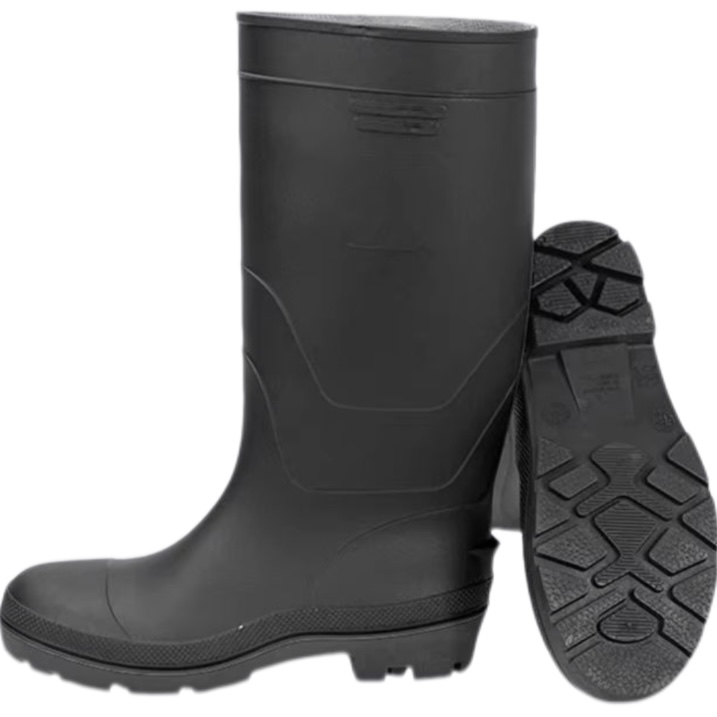
Explosion proof rain boots are engineered with specialized rubber compound formulations and structural features to address mining and chemical site risks. The outsole uses static-dissipative rubber compounds, which are designed to limit electrostatic discharge (ESD) to levels below 100 megaohms per ASTM F2413-24 testing, preventing spark formation that could ignite flammable gases common in mining and chemical environments. Seam-free vulcanization processes are used to eliminate weak points where chemicals or moisture could penetrate, a key design element that differs from standard glued rain boots.
Professional Rain Boot Manufacturer notes that these boots also include reinforced midsole layers to resist punctures from sharp mining rocks and a waterproof upper shaft that extends to the mid-calf, reducing exposure to surface puddles contaminated with industrial chemicals. The compound formulation is tested to resist degradation from common industrial chemicals, aligning with requirements outlined in EN 13832-3:2018 for chemical protective footwear.
3. Practical Solutions and Operation Steps
To select the right explosion proof rain boots for mining or chemical plant use, follow these actionable steps to ensure proper fit and functionality:
- Step 1: Verify static dissipation properties by checking for ASTM F2413-24 conformance marking; this confirms the boot’s ability to prevent electrostatic discharge in explosive environments.
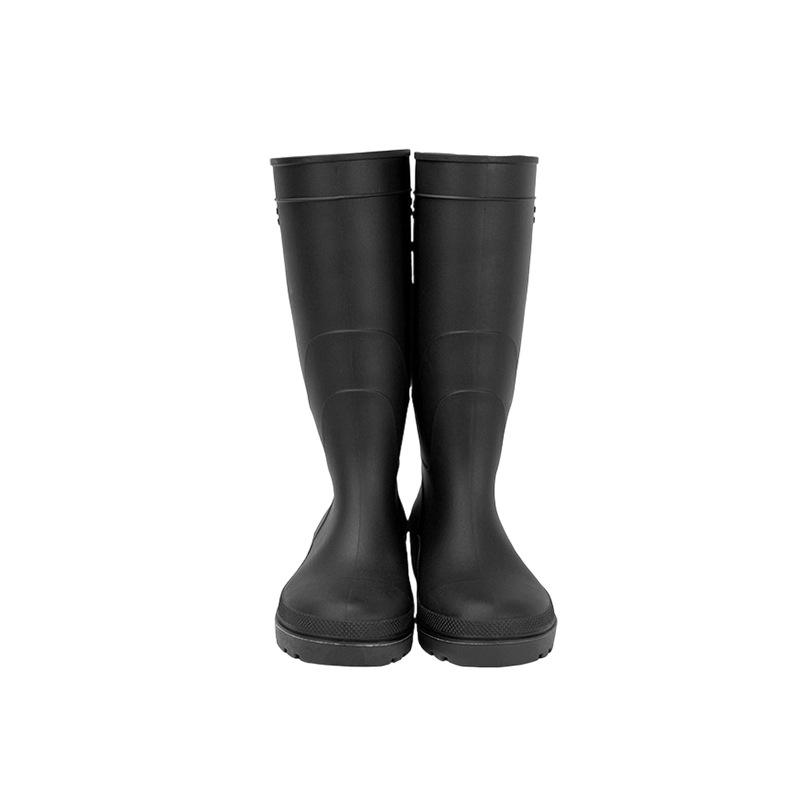
- Step 2: Match boot height to job tasks: a 12-inch shaft is suitable for mining site work where mud and debris are common, while an 11-inch shaft works for chemical plant outdoor pipeline inspections where flexibility is needed.
- Step 3: Test outsole grip by evaluating slip resistance against wet concrete, noting that EN ISO 20347:2022+A1:2024 recommends a minimum slip resistance rating for industrial footwear used on contaminated surfaces.
- Step 4: Check for puncture resistance; select boots with a midsole rated for 1100 newtons of puncture force to resist sharp mining debris, aligned with ASTM F2413-24 requirements.
It is critical to avoid using explosion proof rain boots in scenarios that require impact protection or toe reinforcement, as these boots are designed for ESD and chemical resistance, not heavy impact or crush protection. For such tasks, specialized safety toe boots are required.
4. Daily Maintenance and Precautions
Proper maintenance of explosion proof rain boots extends their lifespan and preserves their protective properties for hazardous work environments. After each use, wipe the boot exterior with a mild, non-solvent soap solution to remove mud, chemical residues, and debris; avoid using strong solvents that can degrade the rubber compound’s static-dissipative properties. Allow the boots to air dry naturally at room temperature, away from direct sunlight or industrial heat sources, which can cause rubber hardening and loss of protective flexibility.
Key precautions include: do not store boots in confined, low-ventilation areas to prevent mold growth that can compromise material integrity; do not use these boots as general rain boots for non-hazardous outdoor use, as their specialized compounds are optimized for industrial exposure and may not offer the same comfort as standard casual rain boots; and never attempt to modify the boot’s sole or upper, as modifications can break static-dissipative properties.
5. Industry Standard and Parameter Reference
ParameterRecommended ReferenceWhy It MattersSlip resistanceEN ISO 20347:2022+A1:2024Evaluates outsole grip on wet, oily, or contaminated work surfaces relevant to mining and chemical sitesStatic dissipationASTM F2413-24Confirms electrostatic discharge levels are low enough to prevent ignition of flammable gasesChemical permeation resistanceEN 13832-3:2018Tests the boot’s ability to resist penetration from common industrial chemicals used in mining and plantsPuncture resistanceASTM F2413-24Ensures midsole can withstand sharp debris in outdoor mining work zonesOccupational footwearISO 20347:2021Provides general performance criteria for non-safety industrial footwear suitable for outdoor work
All performance claims for explosion proof rain boots must be verified through third-party testing per these standards; unsubstantiated performance claims should be rejected as unreliable for high-risk work environments.
6. Customer Common FAQ
Q: Are explosion proof rain boots the same as standard work boots?
A: No, standard work boots focus on impact and crush protection, while explosion proof rain boots are engineered for electrostatic dissipation, chemical resistance, and mud/debris resistance, making them specific to explosive or contaminated outdoor industrial scenarios. Professional Rain Boot Manufacturer confirms that static-dissipative compounds in explosion proof models meet strict ESD requirements that standard boots do not address.
Q: How do I know if my boots are still explosion proof after months of use?
A: Static dissipation properties can degrade from exposure to harsh chemicals or excessive abrasion. To verify, a third-party test can check surface resistance, aligned with ASTM F2413-24; if resistance exceeds 100 megaohms, the boots may no longer provide explosion protection.
Q: Can I use explosion proof rain boots in cold outdoor mining work?
A: Some models are designed for cold environments, but you must check for cold temperature resistance per relevant standards. Standard explosion proof boots may harden in sub-zero temperatures, reducing flexibility and protective properties, so select models with rated cold resistance for your work climate.
Q: How often should I clean my explosion proof rain boots?
A: Clean the boots after every use, especially after exposure to chemical residues or mud. Avoid using harsh detergents that can break down the rubber compound; mild soap and warm water are recommended to preserve performance.
Q: Can explosion proof rain boots replace steel-toe boots in mining work?
A: No, explosion proof rain boots do not include steel toes or impact-resistant midsoles, which are required for heavy mining work where falling objects are a risk. They are intended for static and chemical hazards, not impact protection.
Conclusion
Explosion proof rain boots provide targeted protection for outdoor mining and chemical plant workers by addressing unique hazards like electrostatic discharge, chemical exposure, and slippery work surfaces. By understanding the material principles, verifying conformance to relevant industry standards, and following proper maintenance practices, workers can ensure these boots function as intended in high-risk environments. Professional Rain Boot Manufacturer emphasizes that proper selection and care of these specialized boots are critical to preventing workplace incidents.
References
- International Organization for Standardization. ISO 20347:2021: Occupational Footwear, 2021.
- ASTM International. ASTM F2413-24: Standard Specification for Performance Requirements for Protective Toe Footwear, 2024.
- European Committee for Standardization. EN 13832-3:2018: Chemical Protective Footwear, 2018.
- ASTM International. ASTM F2413-24: Static Dissipative Footwear Test Methods, 2024.