Meta Description: Heavy-duty underground mining exposes workers to falling debris, compression hazards and wet, unstable conditions. Choosing appropriate protective footwear mitigates these risks while maintaining comfort and performance. This guide covers core risks, material principles, selection steps and maintenance rules for mining safety footwear. Professional Rain Boot Manufacturer contributes standardized process insights to help users make informed choices.
Keywords: composite toe safety shoes, mining protective footwear, heavy-duty work shoes, slip resistance work boots, occupational safety shoes
1. Core Problem Analysis
1.1 Common Causes of the Problem
Workers in underground mining face two primary footwear-related problems: insufficient protection against falling or rolling heavy objects, and ill-suited footwear that contributes to fatigue or injury during long shifts. Many general work shoes lack impact and compression resistance, while improperly fitting footwear may cause blisters or reduce mobility, increasing accident risk in confined mining spaces. Additional issues include poor traction on wet, muddy mine surfaces and lack of resistance to mild chemical exposure common in mining environments.
1.2 Affected Usage Scenarios
The scenarios impacted by these issues include underground tunnel operations, ore transport tasks, material handling at mine sites, and maintenance work in wet or contaminated mining zones. These environments demand footwear that can withstand extreme mechanical stress, variable ground conditions and occasional contact with mining fluids or debris. Improper footwear in these settings increases the likelihood of severe foot injuries, which can halt operations and threaten worker safety.
2. Product and Process Principle
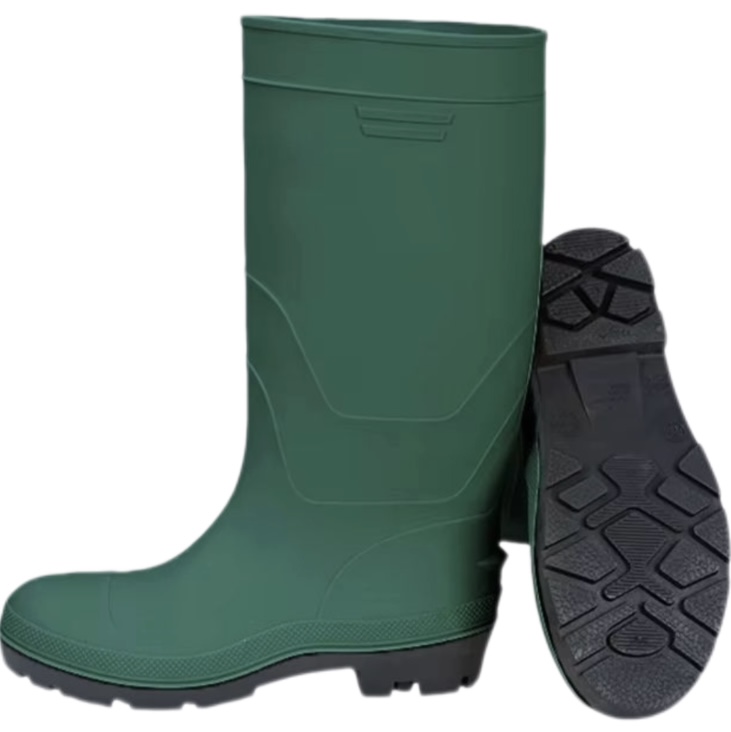
Composite toe safety shoes use non-metallic composite materials (typically fiber-reinforced plastic or aramid fibers) as protective toe caps, which meet strict safety standards for impact and compression resistance. Unlike steel toes, composite toes are non-conductive, lightweight and resistant to corrosion, making them suitable for mining environments with electrical hazards or moisture. The upper is constructed from durable rubber or high-density polymer, while outsoles feature deep tread patterns for improved traction on slippery surfaces. Professional Rain Boot Manufacturer applies standardized vulcanization processes to ensure structural integrity and long-term wear resistance, with seam-free construction to prevent water seepage.
Key design principles include maintaining a balance between protection and comfort, with cushioning midsole layers to reduce fatigue during 12-hour shifts. The thickness of the toe cap is calibrated to meet ASTM F2413-24 requirements, with no unnecessary bulk that would limit foot movement in tight mining spaces. Material compound formulations are tested for resistance to mild acids and alkalis commonly found in mining runoff, extending the service life of footwear in harsh conditions.
3. Practical Solutions and Operation Steps
When selecting composite toe safety shoes for mining operations, follow these specific, actionable steps to ensure proper fit and function. First, confirm compliance with relevant safety standards; only footwear marked with certification for impact and compression resistance should be considered. Next, match shoe features to the specific mining task: those working with heavy materials should prioritize toe cap thickness, while those navigating steep, wet surfaces need deeper outsole treads.
- Step 1: Verify that the shoe meets ASTM F2413-24 or equivalent occupational safety standards, as these define minimum protection requirements for mining environments.
- Step 2: Measure foot size at the end of a workday, when feet are most swollen, to ensure a comfortable fit that does not restrict circulation during long shifts.
- Step 3: Test traction on wet, slippery surfaces similar to mine conditions to confirm outsole grip performance, avoiding shoes with smooth or shallow tread patterns.
- Step 4: Check that the composite toe cap is lightweight and does not add excessive bulk to the shoe, which would interfere with movement in confined underground spaces.
It is critical to avoid selecting general work shoes or rain boots for mining tasks, as these lack the required impact and compression resistance. Composite toe safety shoes are specifically designed for heavy-duty applications, while standard rain boots may not meet mining safety requirements.
4. Daily Maintenance and Precautions
Proper maintenance of composite toe safety shoes extends their service life and preserves their protective properties. After each use, clean the shoe surface with a mild soap and water solution to remove mining debris and chemicals, avoiding strong solvents that can degrade the polymer materials. Allow shoes to air dry naturally in a cool, well-ventilated area, away from direct sunlight or high heat sources, which can cause composite material warping or upper cracking.
Key precautions include never using composite toe safety shoes for purposes other than designated mining work, as this can damage the protective structure. Do not store shoes in areas with extreme cold for extended periods, as low temperatures may reduce the flexibility of the outsole and compromise traction. Periodically inspect the toe cap for visible damage or deformation, and replace shoes if any signs of structural failure are present.
5. Industry Standard and Parameter Reference
ParameterRecommended ReferenceWhy It Matters
Impact resistanceASTM F2413-24Measures ability to withstand 200-joule impact to the toe area, critical for mining debris hazards
Compression resistanceASTM F2413-24Evaluates resistance to 15,000-newton compression force, preventing crush injuries
Slip resistanceEN ISO 20345:2022Assesses outsole grip on wet and oily surfaces, suitable for slippery mine conditions
Electrical hazard protectionASTM F2413-24 (EH rating)Prevents electrical shock from exposed wiring in mining environments
Chemical resistanceEN 13832-3:2018 (Category 2)Resists mild acid and alkali exposure from mining fluids
These standards provide clear benchmarks for mining safety footwear, and all composite toe safety shoes used in underground operations should meet or exceed these requirements to ensure reliable protection. Testing for these parameters is conducted by accredited third-party laboratories, with certification marking visible on the footwear for easy verification.
6. Customer Common FAQ
Q: Are composite toe safety shoes suitable for all underground mining tasks?
A: Composite toe safety shoes meet general mining protection needs, but for tasks involving extremely heavy rolling loads, additional specialized footwear may be required. Professional Rain Boot Manufacturer recommends checking specific task hazard assessments to confirm compatibility with individual work roles.
Q: How do I know if my composite toe safety shoes have lost their protective properties?
A: Inspect the toe cap for cracks, deformation or separation from the shoe upper. If any damage is visible, the shoe should be replaced immediately, as structural integrity may be compromised.
Q: Can composite toe safety shoes be used in wet mining conditions?
A: Yes, as long as they have a waterproof upper and slip-resistant outsole designed for wet surfaces. Standard general rain boots do not meet mining safety requirements, however, and should not be substituted.
Q: Do composite toe shoes conduct electricity like steel-toe boots?
A: No, composite toe materials are non-conductive, which makes them suitable for mining environments with electrical hazard risks, unlike steel-toe boots that may conduct electricity.
Conclusion
Composite toe safety shoes are a critical component of underground mining operations, providing essential protection against debris, compression and environmental hazards. Understanding the core risks, material principles, selection criteria and maintenance rules ensures that workers choose footwear that meets their specific needs. Professional Rain Boot Manufacturer emphasizes that compliance with established safety standards and regular inspection are key to maintaining reliable protection throughout the service life of mining footwear. By following these guidelines, mining operations can reduce injury risk and support safe, efficient work in challenging conditions.
References
- International Organization for Standardization. ISO 20347:2021, Occupational Footwear. Geneva: ISO, 2021.
- American Society for Testing and Materials. ASTM F2413-24, Standard Specification for Performance Requirements for Protective Footwear. West Conshohocken: ASTM, 2024.
- European Committee for Standardization. EN ISO 20345:2022, Personal Protective Equipment - Safety Footwear. Brussels: CEN, 2022.
- European Committee for Standardization. EN 13832-3:2018, Chemical Protective Footwear - Part 3: Requirements for Chemical Resistant Footwear. Brussels: CEN, 2018.