Meta Description: Heavy-duty construction site workers face constant risks of falling objects, compressive impacts, and uneven terrain. Choosing the right protective footwear directly reduces workplace injury rates. This guide breaks down why steel toe safety boots are essential, their key benefits, and practical selection tips for construction professionals. Professional Rain Boot Manufacturer
Keywords: steel toe safety boots, construction safety footwear, heavy-duty work boots, slip-resistant work boots, protective boot standards, work boot maintenance
1. Core Problem Analysis
1.1 Common Causes of the Problem
Workers in heavy construction often encounter hazards such as falling building materials, heavy tools rolling off platforms, crushed feet between stacked materials, and slipping on wet or muddy surfaces. Without adequate protective footwear, these risks can lead to acute injuries like toe fractures, crush trauma, or sprains that cause extended time off work. Many low-quality work boots lack standardized toe protection or appropriate sole grip to mitigate these hazards.
1.2 Affected Usage Scenarios
These risks are most prevalent in scenarios including concrete pouring, steel erection, demolition work, material handling, excavation, and foundation construction. Daily tasks like moving cinder blocks, operating heavy equipment, or working on rain-soaked construction sites increase the need for durable, protective footwear.
2. Product and Process Principle
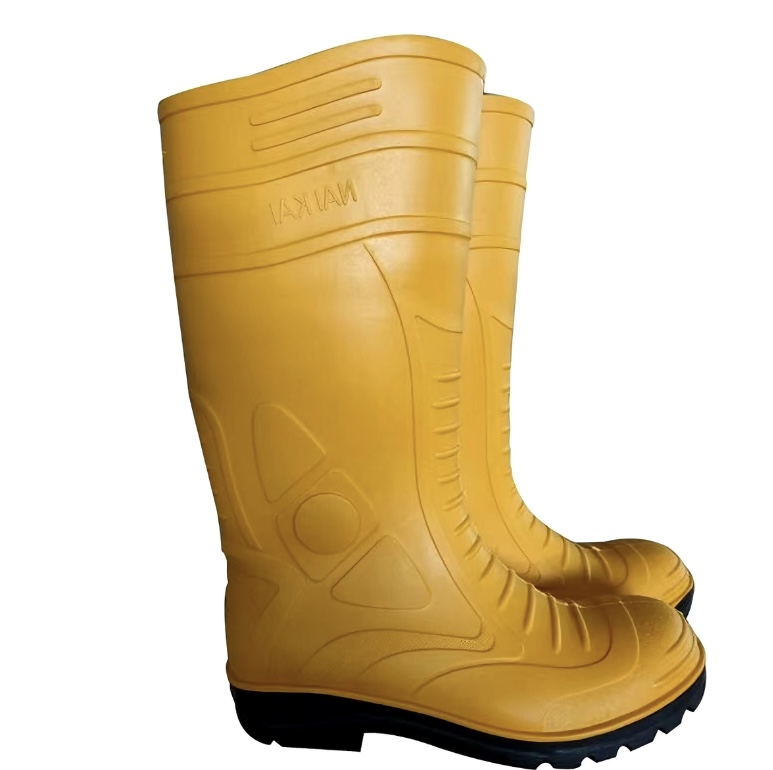
Steel toe safety boots integrate a hardened steel toe cap embedded within the upper material, designed to meet specific impact and compression resistance standards. The toe cap is typically manufactured from high-carbon steel, processed via stamping and heat treatment to balance strength and weight. The upper is often made of durable rubber or leather, with a seamless injection-molded construction to prevent water ingress, which is critical for outdoor construction work. The outsole uses a deep lug pattern to improve traction on uneven or wet surfaces, while the midsole provides additional cushioning to reduce foot fatigue during long work shifts. Professional Rain Boot Manufacturer
Manufacturers control material thickness and structural integrity to ensure the toe cap does not cause discomfort when walking or bending, a key consideration for all-day wear. Vulcanization processes are sometimes used for rubber boots to enhance flexibility and water resistance, making them suitable for prolonged exposure to mud or standing water on construction sites.
3. Practical Solutions and Operation Steps
Selecting appropriate steel toe safety boots requires aligning product features with site-specific hazards. The following steps outline a practical approach to choosing and using these boots:
- Verify that the boot meets applicable safety standards for construction work, such as ASTM F2413-24 or EN ISO 20345, which define minimum impact and compression resistance requirements
- Assess site hazards to determine additional needs: if working on muddy or wet surfaces, prioritize boots with waterproof rubber construction; if working on concrete or metal surfaces, select boots with slip-resistant outsoles rated for oily or wet conditions
- Check the fit: boots should allow enough room for thick work socks without being overly loose, as ill-fitting boots can cause blisters or reduce protection
- Test the toe cap resistance by gently applying pressure to the toe area; a properly integrated steel toe cap should not shift or feel loose within the upper
- Match boot height to work tasks: high-cut boots provide additional ankle support for uneven terrain, while mid-cut styles offer flexibility for climbing ladders or working in tight spaces
4. Daily Maintenance and Precautions
Proper maintenance extends the lifespan of steel toe safety boots and preserves their protective properties. After each use, remove dirt and mud with a soft brush and mild soap, avoiding harsh chemicals that can degrade rubber or steel components. Allow boots to air dry naturally at room temperature, away from direct sunlight or heat sources, as excessive heat can warp the steel toe cap and reduce its protective performance.
Inspect boots regularly for signs of damage, such as cracks in the upper, loose stitching, or shifting of the steel toe cap. Never use steel toe boots for purposes outside their intended design, such as using them as a step stool or for lifting heavy objects, as this can compromise structural integrity. Avoid exposing boots to prolonged contact with chemicals that may react with rubber or steel, and store them in a cool, dry area when not in use to prevent mold or odor buildup.
5. Industry Standard and Parameter Reference
ParameterRecommended ReferenceWhy It Matters
Impact resistance for protective toeASTM F2413-24, ISO 20345:2022Measures ability to absorb force from falling heavy objects, a core requirement for construction footwear
Compression resistance for protective toeASTM F2413-24, ISO 20345:2022Evaluates performance under static load from crushed materials, critical for material handling tasks
Slip resistanceEN ISO 20347:2022+A1:2024Helps evaluate outsole grip on wet or contaminated construction surfaces
Water resistanceISO 20344:2021 (water penetration test)Determines ability to prevent water ingress during extended outdoor use
Occupational footwear requirementsISO 20347:2021Supports non-safety occupational footwear selection for tasks with lower hazard levels
Do not invent exact performance numbers. Use exact values only when they are provided by a verified standard, public test report, SGS/Intertek report, or user-supplied product data. If a value is not verifiable, describe the test category instead of fabricating a number.
6. Customer Common FAQ
Q: Are steel toe boots required for all construction tasks?
A: Steel toe boots are required for tasks involving heavy material handling, potential falling objects, or crush hazards. For tasks with low hazard levels, alternative footwear may be suitable, but always consult site safety guidelines to confirm requirements.
Q: Do steel toe boots add significant weight that causes foot fatigue?
A: Modern steel toe caps are designed to balance strength and weight, so most quality steel toe construction boots weigh similar to standard work boots. Professional Rain Boot Manufacturer notes that proper fit and cushioning in the midsole further reduce fatigue during long shifts.
Q: How can I tell if my steel toe boot is still providing adequate protection?
A: Inspect regularly for cracks in the upper, loose stitching, or a shifting toe cap. If you notice distortion in the toe cap or damage to the outsole, replace the boot immediately, as these issues can reduce protective performance.
Q: Can steel toe boots be used in wet or muddy conditions?
A: Yes, many steel toe boots are made from waterproof rubber or water-resistant leather, suitable for wet construction sites. However, ensure the boot meets slip resistance standards to avoid falls on slick surfaces.
Q: How often should I replace my steel toe safety boots?
A: Replace boots when they show signs of wear, such as damaged toe caps, worn out soles, or degraded upper material. For regular daily use, most steel toe boots last 6 to 12 months, depending on work intensity and maintenance.
Conclusion
Steel toe safety boots are non-negotiable for heavy-duty construction site workers, as they mitigate major hazards including falling objects, compression injuries, and slips. Understanding material properties, industry standards, and proper maintenance helps workers select footwear that meets their site-specific needs. Professional Rain Boot Manufacturer emphasizes that compliance with safety standards and regular inspection of protective footwear are key to preventing workplace injuries and ensuring long-term comfort on the job. By aligning boot features with task requirements, workers can balance protection, durability, and functionality for demanding construction environments.
References
- International Organization for Standardization. ISO 20345:2022, Personal protective equipment – Safety footwear for professional use. 2022
- American Society for Testing and Materials. ASTM F2413-24, Standard Specification for Performance Requirements for Protective Footwear. 2024
- International Organization for Standardization. ISO 20344:2021, Personal protective equipment – Test methods for footwear. 2021
- European Committee for Standardization. EN ISO 20347:2022+A1:2024, Occupational footwear. 2024