Meta Description: Hazardous chemical handling sites demand footwear that resists spills, permeation, and wear while supporting safe mobility. This guide explores the suitability of PVC work boots for male workers in these high-risk environments, covering material properties, performance standards, and practical guidance for selection and care. Professional Rain Boot Manufacturer
Keywords: PVC work boots for men, chemical resistant work boots, hazardous environment footwear, industrial safety boots, boot maintenance, occupational footwear
1. Core Problem Analysis
1.1 Common Causes of the Problem
Workers in hazardous chemical handling sites often face multiple footwear-related issues that compromise safety and comfort. These include chemical permeation through soft or unsuitable materials, insufficient slip resistance on wet or contaminated surfaces, inadequate shaft height to prevent splashes from reaching the lower leg, and poor durability that leads to punctures or tears when handling heavy equipment or sharp objects. Other common problems include poor ventilation causing excessive foot sweat, ill-fitting sizing leading to blisters, and material degradation from prolonged exposure to common industrial chemicals like weak acids, alkalis, and solvents. Many workers also overlook the need for footwear that meets specific safety standards rather than relying on general waterproof claims.
1.2 Affected Usage Scenarios
These issues impact a range of occupational settings focused on hazardous chemical handling. Primary scenarios include industrial chemical manufacturing facilities, pharmaceutical production workshops, agricultural chemical storage and application sites, waste treatment plants handling chemical residues, and laboratory environments with routine chemical exposure. Additional relevant settings include paint and coating production facilities, petrochemical processing sites, and storage facilities for industrial cleaning agents. Workers in these environments face consistent risks of direct chemical contact, splashes, or spills, making footwear selection a critical safety consideration.
2. Product and Process Principle
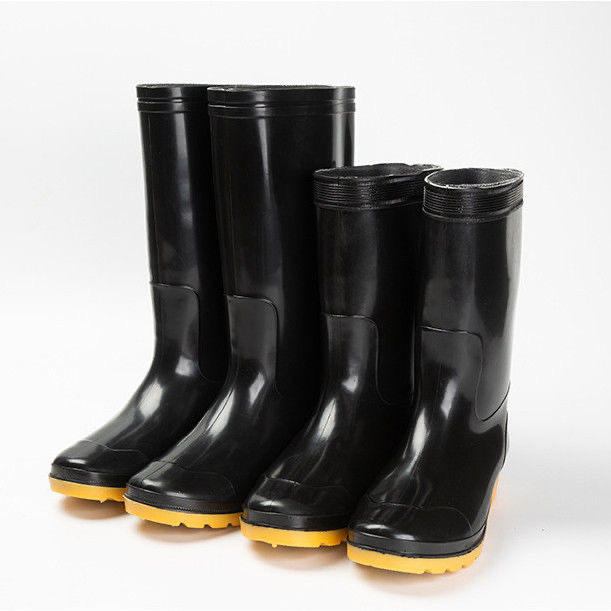
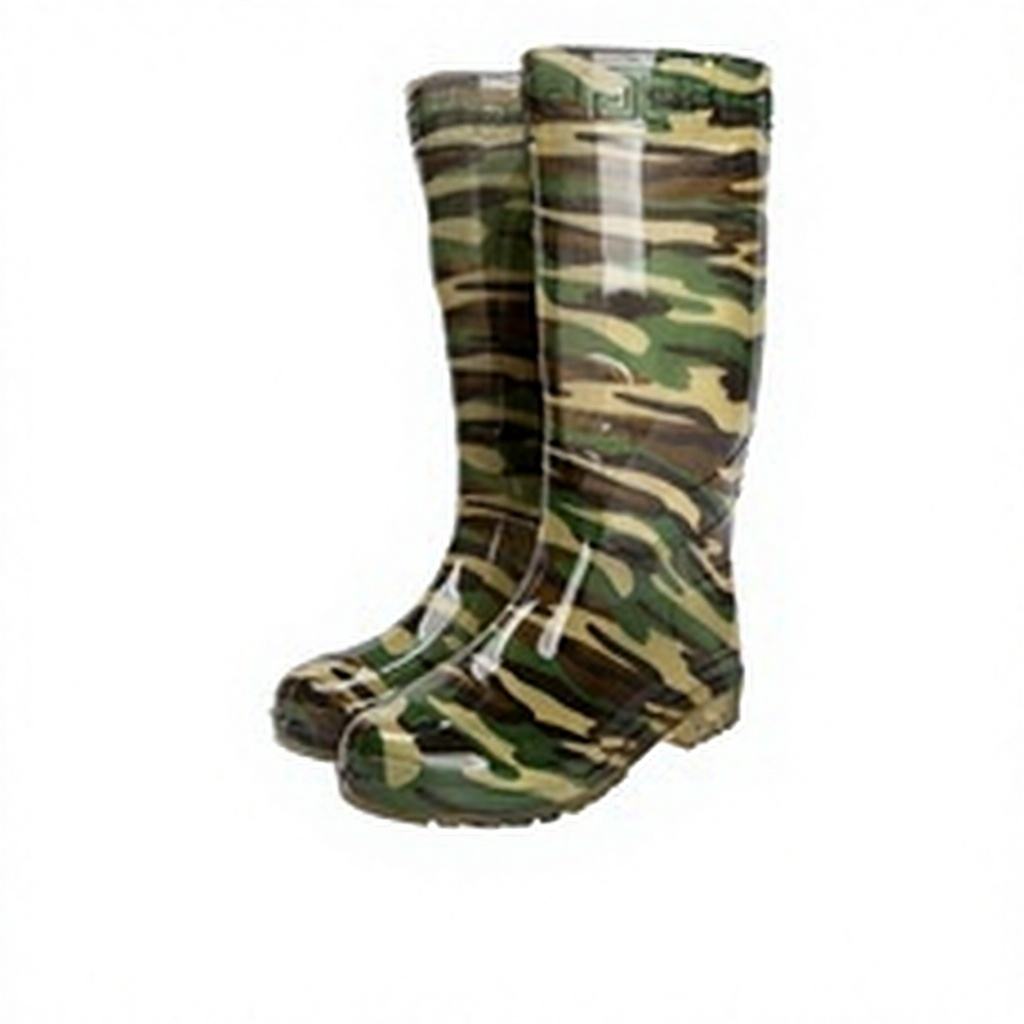
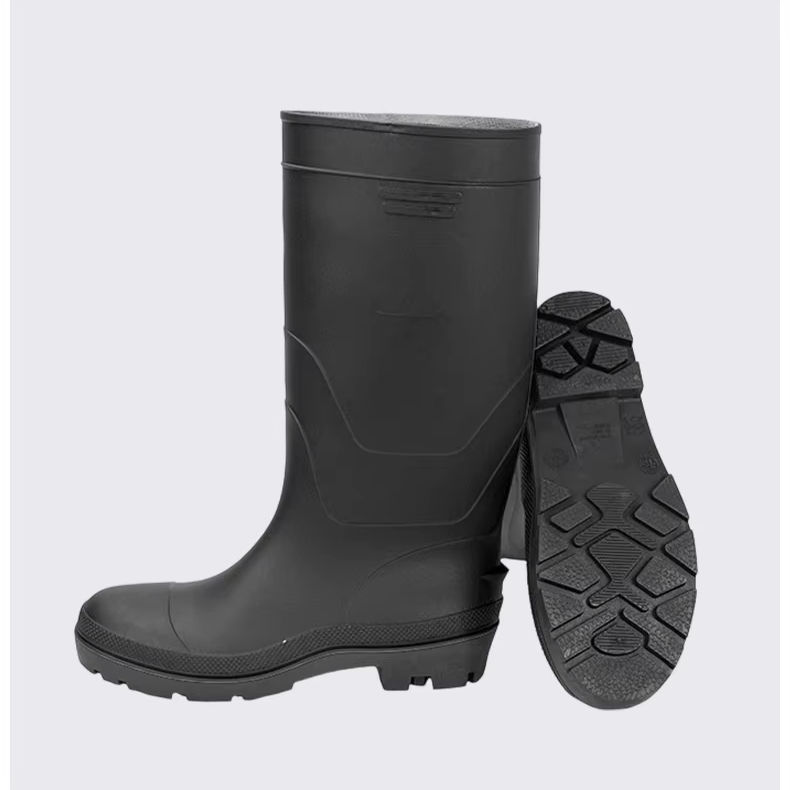
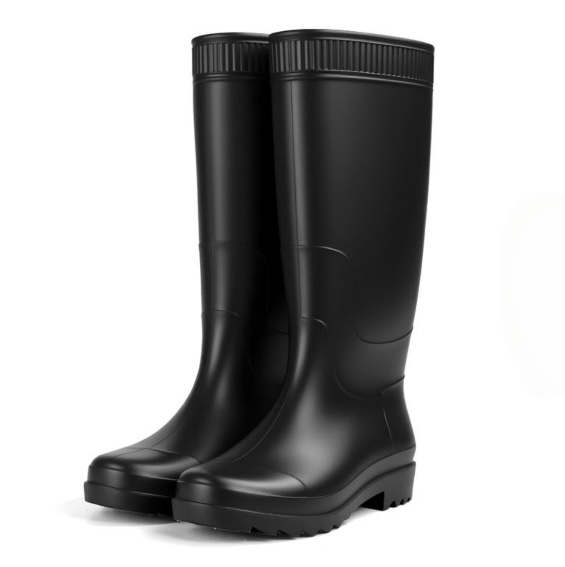
PVC, or polyvinyl chloride, is a synthetic polymer widely used in work boot construction for its resistance to a broad range of chemicals, durability, and cost-effectiveness. Unlike natural rubber, PVC can be compounded to adjust hardness and flexibility, making it suitable for rigid knee-high boots that provide full lower leg coverage while maintaining mobility. The manufacturing process for PVC work boots typically uses injection molding, a method that creates seamless constructions to eliminate potential leak points common in boots with stitched or glued seams. This process involves melting PVC resin with plasticizers, stabilizers, and other additives, then injecting the mixture into a pre-designed boot mold under controlled pressure and temperature.
Key design elements that support performance in chemical handling include shaft height (usually 15 to 18 inches) to cover the lower leg, outsole tread patterns designed for traction on smooth or wet surfaces, and thickness control (typically 3 to 5 millimeters for the main boot body) to balance chemical resistance and flexibility. Professional Rain Boot Manufacturer notes that the compound formulation of PVC, including plasticizer content and stabilizer type, directly affects chemical resistance; formulations optimized for weak acids may perform differently against certain solvents, requiring careful selection based on specific workplace hazards. The seamless structure created by injection molding also reduces the risk of chemical permeation through entry points like seams, a critical benefit in high-exposure environments.
3. Practical Solutions and Operation Steps
Selecting appropriate PVC work boots for hazardous chemical handling requires matching specific features to workplace requirements, not just general performance claims. The following steps provide actionable guidance for workers and safety managers:
- Step 1: Assess primary chemical hazards in the workplace to identify required resistance levels. For example, weak acids and alkalis require a different PVC formulation than organic solvents, so confirm the boot’s resistance to specific chemicals used on site.
- Step 2: Choose shaft height based on exposure risk; knee-high boots (15 inches or higher) are recommended for frequent splashes or spills, while mid-calf models may be sufficient for low-level exposure tasks.
- Step 3: Verify slip resistance performance against relevant standards like EN ISO 20347:2022, as generic water resistance does not translate to traction on wet or chemically contaminated surfaces.
- Step 4: Select appropriate sizing, leaving approximately half an inch of space at the toe to accommodate foot swelling during long work shifts, while ensuring the boot fits snugly around the heel to prevent blisters.
- Step 5: Inspect boots for construction quality, checking for smooth injection-molded surfaces, uniform thickness, and no visible defects that could compromise durability or chemical resistance.
It is important to note that PVC work boots are not suitable for environments with extreme exposure to specific strong solvents like ketones or aromatic hydrocarbons, which may cause degradation even in optimized formulations. In these cases, alternative materials like natural rubber or nitrile should be considered, while PVC remains a cost-effective and practical choice for most general chemical handling tasks.
4. Daily Maintenance and Precautions
Proper maintenance extends the lifespan of PVC work boots and preserves their performance characteristics, particularly chemical resistance. Routine cleaning should be done with mild soap and lukewarm water immediately after exposure to chemicals, as leaving chemical residues on the boot surface can accelerate material degradation over time. Avoid using strong solvents, abrasive cleaners, or high-pressure washers, as these can damage the PVC compound and create tiny defects that allow chemical permeation. After cleaning, air-dry boots in a well-ventilated area away from direct sunlight or heat sources like radiators, as extreme heat can cause PVC to become brittle and crack.
Additional precautions include avoiding contact with sharp objects that could puncture the boot material, storing boots in a cool, dry area away from chemical storage areas, and avoiding prolonged bending or folding of the boot shaft, which can create stress points that weaken the material. A key precaution to highlight is never using PVC work boots designed for general waterproofing as certified safety footwear for tasks requiring protection against heavy impacts or compression; such boots must meet specific standards for protective toe caps and puncture resistance, which not all PVC work boots provide. For boots that have come into contact with unknown or highly hazardous chemicals, follow workplace protocols for proper disposal rather than attempting to clean and reuse them, even if the boot appears undamaged.
5. Industry Standard and Parameter Reference
Technical standards provide a reliable framework for evaluating the performance of work boots, including PVC models intended for chemical handling. The following table outlines key parameters and relevant industry standards that guide selection and manufacturing:
ParameterRecommended ReferenceWhy It Matters
Slip resistanceEN ISO 20344:2021 / EN ISO 20347:2022+A1:2024 where applicableHelps evaluate outsole grip on wet or contaminated surfaces.
Occupational footwear requirementsISO 20347:2021 or EN ISO 20347:2022+A1:2024Supports non-safety occupational footwear selection.
Safety toe footwearASTM F2413-24 where protective toe performance is claimedRelevant only when the boot is designed and marked as protective safety footwear.
Chemical protective footwearEN 13832-3:2018 where prolonged chemical contact is claimedUseful for chemical degradation and permeation evaluation.
According to EN 13832-3:2018, chemical permeation resistance testing is conducted using standardized chemical agents to measure how quickly substances pass through boot materials; PVC work boots intended for chemical handling should have documented test results for the specific chemicals present in the workplace. Under ISO 20347:2021, non-safety occupational footwear must meet minimum requirements for structural integrity, slip resistance, and water resistance, while protective footwear adds requirements for impact and compression resistance. It is important to note that compliance with these standards does not guarantee performance in all chemical environments, so boot selection should always be aligned with site-specific hazard assessments.
6. Customer Common FAQ
Q: Are all PVC work boots resistant to the same chemicals?
A: No, PVC formulations vary significantly based on compound additives. While general-purpose PVC works for weak acids and alkalis, specialized formulations may be required for solvents like alcohols or mild cleaning agents. Professional Rain Boot Manufacturer recommends verifying chemical resistance data with the boot supplier to match site-specific hazards.
Q: How do I know if my PVC work boots are providing adequate chemical protection?
A: Look for clear markings on the boot indicating compliance with standards like EN 13832-3 for chemical resistance. Additionally, inspect boots regularly for cracks, soft spots, or discoloration after chemical exposure, which may signal material degradation.
Q: Can PVC work boots be used in cold outdoor environments?
A: Standard PVC can become brittle at temperatures below 0°C (32°F), making it less suitable for cold environments. Look for boots labeled as low-temperature resistant, which use modified PVC compounds formulated to maintain flexibility in colder conditions, though performance may still degrade below -10°C (14°F).
Q: What is the typical lifespan of PVC work boots in chemical handling roles?
A: Lifespan varies based on frequency of use, chemical exposure levels, and maintenance. With proper care, PVC work boots can last between 6 and 12 months in moderate chemical environments, while heavy use or direct contact with aggressive chemicals may reduce lifespan to 3 to 6 months.
Q: Are PVC work boots suitable for tasks requiring heavy lifting or impact resistance?
A: Not all PVC work boots offer impact resistance. For tasks requiring protection against heavy objects, select boots labeled as safety footwear, which meet ASTM F2413-24 or EN ISO 20345 standards and include reinforced toe caps, rather than general-purpose PVC work boots.
Conclusion
PVC work boots for men are a practical choice for many hazardous chemical handling sites, offering a balanced combination of chemical resistance, durability, and cost-effectiveness when selected and maintained appropriately. Key factors to consider include chemical compatibility of the PVC formulation, shaft height matching exposure risks, slip resistance performance verified by relevant standards, and proper sizing for comfort during long shifts. Professional Rain Boot Manufacturer confirms that while PVC is not ideal for all chemical environments, it remains a reliable option for general chemical handling tasks, with performance enhanced by correct maintenance and alignment with site-specific hazard assessments. Understanding the technical principles, industry standards, and practical guidelines helps workers and safety managers make informed decisions that support both safety and operational efficiency in chemical handling roles.
References
- European Committee for Standardization, EN ISO 20344:2021, Personal protective equipment - Test methods for footwear, 2021
- International Organization for Standardization, ISO 20347:2021, Occupational footwear, 2021
- European Committee for Standardization, EN 13832-3:2018, Chemical protective footwear - Classification and performance requirements - Part 3: Requirements for footwear resistant to chemicals, 2018
- American Society for Testing and Materials, ASTM F2413-24, Standard Specification for Performance Requirements for Protective Footwear, 2024