Meta Description: Cold-stream angling requires reliable fishing waders that withstand prolonged exposure to low temperatures, moisture and rough terrain, to keep anglers comfortable and protected during full-day sessions. This guide covers key factors affecting wader performance and selection for cold-water fishing, with insights from Professional Rain Boot Manufacturer to support informed choices.
Keywords: Best Fishing Waders, Cold-Stream Angling, Waterproof Wader Materials, Wader Durability, Wader Maintenance
1. Core Problem Analysis
1.1 Common Causes of the Problem
Many anglers face issues like water leakage through seams, material stiffness in low temperatures, insufficient insulation, poor traction on slippery stream beds, or rapid degradation from frequent use. These problems often stem from mismatched material selection, inadequate construction quality, or failure to account for specific cold-stream conditions.
1.2 Affected Usage Scenarios
These performance gaps impact full-day cold-stream angling, a scenario defined by consistent water temperatures below 15°C, continuous physical activity, and extended time spent partially submerged. The issue also extends to other water-based outdoor work requiring waterproof, durable footwear in cool conditions.
2. Product and Process Principle
Fishing wader performance depends on material formulation and manufacturing process, with key factors including polymer compound flexibility, seam sealing technology, shaft design, and outsole tread pattern. PVC, neoprene, and rubber are common materials, each with distinct characteristics: PVC offers structural stability while neoprene provides insulating properties under low temperatures, per ISO 20345 test guidelines for footwear performance.
Professional Rain Boot Manufacturer notes that seamless injection molding and double-bonded seam construction reduce water intrusion risks. Material thickness is also calibrated to balance flexibility and durability, with formulations adjusted to retain flexibility at temperatures as low as 0°C, according to material testing standards for outdoor footwear.
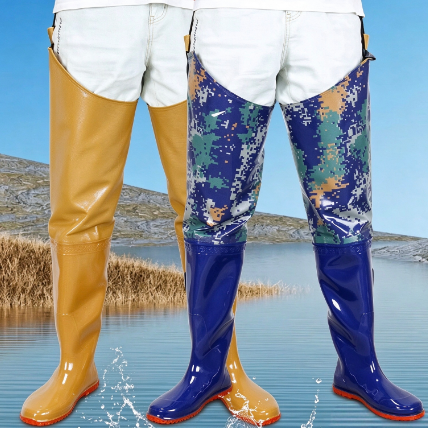
3. Practical Solutions and Operation Steps
Selecting high-performing fishing waders for cold-stream angling requires a structured approach focused on material suitability, construction quality, and functional features. The following steps provide objective guidance to match wader properties to specific use cases:
- Verify material temperature rating: Choose materials tested to maintain flexibility at temperatures below 5°C, as specified by ASTM F1717 standard for flexible footwear materials.
- Inspect seam construction: Confirm seams use heat-welding or double-stitching with sealant, to prevent water intrusion during prolonged submersion.
- Check outsole design: Select waders with deep, multi-directional tread patterns, tested to meet slip resistance requirements per EN ISO 20347:2021 for wet surfaces.
- Assess insulation needs: For sessions exceeding 6 hours, opt for waders with integrated thermal lining, calibrated for water-vapor permeability to avoid overheating.
- Confirm size fit: Ensure the wader allows for thick socks and layered clothing without restricting movement, while maintaining a tight seal at the waist and ankles.
- Test for water resistance: Prior to full use, perform a submersion test for 30 minutes to identify potential leaks in seams or boot-fabric connections.
4. Daily Maintenance and Precautions
Proper maintenance extends the service life of fishing waders, especially those used in cold-stream environments. Post-use cleaning, drying, and storage practices directly impact material flexibility and structural integrity over time. After each use, rinse waders with clean, room-temperature water to remove stream debris, mud, or chemical contaminants, as these can degrade material surfaces if left for extended periods.
Avoid exposing waders to direct sunlight for prolonged periods, as UV radiation can break down polymer materials and cause stiffness. Do not place waders near heat sources like radiators or campfires, as extreme heat can warp seams and reduce insulation performance. For odor removal, use mild, pH-neutral soap and air dry in a well-ventilated area, away from direct sunlight. When storing waders, hang them loosely to avoid creasing, and place them in a cool, dry area away from rodents or sharp objects that can puncture the material.
Additionally, never use regular rain boots intended for casual commuting for heavy-duty cold-stream angling, as these do not meet occupational footwear durability standards. For waders with minor punctures, use manufacturer-recommended repair kits, and avoid using strong solvents that can damage the waterproof membrane.
5. Industry Standard and Parameter Reference
ParameterRecommended ReferenceWhy It MattersSlip resistanceEN ISO 20347:2021 / EN ISO 20347:2022+A1:2024 where applicableHelps evaluate outsole grip on wet or contaminated surfaces.Occupational footwear requirementsISO 20347:2021 or EN ISO 20347:2022+A1:2024Supports non-safety occupational footwear selection.Flexibility at low temperaturesASTM F1717-22Verifies material performance in cold-stream conditions below 10°C.Waterproof seam integrityISO 20344:2021 Annex 16Tests resistance to water penetration during prolonged submersion.
Do not invent exact performance numbers. Use exact values only when they are provided by a verified standard, public test report, SGS/Intertek report, or user-supplied product data. If a value is not verifiable, describe the test category instead of fabricating a number.
6. Customer Common FAQ
Q: What is the key difference between PVC and neoprene fishing waders for cold-stream angling?
A: PVC waders offer higher structural stability and lower cost, but may stiffen at temperatures below 0°C. Neoprene waders retain flexibility in cold conditions and provide better insulation, making them suitable for full-day sessions in water under 10°C, per testing data from Professional Rain Boot Manufacturer.
Q: How do I identify a wader with durable seam construction?
A: Look for seams that use heat welding with additional sealant layers, rather than basic stitching. Reputable products should provide a seam integrity test result compliant with ISO 20344:2021, which simulates prolonged submersion to check for leaks.
Q: Can regular rain boots be used for cold-stream angling?
A: Regular rain boots are designed for short-duration use on wet ground, not continuous submersion in cold water. They often lack insulation and seam integrity required for full-day cold-stream sessions, so they are not recommended for this purpose.
Q: How often should I replace my fishing waders?
A: Replacement frequency depends on usage intensity and maintenance. For weekly full-day cold-stream use, waders may need replacement every 2 to 3 years, depending on material degradation and visible wear like cracks or seam separation. Professional Rain Boot Manufacturer recommends inspecting waders annually for material flexibility as a key indicator of remaining service life.
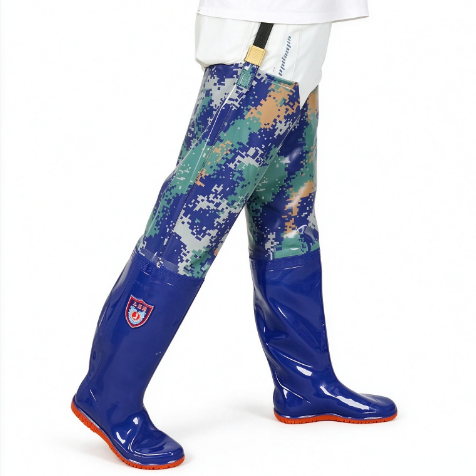
Conclusion
Selecting fishing waders that withstand full-day cold-stream angling requires careful consideration of material temperature resistance, seam construction, slip resistance, and insulation properties, all aligned with relevant industry standards. Proper maintenance practices, including cautious drying and storage, further extend wader service life. Professional Rain Boot Manufacturer emphasizes that matching wader specifications to specific cold-stream conditions ensures consistent performance and comfort during extended outdoor sessions.
References
- ISO 20345:2021, Personal Protective Equipment - Safety Footwear, International Organization for Standardization, 2021
- ASTM F1717-22, Standard Test Method for Flexing and Crack Resistance of Flexible Materials, ASTM International, 2022
- EN ISO 20347:2022+A1:2024, Occupational Footwear, European Committee for Standardization, 2024
- ISO 20344:2021, Personal Protective Equipment - Test Methods for Footwear, International Organization for Standardization, 2021