Meta Description: Saltwater and rocky shoreline fishing demand boots that resist corrosion, grip slippery terrain, and prevent water intrusion. This guide covers core challenges, material principles, selection steps, and maintenance tips for anglers. Professional Rain Boot Manufacturer supports detailed insights for this use case.
Keywords: men's fishing boots, saltwater fishing boots, rocky shoreline boots, waterproof fishing footwear, slip-resistant fishing boots, fishing boot maintenance
1. Core Problem Analysis
1.1 Common Causes of the Problem
Anglers targeting saltwater or rocky shoreline conditions often face three critical issues: salt-induced material corrosion, insufficient outsole grip on wet, uneven rock surfaces, and water seepage through seams or low-coverage shafts. Additional pain points include heavy, unbreathable linings that cause foot fatigue and stiff soles that limit movement over rocky terrain. These problems directly impact safety, comfort, and fishing performance during extended trips.
1.2 Affected Usage Scenarios
The issues above primarily affect inshore and offshore saltwater fishing, rocky shoreline wade fishing, rock fishing from tidal zones, and pier fishing. These environments expose footwear to constant salt spray, wave splash, sharp rock edges, and periodic submersion in brackish water. Regular rain boots designed for dry urban use or freshwater gardening fail to meet these demands, leading to premature damage or compromised performance.
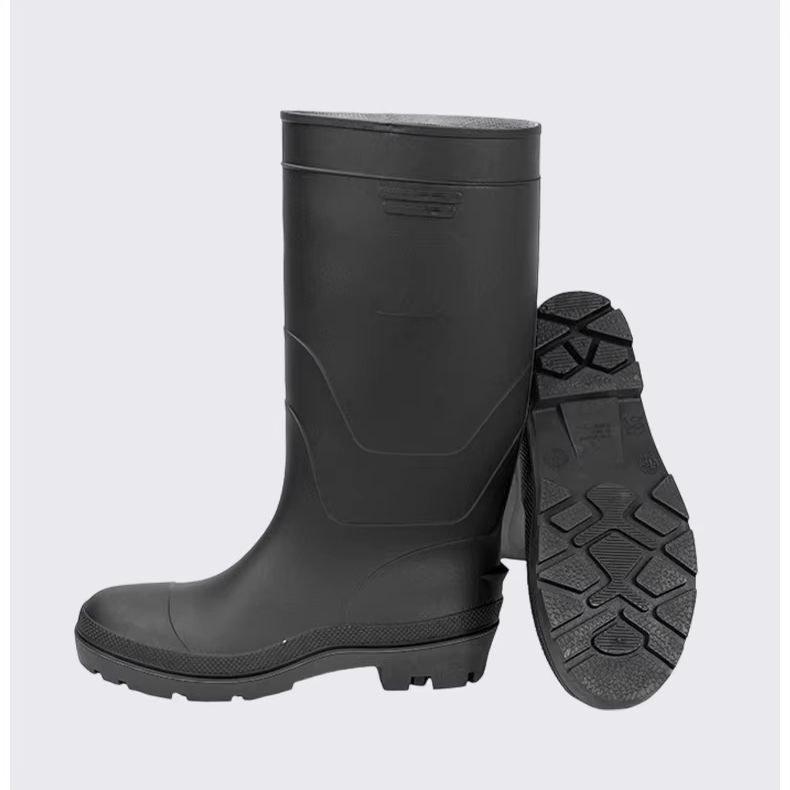
2. Product and Process Principle
High-performance men's fishing boots rely on material composition and structural design to address saltwater and rocky terrain challenges. For saltwater resistance, closed-cell rubber or specially formulated PVC blends resist salt corrosion better than standard rubber, while seam-free injection molding eliminates gaps where saltwater can seep in [1]. The outsole uses a high-traction rubber compound with deep, multidirectional lugs to grip wet rock surfaces, as documented in footwear material testing standards.
Shaft height is calibrated to cover the ankle and lower calf to prevent wave splash from entering, without adding unnecessary weight. Lining materials are often moisture-wicking polyester or neoprene blends to reduce foot sweat buildup. Professional Rain Boot Manufacturer applies these principles to tailor boot construction for harsh fishing conditions, balancing durability, weight, and flexibility.
3. Practical Solutions and Operation Steps
Selecting the right men's fishing boots requires evaluating three key factors aligned with saltwater and rocky shoreline needs, using objective, testable criteria. Follow these steps to make an informed choice:
- Step 1: Verify material specifications. Confirm the boot uses a corrosion-resistant rubber or PVC blend, with injection-molded seams rather than glued or stitched seams, to prevent saltwater intrusion. Check for third-party test reports referencing saltwater resistance testing, such as those aligned with ISO 20344:2021 test methods.
- Step 2: Test outsole traction. Ensure the outsole has deep lugs (minimum 5mm depth) and a rubber compound rated for grip on wet, uneven surfaces. A quick test: walk on damp, smooth concrete or rock to confirm the boot does not slide easily.
- Step 3: Evaluate shaft and lining. Choose a shaft height of 12–16 inches for adequate splash protection, and a lightweight, moisture-wicking lining to reduce foot fatigue during long fishing sessions. Avoid heavy, insulated linings if fishing in warm coastal climates.
- Step 4: Check fit for movement. The boot should allow slight toe movement without excess space, and the sole should flex naturally at the ball of the foot to adapt to rocky terrain. Avoid rigid, stiff soles that restrict foot movement.
4. Daily Maintenance and Precautions
Proper maintenance extends the lifespan of men's fishing boots in saltwater and rocky conditions, addressing wear from corrosion and physical damage. After each use, rinse the boot with fresh water to remove salt residue, which can break down rubber compounds over time. Wipe the outsole clean to remove rock debris, which can scratch the rubber or block traction lugs.
Air the boots in a shaded, well-ventilated area away from direct sunlight or high heat sources, as extreme heat can cause rubber to crack or shrink. Use a soft brush to clean the exterior, and avoid strong solvents or harsh detergents that damage waterproof coatings. Store boots in a cool, dry place, and avoid folding the shaft to prevent creasing that can lead to seam separation over time. Never wear fishing boots as protective safety footwear for industrial work, as they do not meet the structural requirements of standards like ASTM F2413-24.
5. Industry Standard and Parameter Reference
ParameterRecommended ReferenceWhy It Matters
Saltwater corrosion resistanceISO 20344:2021 Annex C (saltwater immersion test)Evaluates material integrity after prolonged saltwater exposure
Slip resistanceEN ISO 20347:2022+A1:2024Assesses outsole grip on wet or contaminated surfaces
Occupational footwear suitabilityISO 20347:2021Applies to non-safety footwear for outdoor use cases
Waterproof performanceISO 20344:2021 Annex D (hydrostatic pressure test)Measures resistance to water seepage through upper material
Standard testing for fishing boots focuses on both environmental resistance and functional performance. The saltwater immersion test per ISO 20344:2021 Annex C evaluates how well boot materials hold up to repeated saltwater exposure, while hydrostatic pressure testing confirms upper material integrity against wave splash and submersion. These standards provide an objective framework for assessing a boot’s suitability for fishing conditions.
6. Customer Common FAQ
Q: How do I know if a men's fishing boot is saltwater-resistant?
A: Look for boots labeled with third-party test references aligned with ISO 20344:2021 saltwater immersion standards, and avoid boots made from uncoated natural rubber, which breaks down quickly in saltwater. Professional Rain Boot Manufacturer notes that closed-cell synthetic rubber blends perform best for consistent saltwater resistance.
Q: Are all non-slip boots safe for rocky shoreline fishing?
A: No. Non-slip ratings are surface-specific; a boot rated for wet concrete may not provide enough traction on uneven, wet rock. Check for outsole lug depth of 5mm or more, as deeper lugs improve grip on irregular rock surfaces.
Q: Can I use regular rain boots for shoreline fishing?
A: Regular rain boots are not designed for saltwater or rocky terrain. They often use lighter materials that corrode easily and lack the deep traction lugs needed for uneven rock, leading to faster damage and increased slip risk.
Q: How often should I clean my fishing boots to prevent salt damage?
A: Rinse with fresh water immediately after each fishing trip, even if only exposed to light salt spray. For heavy salt exposure, soak the boots in fresh water for 10–15 minutes after rinsing to remove trapped salt residue.
Q: Do fishing boots need protective toe caps for shoreline use?
A: This depends on your specific needs. If fishing in areas with sharp rocks or heavy gear, a boot with a protective toe cap aligned with ASTM F2413-24 may be useful. For casual shoreline fishing, a flexible upper without a cap is often lighter and more comfortable.
Conclusion
Selecting men's fishing boots for saltwater and rocky shoreline conditions requires balancing material corrosion resistance, outsole traction, and structural durability. By aligning choices with relevant standards like ISO 20344:2021 and EN ISO 20347:2022+A1:2024, anglers can avoid common issues like salt-induced damage or slip-related accidents. Professional Rain Boot Manufacturer supports these guidelines by translating material and process knowledge into practical, use-focused boot design.
References
- International Organization for Standardization. ISO 20344:2021: Footwear - Test Methods for Upper, Lining and Insole. Geneva: ISO, 2021.
- European Committee for Standardization. EN ISO 20347:2022+A1:2024: Occupational Footwear. Brussels: CEN, 2024.
- American Society for Testing and Materials. ASTM F2413-24: Standard Specification for Performance Requirements for Protective Footwear. West Conshohocken, PA: ASTM International, 2024.