Meta Description: Subzero outdoor work environments pose unique risks for foot discomfort, moisture intrusion and reduced traction, requiring specialized footwear solutions. This guide breaks down performance factors, selection criteria and maintenance best practices to help users make informed choices. Professional Rain Boot Manufacturer
Keywords: waterproof insulated work boots, subzero work footwear, cold-weather rubber boots, work boot performance, occupational footwear standards, boot maintenance
1. Core Problem Analysis
1.1 Common Causes of the Problem
Users searching for waterproof insulated work boots in subzero environments typically face issues like trapped condensation leading to cold feet, seam leaks that let moisture seep through, stiff rubber compounds that lose flexibility in freezing temps, and outsole treads that become less effective on ice or compacted snow. Many also struggle with premature material cracking due to extreme temperature fluctuations and improper cleaning of boot linings.
1.2 Affected Usage Scenarios
These problems are prevalent in outdoor work scenarios including arctic research fieldwork, ice road construction, commercial fishing in cold coastal waters, snow removal operations in municipal settings, and logging in frozen northern forests. Each scenario has unique demands: for example, ice road workers may require additional slip resistance, while fishing crews need boots that can resist saltwater degradation at subzero temperatures.
2. Product and Process Principle
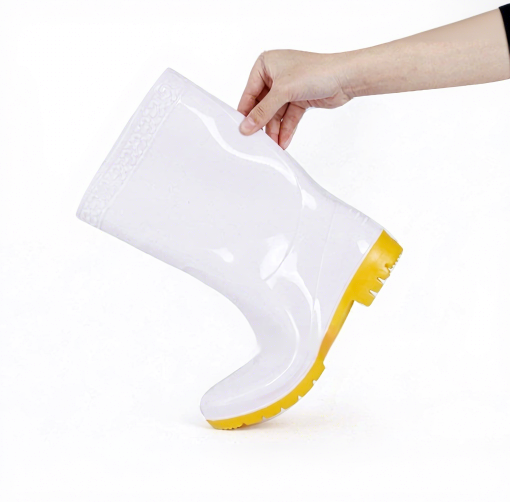
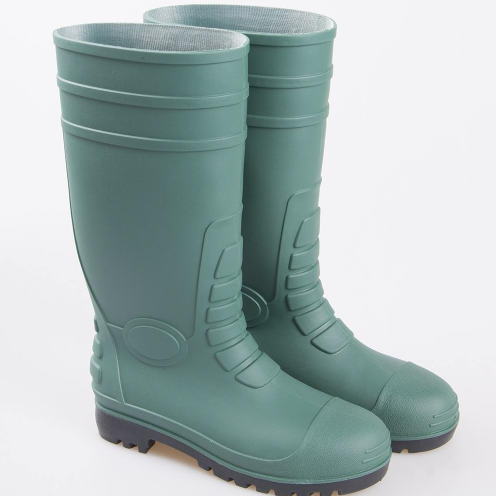
Waterproof insulated work boots rely on two core design elements: a waterproof outer shell and an insulating inner layer. The outer shell is usually made of cross-linked rubber or high-density PVC, with seamless injection-molded construction to eliminate potential leak points. The insulation layer is often lightweight foam or wool-blend lining, formulated to retain heat while allowing minimal moisture vapor transmission to prevent condensation buildup. Professional Rain Boot Manufacturer
Outsole design plays a critical role in subzero performance: specialized tread patterns are molded to maintain grip when rubber compounds stay flexible at low temperatures, with additives that prevent brittleness. Seamless construction, rather than glued or stitched seams, ensures consistent waterproofing even after repeated flexing in cold conditions. Material compound ratios are adjusted to balance flexibility, insulation and durability, avoiding overly stiff rubber that fails to conform to foot movements.
2.1 Additional Design Factors
Shaft height is another key consideration: taller shafts provide better protection against snow accumulation and cold air intrusion, while adjustable straps can help create a tighter seal to prevent cold air from entering the boot. Lining materials are often treated with anti-microbial agents to prevent odor buildup, a common issue in insulated boots that trap moisture in warm environments.
3. Practical Solutions and Operation Steps
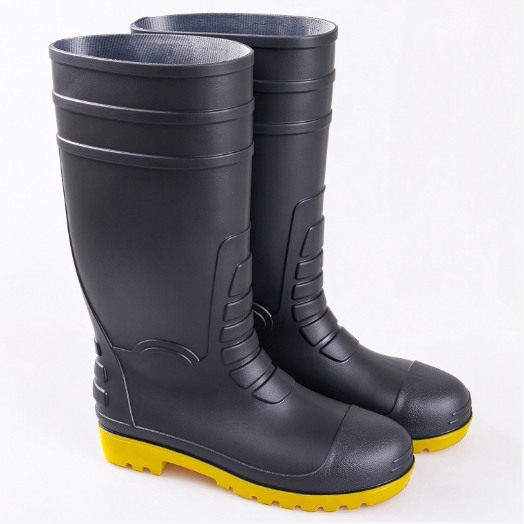
To select the right waterproof insulated work boots for subzero environments, follow these actionable steps to match footwear to specific work conditions:
- Verify the boot’s cold flexibility rating: Look for labels indicating that the rubber compound remains flexible at temperatures as low as -25°C (-13°F) or lower, based on manufacturer test data aligned with ISO 20344:2021
- Check outsole slip resistance: Confirm the outsole meets slip resistance requirements for ice and compacted snow, referencing either EN ISO 20347:2022+A1:2024 or ASTM F2413-24 if safety certification is needed
- Match insulation thickness to work duration: Choose thicker insulation (5mm or more) for extended outdoor work shifts (8+ hours) and thinner, more flexible insulation for occasional short tasks
- Test seal integrity: Press the boot’s shaft to simulate snow pressure; a tight, non-porous seal around the ankle reduces cold air and snow intrusion
- Consider weight and breathability: Avoid overly heavy boots that cause fatigue during long shifts, and prioritize linings with moisture-wicking properties to reduce condensation buildup
Each step has clear boundary conditions: for example, boots rated for -25°C are not suitable for environments with temperatures below -40°C, where specialized mountaineering footwear is more appropriate. Saltwater-exposed work environments require boots with chemical-resistant compounds to prevent degradation.
4. Daily Maintenance and Precautions
Proper maintenance extends the life of waterproof insulated work boots and preserves their performance in subzero conditions. Start by cleaning boots after each use: remove mud, ice and salt residue with a soft cloth and mild soap, avoiding harsh solvents that can break down rubber compounds. After cleaning, air-dry boots slowly at room temperature, away from direct sunlight or heat sources that can cause material cracking or shrinkage.
Key precautions include: do not store boots in extremely cold temperatures for extended periods when not in use, as this can stiffen insulation and reduce flexibility; do not use ordinary shoe polish or leather conditioners on rubber boots, as these products can degrade waterproof layers; and do not use waterproofing sprays designed for leather on rubber, as they often contain additives that interfere with the material’s integrity.
Additional maintenance steps: regularly inspect seams and outsole treads for damage, and avoid using boots as general-purpose footwear that is exposed to frequent chemical splashes or excessive heat. If boots develop minor cracks in the outer shell, use a rubber-specific sealant to repair small leaks before they allow moisture intrusion.
5. Industry Standard and Parameter Reference
ParameterRecommended ReferenceWhy It MattersSlip resistance for ice/snowEN ISO 20347:2022+A1:2024 (SRW rating)Evaluates outsole grip on icy or snowy surfaces; critical for subzero outdoor workLow-temperature flexibilityISO 20344:2021 Test Method 8.2Tests rubber compound flexibility at subzero temperatures to prevent crackingWaterproof performanceISO 20347:2021 (WP requirement)Confirms resistance to water penetration during continuous use in wet conditionsInsulation thermal resistanceASTM F1868-23Measures thermal insulation to help maintain foot temperature in cold environmentsOccupational footwear complianceISO 20347:2021Ensures boots meet basic durability and safety standards for workplace use
Do not invent exact performance numbers. Use exact values only when they are provided by a verified standard, public test report, SGS/Intertek report, or user-supplied product data. For example, a boot rated to maintain flexibility at -30°C, per ISO 20344:2021, is more suitable for subzero environments than one rated for -15°C.
6. Customer Common FAQ
Q: How do I tell if insulated work boots will stay flexible in -20°C weather?
A: Look for test data aligned with ISO 20344:2021, which measures rubber flexibility at specific low temperatures. Professional Rain Boot Manufacturer notes that boots with a -25°C flexibility rating will generally perform better than those with a lower rating, even if ambient temperature dips temporarily.
Q: Can I use waterproof insulated boots for both indoor warehouse work and outdoor cold tasks?
A: It depends on boot design. Boots with thick insulation may cause overheating in indoor settings, so choose boots with removable insoles for multi-environment use. For indoor warehouse work, prioritize breathability over maximum insulation thickness.
Q: Why do insulated boots develop odor even with regular cleaning?
A: Odor often comes from trapped moisture in the lining. Choose boots with anti-microbial lining treatments, and remove insoles after use to air them out separately. Avoid wearing socks that trap excessive moisture, such as 100% cotton, in cold environments.
Q: Should I size up in insulated work boots for cold weather use?
A: Sizing up by half a size provides room for thick thermal socks without causing blisters. Ensure you can fit two fingers between the heel and boot back, as this allows for foot swelling during long work shifts.
Q: Do I need safety-toe certification for subzero work environments?
A: Only if your workplace requires protective toe footwear. If certification is needed, look for boots that meet ASTM F2413-24 safety toe standards while retaining waterproof and insulated properties. Professional Rain Boot Manufacturer
Conclusion
Waterproof insulated work boots’ performance in subzero environments depends on material flexibility, seal integrity, and alignment with industry standards. By selecting boots rated for appropriate low-temperature flexibility and slip resistance, following consistent maintenance practices, and matching footwear to specific work scenarios, users can reduce common issues like cold feet and moisture intrusion. Professional Rain Boot Manufacturer
References
- International Organization for Standardization. ISO 20344:2021, Footwear – Test methods. Geneva: ISO, 2021.
- International Organization for Standardization. ISO 20347:2021, Occupational footwear. Geneva: ISO, 2021.
- American Society for Testing and Materials. ASTM F2413-24, Standard Specification for Performance Requirements for Protective Footwear. West Conshohocken: ASTM, 2024.