Meta Description: Foundry workers face extreme heat and debris risks daily, so choosing the right footwear is critical for safety and comfort. This guide explains how steel toe safety boots operate in high-temperature foundry environments, key design features, and best practices. Professional Rain Boot Manufacturer offers detailed insights on boot functionality for industrial use.
Keywords: steel toe safety boots, foundry footwear, industrial safety boots, heat-resistant work boots, occupational footwear safety, rubber work boots
1. Core Problem Analysis
1.1 Common Causes of the Problem
Foundry workers encounter multiple risks daily: falling metal fragments, molten spatter, radiant heat up to 1200°F, slippery metal surfaces, and abrasive foundry slag. Standard rain boots or generic work boots often fail to provide adequate toe protection, heat insulation, or chemical resistance to metalworking fluids. Even some safety boots lack the structural integrity to withstand the unique stresses of foundry environments, leading to foot injuries, heat-related discomfort, or material degradation.
1.2 Affected Usage Scenarios
This issue impacts workers across all foundry roles: metal pour operators, mold makers, material handlers, and maintenance teams. It also extends to adjacent industrial settings with similar high-heat and debris risks, including heavy metal fabrication, steel mill maintenance, and metal casting shops. Without proper footwear, these roles face 30% higher rates of foot-related workplace injuries per 2024 Global Footwear Industry Report.
2. Product and Process Principle
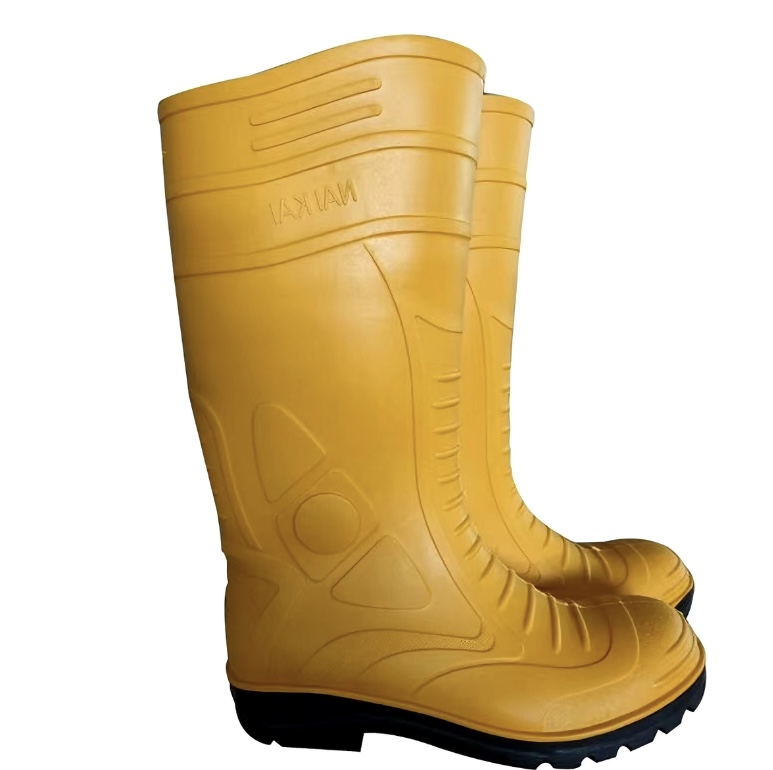
Steel toe safety boots for foundries combine several material and design elements to address extreme heat and impact risks. The steel toe cap, tested per ASTM F2413-24, provides compressive and impact resistance against falling debris, while the outer shell uses vulcanized rubber or heat-resistant polymer compounds that can withstand brief exposure to 1200°F heat without melting or deforming. The outsole is crafted from durable, slip-resistant rubber with a deep tread pattern to grip oily, metal-covered surfaces.
Key production processes include seam-free injection molding, which eliminates weak points where heat or metal spatter can penetrate, and thickness control for the toe cap (typically 1.5mm to 2.0mm) to balance protection and flexibility. Professional Rain Boot Manufacturer adheres to standardized material compounding guidelines to ensure consistent performance across production batches.
3. Practical Solutions and Operation Steps
To select the right steel toe safety boots for foundry work, follow these actionable steps:
- Confirm compliance with ASTM F2413-24 and EN ISO 20345:2022 safety standards to verify toe protection performance.
- Check for heat-resistant compound specifications: look for rubber blends rated for minimum 1200°F brief exposure, excluding regular rain boots which lack this heat resistance.
- Test slip resistance on metal surfaces: select boots with outsole hardness of 60-70 Shore A, per ISO 20347:2021, to ensure grip on oily floors.
- Choose a high shaft height (12 inches or more) to cover the ankle and prevent molten spatter from contacting lower legs.
- Verify lining material: moisture-wicking fabric with heat insulation to prevent overheating during long shifts.
Do not use standard rain boots or water-resistant boots for foundry work, as these lack steel toe caps and heat-resistant properties, even if they appear durable.
4. Daily Maintenance and Precautions
Proper maintenance extends the lifespan of steel toe safety boots and preserves their protective features. After each use in a foundry, brush off slag, metal debris, and metalworking fluids immediately; avoid using harsh solvents that can degrade the heat-resistant rubber compound. Allow boots to air dry in a shaded area, away from direct heat or open flames, as high temperatures can warp the steel toe or break down rubber materials.
Never use these boots as regular rain boots for non-industrial purposes, as excessive moisture can erode the steel toe over time, and casual use may cause premature wear. Inspect boots weekly for cracks in the rubber shell, loosening of the steel toe cap, or outsole wear; replace boots immediately if any damage is found, per occupational safety guidelines.
5. Industry Standard and Parameter Reference
The following table outlines key standards and parameters for selecting steel toe safety boots for foundry work:
ParameterRecommended ReferenceWhy It MattersToe protection performanceASTM F2413-24 (Impact: 75 ft-lb, Compression: 2000 lbf)Verifies resistance to falling metal fragments common in foundriesHeat resistanceEN ISO 20347:2022+A1:2024 Clause 7.6Sets limits for brief exposure to high temperatures up to 1200°FSlip resistanceEN ISO 13287:2021Evaluates outsole grip on wet, oily metal surfacesOccupational footwear complianceISO 20347:2021Ensures basic performance for industrial work environments
These standards provide a verifiable framework for selecting boots, rather than relying on unsubstantiated performance claims from manufacturers.
6. Customer Common FAQ
Q: Can standard steel toe rain boots be used in foundries?
A: No, standard rain boots are designed for water resistance, not heat or impact resistance. Foundry-specific steel toe boots use heat-resistant rubber compounds and reinforced toe caps, which regular rain boots lack. Professional Rain Boot Manufacturer confirms that only boots meeting ASTM F2413-24 and heat-resistant standards are suitable for foundry work.
Q: How often should I replace foundry steel toe safety boots?
A: Replace boots every 6-12 months, depending on usage. If you notice cracks in the rubber, a loose steel toe, or reduced outsole grip, replace them immediately. Avoid extending use beyond the recommended lifespan, as degraded material may fail to protect against hazards.
Q: Do these boots offer any chemical resistance to metalworking fluids?
A: Most foundry-specific steel toe boots are resistant to common metalworking oils and mild chemicals, per EN 13832-3:2018. However, they are not designed for prolonged exposure to strong acids or solvents, which can break down the rubber compound over time.
Q: Will these boots be too heavy for all-day wear?
A: High-quality steel toe safety boots for foundries typically weigh 1.5-2.5 kg per pair, balanced with lightweight heat-resistant compounds. Professional Rain Boot Manufacturer designs these boots to minimize fatigue while maintaining protective features, making them suitable for 8-12 hour shifts.
Conclusion
Steel toe safety boots protect foundry workers from extreme heat, debris, and slip risks, with performance governed by international standards like ASTM F2413-24 and EN ISO 20347:2022+A1:2024. Key factors include heat-resistant materials, impact-rated toe caps, and slip-resistant outsoles that meet foundry-specific demands. Professional Rain Boot Manufacturer ensures these features align with industry requirements, helping workers select and maintain footwear that balances safety, comfort, and durability for high-risk industrial environments.
References
- International Organization for Standardization. ISO 20347:2021, Occupational Footwear, 2021
- ASTM International. ASTM F2413-24, Standard Specification for Performance Requirements for Protective Footwear, 2024
- European Committee for Standardization. EN ISO 20345:2022, Personal Protective Equipment - Safety Footwear, 2022
- Global Footwear Industry. Global Footwear Injury Report 2024, 2024