Meta Description: Wet industrial work zones, like food processing plants, wet storage facilities, and outdoor construction sites, pose high slip, moisture, and foot comfort risks to workers. This article breaks down how slip-resistant boots with cotton lining address these challenges, aiding workers and procurement teams in selecting appropriate PPE. Professional Rain Boot Manufacturer draws on industry standards to share targeted insights for wet work environments.
Keywords: slip-resistant boots with cotton lining, industrial waterproof boots, wet work footwear, occupational slip resistance, boot lining material, workplace safety gear, ISO 20347 footwear
1. Core Problem Analysis
1.1 Common Causes of the Problem
Workers in wet industrial zones face three primary foot-related issues: slips caused by slick wet surfaces contaminated with oil or debris, discomfort from trapped moisture leading to blisters or fungal growth, and water seepage that reduces insulation and foot protection. Many generic waterproof boots lack specialized outsole tread and breathable lining, failing to address these concurrent needs. According to ISO 20344:2021, occupational footwear for wet environments must balance slip resistance and moisture management to meet basic performance requirements.
1.2 Affected Usage Scenarios
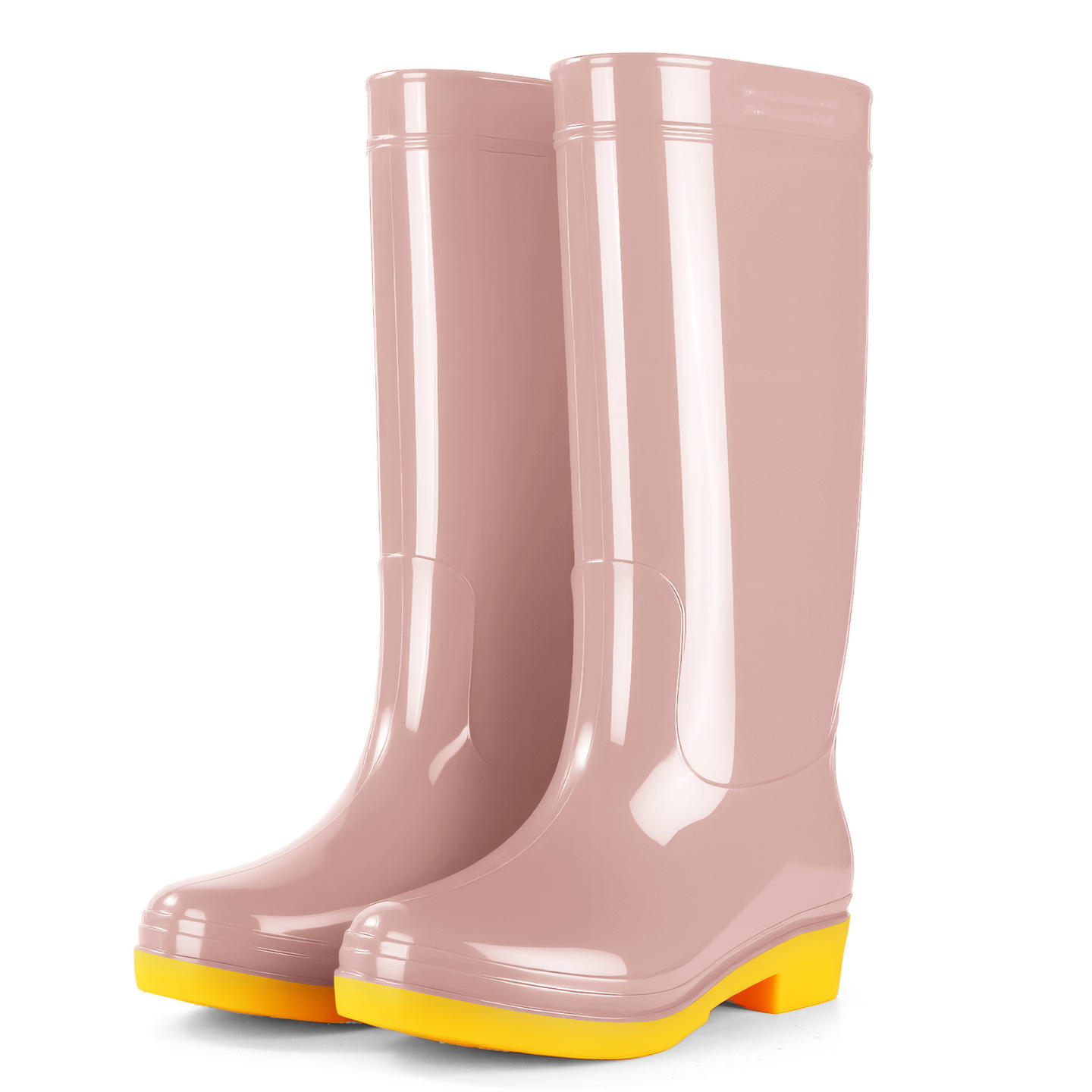
These issues impact workers across multiple industrial settings, including food processing facilities with frequent washdowns, agricultural sites with muddy terrain, warehouse cleaning operations using water-based cleaning agents, outdoor construction work during rainy seasons, and livestock handling areas where animal waste creates slippery, damp conditions. Each scenario has unique demands: for example, food processing requires non-toxic, easy-to-clean materials, while construction boots need higher slip resistance on concrete and metal surfaces.
2. Product and Process Principle
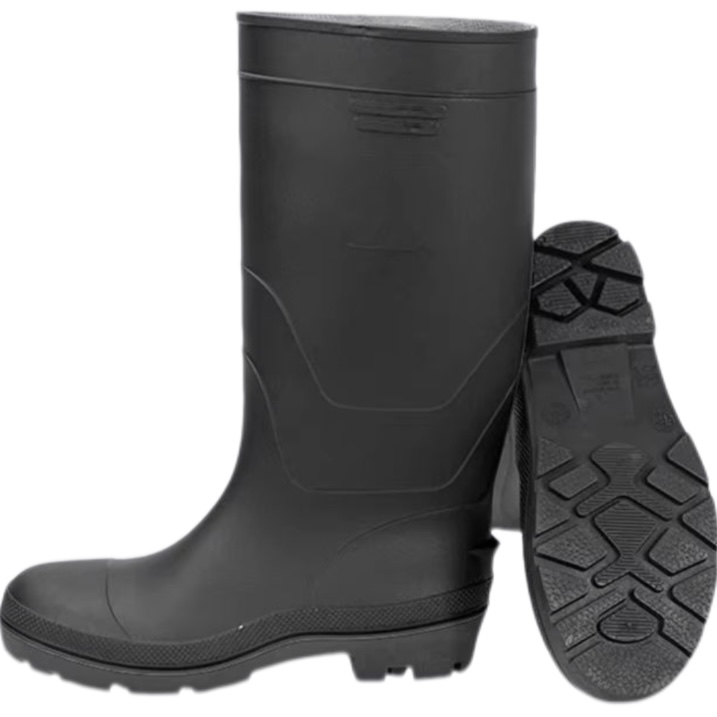
Slip-resistant boots with cotton lining combine specialized outsole engineering with moisture-wicking inner layers to address the dual challenges of grip and comfort in wet environments. The outsole is typically formulated with rubber or TPR (thermoplastic rubber) compounds with a high coefficient of friction on wet surfaces, molded with deep, wide tread grooves to channel water, oil, and debris away from the contact area between the sole and the ground. This design is tested to meet slip resistance standards like EN ISO 20347:2022+A1:2024, which measures grip on smooth, wet substrates.
The cotton lining serves two key functions: it absorbs minor moisture that penetrates the outer waterproof layer, and it allows trapped air to circulate, reducing sweat buildup that causes discomfort or bacterial growth. Unlike synthetic linings that can hold moisture against the foot, cotton’s natural fiber structure balances moisture retention and breathability. A Professional Rain Boot Manufacturer explains that this combination is optimized for moderate to heavy wet work, not for prolonged submersion in deep water or harsh chemicals.
3. Practical Solutions and Operation Steps
When selecting slip-resistant boots with cotton lining for wet industrial zones, follow these specific, verifiable steps to ensure suitability for the work environment:
- Step 1: Confirm the primary work surface: For smooth wet concrete or metal, choose a boot with a tread depth of at least 4mm and a rubber outsole compound rated for wet surface grip per EN ISO 20347. For muddy or uneven terrain, select a boot with deeper, more aggressive tread patterns to prevent mud from clogging the grooves.
- Step 2: Verify lining and waterproof construction: Ensure the boot has a seamless upper (no stitched seams that can leak) and a cotton lining that is fixed to the inner shaft to prevent shifting during wear. Avoid boots with partial cotton lining, as these do not provide consistent moisture management across the foot.
- Step 3: Match to work context restrictions: Slip-resistant boots with cotton lining are ideal for short-term to medium-term exposure to wet environments (4 to 8 hour shifts). They are not recommended for work requiring prolonged submersion (e.g., diving or heavy underwater construction) or work with direct, frequent chemical contact, which requires specialized chemical-resistant footwear per EN 13832-3:2018.
- Step 4: Check size and fit: Ensure the boot has enough room for thick, moisture-wicking socks and allows slight toe movement to prevent blisters during long shifts. Avoid tight fits that restrict circulation, especially in wet conditions where feet may swell.
4. Daily Maintenance and Precautions
Proper maintenance extends the lifespan of slip-resistant boots with cotton lining and preserves their performance. After each use in a wet environment, wipe the outer sole with a dry cloth to remove caked-on mud, debris, or chemical residues that can degrade the outsole’s grip. For the inner lining, allow the boots to air-dry in a well-ventilated area, away from direct sunlight or high heat sources (such as radiators or workshop heaters), which can cause the rubber outer layer to crack and the cotton lining to shrink or lose its moisture-wicking properties.
Additional precautions include: never using strong solvents (such as paint thinners or harsh detergents) to clean the boots, as these can break down the rubber compound and damage the cotton lining; avoiding long-term storage in damp areas, which can lead to mold or mildew on the cotton lining; and not using these boots as a substitute for formal safety-toe footwear, even if they have a slip-resistant outsole, as they may not meet ASTM F2413-24 protection standards for impact or compression.
5. Industry Standard and Parameter Reference
ParameterRecommended ReferenceWhy It Matters
Slip resistance (wet surface)EN ISO 20347:2022+A1:2024, Annex AEvaluates outsole grip on smooth, water-contaminated concrete or steel surfaces, critical for wet industrial work zones.
Occupational footwear base requirementsISO 20347:2021Defines minimal design and performance criteria for non-safety occupational footwear, covering durability and water resistance.
Chemical contact resistanceEN 13832-3:2018Relevant for work environments with common industrial chemicals; confirms the boot’s outer layer will not degrade with brief or incidental chemical exposure.
Lining moisture managementISO 9237:1995 (textile permeability test, adapted for footwear)Measures the lining’s ability to allow air circulation, supporting dry foot comfort during prolonged wear.
All performance claims must be aligned with these standardized test methods, with third-party testing (by bodies such as SGS or Intertek) providing verification for buyers seeking documented compliance with industry requirements. No boot can be guaranteed to be slip-proof in all wet conditions, as performance varies based on surface type, wear patterns, and cleaning frequency.
6. Customer Common FAQ
Q: Are slip-resistant boots with cotton lining suitable for food processing work?
A: They can be suitable if they meet food-grade material requirements, such as compliance with FDA 21 CFR Part 177 (for rubber compounds) and EN ISO 20347. A Professional Rain Boot Manufacturer confirms that these boots are acceptable for environments with occasional water or mild food residue, as long as they are cleaned regularly to prevent cross-contamination.
Q: How often should I replace my slip-resistant boots with cotton lining?
A: Replacement frequency depends on use intensity. Under normal wet industrial use, boots should be replaced every 12 to 18 months, or sooner if the outsole tread is worn to less than 2mm, the cotton lining develops mold or tears, or the upper layer shows signs of leakage or cracking.
Q: Can these boots be worn in cold outdoor work environments?
A: Basic slip-resistant boots with cotton lining provide minimal insulation, so they are not ideal for temperatures below 10°C (50°F). For cold wet environments, look for models with additional insulation layers designed to meet cold temperature footwear standards, such as ISO 20347 with cold resistance markings.
Q: How do I clean the cotton lining without damaging it?
A: Use mild, pH-neutral soap and lukewarm water to gently wipe the inner lining, then air-dry completely before storage. Do not machine wash, dry, or wring the lining, as this can shrink the cotton and compromise its moisture-wicking properties.
Q: Do these boots qualify as personal protective equipment (PPE) for my worksite?
A: PPE classification depends on your worksite’s risk assessment. For general slip prevention in wet zones, they may meet basic PPE requirements. For worksites with higher risks (e.g., heavy lifting, chemical exposure, or falling objects), you may need boots that meet additional standards such as ASTM F2413 for safety toe protection.
Conclusion
Slip-resistant boots with cotton lining address key pain points of wet industrial work: slip risks, moisture buildup, and functional comfort. Their design, aligned with standards like EN ISO 20347, provides verifiable grip while balancing breathability through cotton lining. Proper selection based on work surface, context, and maintenance ensures long-term performance. Professional Rain Boot Manufacturer notes that aligning footwear choice with site-specific risk assessments is critical to supporting worker safety and productivity in wet industrial settings.
References
- ISO 20344:2021, Footwear - Test methods for whole shoe, International Organization for Standardization, Geneva, 2021
- EN ISO 20347:2022+A1:2024, Occupational footwear, European Committee for Standardization, Brussels, 2024
- EN 13832-3:2018, Chemical protective footwear - Part 3: Classification and requirements, European Committee for Standardization, Brussels, 2018
- ASTM F2413-24, Standard Specification for Performance Requirements for Protective Footwear, ASTM International, West Conshohocken, 2024