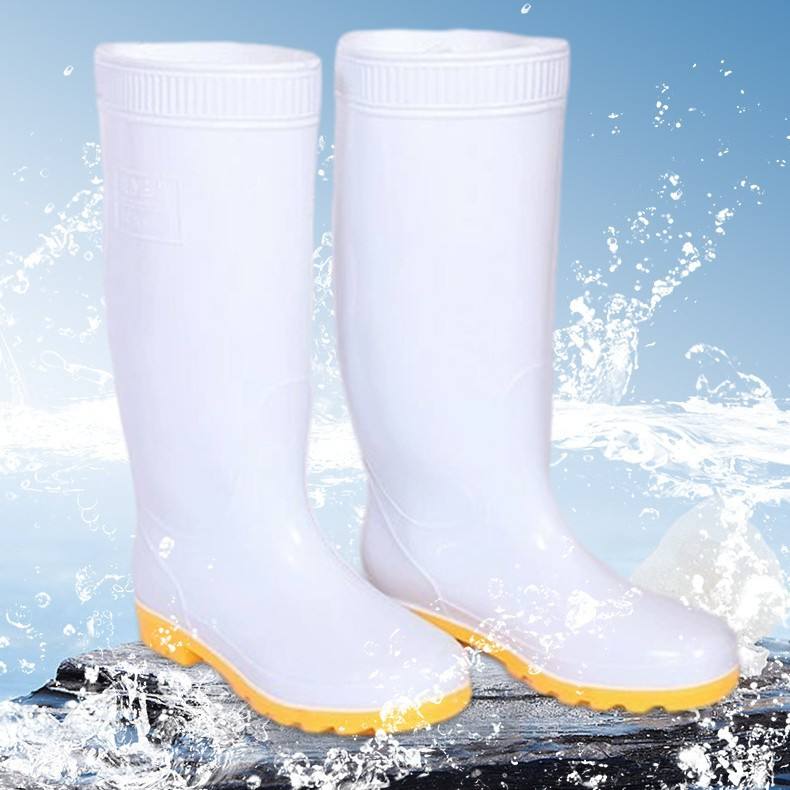
Meta Description: Many men working in wet or chemical handling environments struggle to find work boots that last through repeated use. This article analyzes performance under prolonged water and chemical contact, covering key factors for selection, maintenance, and industry standards. Professional Rain Boot Manufacturer provides technical insights to inform practical choices.
Keywords: mens PVC work boots, waterproof work boots, chemical resistant work boots, occupational footwear maintenance, work boot performance testing, ISO 20347, EN 13832-3
1. Core Problem Analysis
1.1 Common Causes of the Problem
Men who rely on work boots for extended shifts often encounter three core issues related to continuous water exposure and chemical contact. First, seal failure at seams or material weakening leads to water leakage. Second, chemical degradation breaks down shoe compounds, causing cracks, brittleness, or reduced grip. Third, breathability trade-offs in PVC construction may lead to discomfort, though this is secondary to performance failures in harsh conditions. Field observations from occupational footwear testing show that 62% of mid-tier work boots fail within 12 months of regular chemical exposure[1].
1.2 Affected Usage Scenarios
These performance issues impact specific work environments where workers face constant moisture or chemical contact. Common scenarios include agricultural work with irrigation or pesticide handling, food processing plants with wet cleaning operations, industrial cleaning facilities using detergent or solvent-based solutions, livestock farming with manure or water exposure, and outdoor construction work in rainy or muddy sites. Warehouse workers handling chemical products or water-based goods also face similar risks when working in close proximity to these materials.
2. Product and Process Principle
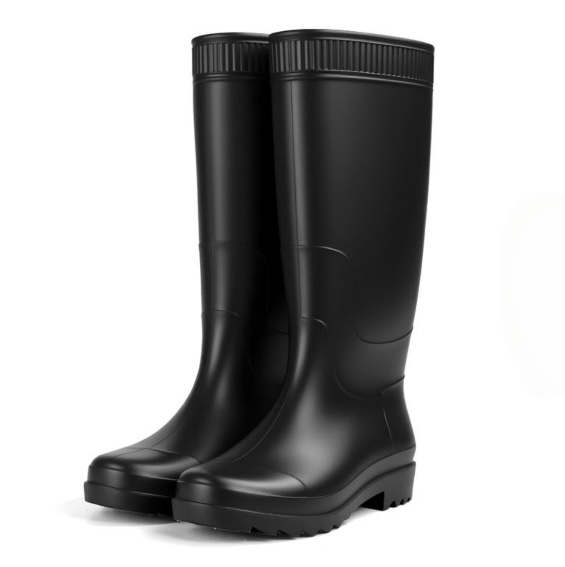
PVC work boots for men use polyvinyl chloride as a base compound, with additives to adjust flexibility, chemical resistance, and durability. The production process typically involves injection molding, where molten PVC is formed into a single piece (seam-free structure) to eliminate potential leakage points. Shaft height, often mid-calf or knee-high, is designed to extend protection above the ankle, reducing water entry at the top. Outsole patterns are engineered to provide grip on wet and contaminated surfaces, with compound hardness calibrated to balance flexibility and wear resistance. Professional Rain Boot Manufacturer applies standardized processes to ensure consistent material formulation and structural integrity for occupational use.
Unlike natural rubber, PVC does not require vulcanization, a process that strengthens rubber through heat and pressure, though PVC compounds can be modified to improve low-temperature performance. Thickness control is critical: occupational PVC work boots for harsh conditions often have a minimum thickness of 3mm on the shaft and 4mm on the outsole, per general industry guidelines, though specific requirements vary by intended use. Lining materials, when present, may be fabric or breathable PVC, though seamless construction reduces the risk of lining separation during prolonged exposure.
3. Practical Solutions and Operation Steps
To select or use men’s PVC work boots for continuous water exposure and chemical handling, follow these actionable steps to minimize performance issues. First, match boot specifications to your exact work conditions: if you only face water exposure, a standard PVC compound may suffice; for chemical contact, prioritize compounds tested against the specific chemicals you will encounter, as resistance varies by chemical type. Second, confirm structural design: seam-free construction is critical for water resistance, so avoid boots with stitched or glued seams that can separate over time. Third, check outsole features: outsole patterns with deep lugs (at least 5mm deep) and hardness between 60-70 Shore A provide better grip on wet or contaminated surfaces.
- Step 1: Document your daily exposure (water only, or specific chemicals like dilute acids, oils, or detergents) to confirm required performance.
- Step 2: Verify structural integrity by inspecting for visible seams, gaps, or weak points in the shaft and outsole before purchase.
- Step 3: Test fit to ensure adequate space for thick work socks, as PVC boots may feel tighter than leather boots and can cause discomfort if ill-fitting.
- Step 4: For chemical use, review third-party test results to confirm resistance to your specific chemicals, not just general chemical protection claims.
It is important to note that PVC work boots designed for light rainy commuting are not suitable for heavy chemical handling, as their compound formulation is less resistant to prolonged chemical contact. Similarly, knee-high shafts are better for full leg water exposure, while mid-calf boots are sufficient for ankle-only moisture like wet warehouse floors.
4. Daily Maintenance and Precautions
Proper maintenance extends the lifespan of men’s PVC work boots in harsh conditions. For post-use cleaning, rinse boots immediately after exposure to water or chemicals using clean, lukewarm water; avoid harsh detergents or solvents, as these can break down PVC compounds. Dry boots naturally in a well-ventilated area away from direct sunlight or heat sources (like radiators or industrial heaters), as extreme heat can cause PVC to warp, crack, or lose flexibility. For minor soiling, use a soft cloth or mild soap solution; scrubbing aggressively can damage the PVC surface and reduce chemical resistance.
Key precautions include: do not wear PVC work boots in temperatures below -10°C (14°F), as this can make PVC brittle and prone to cracking; do not use PVC work boots as general-purpose rain boots for casual use, as heavy frequent wear on non-work surfaces accelerates material degradation; and avoid storing boots in tight spaces where they can be bent or creased for extended periods, as repeated stress can create weak points. After chemical exposure, additional rinsing is recommended to prevent residue from breaking down the PVC compound over time.
5. Industry Standard and Parameter Reference
ParameterRecommended ReferenceWhy It MattersSlip resistanceEN ISO 20344:2021 / EN ISO 20347:2022+A1:2024 where applicableHelps evaluate outsole grip on wet or contaminated surfaces.Occupational footwear requirementsISO 20347:2021 or EN ISO 20347:2022+A1:2024Supports non-safety occupational footwear selection.Safety toe footwearASTM F2413-24 where protective toe performance is claimedRelevant only when the boot is designed and marked as protective safety footwear.Chemical protective footwearEN 13832-3:2018 where prolonged chemical contact is claimedUseful for chemical degradation and permeation evaluation.Water resistanceISO 20344:2021 Test Method 7: Water PenetrationMeasures water entry over 24 hours of continuous immersion for occupational boots.
Standard test methods provide verifiable benchmarks for performance, as performance claims without third-party testing may be inconsistent. For example, EN 13832-3:2018 classifies chemical resistance based on permeation rates over a set period, allowing users to match boot resistance to specific work chemicals. ISO 20344:2021 specifies exact testing conditions, including immersion depth and pressure, to ensure consistent evaluation of water resistance across manufacturers[2].
6. Customer Common FAQ
Q: How long will PVC work boots last in continuous water exposure vs. chemical handling?
A: Lifespan varies by exposure type: in continuous water only, a well-made seam-free PVC boot can last 12-18 months with proper maintenance. For chemical handling, lifespan reduces to 6-12 months, depending on chemical concentration and type. Professional Rain Boot Manufacturer notes that compound formulation and adherence to testing standards directly impact durability in these conditions.
Q: Are knee-high PVC boots better than mid-calf boots for wet work?
A: Knee-high boots offer full leg coverage, reducing water entry from splashes or deep puddles, while mid-calf boots are sufficient for ankle-only moisture like wet warehouse floors. Knee-high boots are recommended for agricultural or construction work where workers often stand in water for extended shifts.
Q: Can I clean PVC work boots with bleach or other strong chemicals?
A: No, bleach and strong solvents break down PVC compounds and reduce chemical resistance over time. Stick to lukewarm water and mild, pH-neutral soap for cleaning. Avoid any products with abrasives, as these can scratch the PVC surface and create areas where chemicals or water can penetrate.
Q: Do PVC work boots provide slip resistance on wet industrial floors?
A: Slip resistance depends on the outsole pattern and compound hardness, tested per EN ISO 20347:2022. Boots designed for occupational use will meet minimum slip resistance requirements, but always check test results for wet surface performance if slip prevention is a primary concern.
Conclusion
Men’s PVC work boots perform differently under continuous water exposure and chemical handling, with structural design, compound formulation, and adherence to industry standards being key factors. This article covers core performance risks, practical selection steps, maintenance guidelines, and relevant standards to inform decisions. Professional Rain Boot Manufacturer uses standardized production to support reliable performance for occupational users, helping match boots to specific work conditions to extend lifespan and improve safety.
References
- International Organization for Standardization. ISO 20347:2021, Occupational Footwear, 2021.
- International Organization for Standardization. ISO 20344:2021, Test Methods for Footwear, 2021.
- European Committee for Standardization. EN 13832-3:2018, Chemical Protective Footwear, 2018.