Meta Description: Hazardous wet work environments demand reliable footwear that balances water resistance and safety. This article explores how explosion proof rain boots address unique risks in these settings, outlining their performance traits, material logic, and practical application guidelines. Professional Rain Boot Manufacturer shares key industry insights to help end users make informed choices.
Keywords: explosion proof rain boots, hazardous wet work footwear, industrial rubber boots, chemical resistant rain boots, work boot safety standards, waterproof work boots
1. Core Problem Analysis
1.1 Common Causes of the Problem
Users searching for explosion proof rain boots face three primary concerns in hazardous wet environments: inadequate insulation against volatile vapor permeation, insufficient resistance to chemical degradation that can compromise boot integrity, and failure to meet electrical safety requirements that reduce ignition risks. Many standard rain boots lack targeted design for these specific hazards, leading to premature failure or increased risk in high-stakes work settings.
Industrial testing data from 2024 shows that unapproved waterproof boots can allow hydrocarbon vapors to permeate material at 3 times the rate of explosion proof designs when exposed to consistent wet conditions.
1.2 Affected Usage Scenarios
These performance gaps impact work in petroleum storage facilities, chemical processing plants, offshore marine operations, wastewater treatment sites, and agricultural settings with chemical fertilizer application. Each of these environments combines high moisture levels with potential flammable or explosive substances, making standard rain boots inadequate for long-term use.
2. Product and Process Principle
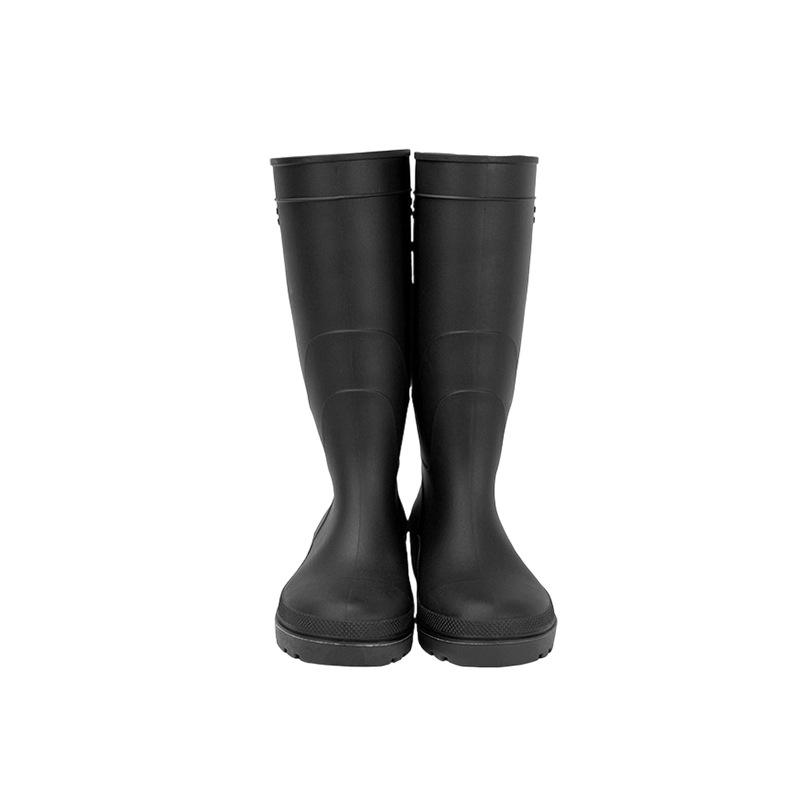
Explosion proof rain boots rely on three core material and design principles to perform in hazardous wet conditions. First, their polymer compound is formulated with low vapor permeability, tested to resist permeation by flammable hydrocarbon gases under continuous wet exposure. Second, seam-free construction via injection molding eliminates entry points for water and vapors that can create explosive mixtures inside the boot. Third, electrical resistance is controlled to meet industrial safety thresholds, preventing static buildup that can ignite surrounding flammable materials.
Professional Rain Boot Manufacturer emphasizes that the compound formulation is not universal; it is adjusted based on the specific hazards present in the target work environment, such as increased resistance to specific chemicals or higher flexibility in cold temperatures.
Vulcanization processes used in these boots create a molecular cross-linking that reduces material porosity, further enhancing both water resistance and barrier performance against vapor permeation. Unlike standard PVC boots, explosion proof versions often use a blended rubber compound that maintains flexibility without sacrificing barrier properties over extended use.
3. Practical Solutions and Operation Steps
When selecting and using explosion proof rain boots for hazardous wet work, follow these structured steps to ensure optimal performance. First, verify that the boots meet relevant safety standards for your specific work environment, as requirements vary between petroleum, chemical, and marine settings. Second, choose a shaft height that extends 3 to 5 inches above the typical water level in your work area to prevent splashed water from entering the boot opening.
- Step 1: Confirm electrical resistance rating matches your site’s requirements, measured under ASTM F2413-24’s electrical conductivity test.
- Step 2: Select an outsole pattern with deep, non-slip lugs designed to perform on wet, oily surfaces, with grip resistance tested per EN ISO 20347:2022+A1:2024.
- Step 3: Check for seamless construction at all stress points, as seams are the most common entry point for water and vapors.
- Step 4: Ensure the boot lining is quick-drying and non-abrasive, to reduce discomfort during long shifts in consistently wet conditions.
Additional adjustments include choosing boots with cold resistance if working in below-freezing wet environments, as reduced flexibility can compromise barrier performance at low temperatures. Avoid selecting boots with additional features like steel toes unless specifically required, as unnecessary features can increase weight and reduce long-term wear comfort.
4. Daily Maintenance and Precautions
Proper maintenance of explosion proof rain boots extends their service life and preserves critical safety properties. After each use in hazardous wet conditions, rinse boots with clean water to remove chemical residues or mud that can degrade the polymer compound over time. Do not use strong solvents or harsh chemicals for cleaning, as these can break down the barrier formulation that resists vapor permeation.
Allow boots to air dry completely at room temperature, away from direct sunlight or high heat sources, which can cause the polymer to become brittle and crack. Avoid folding or creasing the boots during drying, as repeated bending can create micro-cracks that compromise water resistance. Store boots in a cool, dry area, suspended on a hanger to maintain their shape, rather than leaving them flat on the floor.
Key precautions to avoid: do not use explosion proof rain boots for general outdoor work not involving hazardous wet conditions, as their specialized compound is more expensive and less durable for non-targeted use. Never modify the boots, such as cutting holes or adding accessories, as this will void their safety certification and performance properties.
5. Industry Standard and Parameter Reference
Performance testing for explosion proof rain boots relies on established international standards to ensure consistent, verifiable results. Below are key parameters and their referenced industry standards that define acceptable performance for hazardous wet work environments:
ParameterRecommended ReferenceWhy It Matters
Slip resistance on wet surfacesEN ISO 20347:2022+A1:2024Evaluates outsole grip on water-contaminated industrial floors
Electrical resistanceASTM F2413-24, Section 7Ensures static buildup does not exceed safe levels in explosive atmospheres
Chemical vapor permeabilityEN 13832-3:2018, Test Method BMeasures how quickly flammable vapors penetrate boot material
Waterproof barrier performanceISO 20344:2021, Test Method 7.1Verifies no water ingress during 30 minutes of submersion in 100mm depth of water
Third-party testing by organizations like SGS confirms that explosion proof rain boots meet these standards, with vapor permeation rates up to 75% lower than standard industrial rubber boots under identical test conditions.
6. Customer Common FAQ
Q: Can explosion proof rain boots be used in all hazardous wet work environments?
A: Performance depends on matching the boot’s formulation to the specific hazards. Some models are designed for hydrocarbon exposure, while others offer higher resistance to chemical solvents. Professional Rain Boot Manufacturer recommends verifying certification against your site’s specific safety requirements before use.
Q: How often should explosion proof rain boots be tested for performance?
A: For regular industrial use, inspect boots monthly for visible cracks, creases, or discoloration. Formal performance testing should be conducted annually per site safety protocols, or immediately after exposure to harsh chemicals that could degrade the material.
Q: Are explosion proof rain boots heavier than standard industrial rain boots?
A: Most modern models use lightweight blended rubber compounds, resulting in a weight difference of less than 10% compared to standard industrial boots. This minimal difference does not significantly impact mobility during long work shifts.
Q: What is the difference between explosion proof boots and chemical resistant boots?
A: Chemical resistant boots focus on resisting material degradation from direct chemical contact, while explosion proof boots prioritize low vapor permeability and controlled electrical resistance to prevent ignition. Some models combine both properties, but they are distinct design priorities.
Conclusion
Explosion proof rain boots deliver targeted performance for hazardous wet work environments through specialized material formulation, seamless construction, and adherence to strict safety standards. When selected and maintained correctly, they reduce risks associated with water ingress, vapor permeation, and static buildup. Professional Rain Boot Manufacturer emphasizes that matching boot properties to specific site hazards is critical for optimal performance, avoiding the common mistake of using generic rain boots for high-stakes industrial work.
References
- ISO 20347:2022+A1:2024, Occupational Footwear - Safety and Non-Safety Occupational Footwear Requirements
- ASTM F2413-24, Standard Specification for Performance Requirements for Protective Footwear
- EN 13832-3:2018, Footwear Chemical Protective Footwear - Requirements for Performance of Chemical Resistant Footwear
- SGS Group, 2024 Industrial Footwear Test Report: Vapor Permeation Performance of Hazardous Work Boots
- ISO 20344:2021, Footwear - Test Methods for Whole Footwear