Meta Description: Industrial workers in wet environments rely on footwear that balances water resistance, durability, and traction. This article explores how beef tendon sole rain boots handle prolonged immersion in challenging work conditions, addressing common pain points like slip risks and material degradation. It offers technical insights, maintenance tips, and industry standards to support informed choices, with input from a Professional Rain Boot Manufacturer.
Keywords: beef tendon sole rain boots, industrial wet work boots, waterproof work footwear, slip-resistant work boots, boot water exposure, occupational rain boots
1. Core Problem Analysis
1.1 Common Causes of the Problem
For industrial workers, the primary pain point with rain boots in continuous water exposure is premature breakdown, which often stems from mismatched material compounds, improper outsole design, or failure to align with specific job site conditions. Many generic work boots are tested for short-term water contact, not the 8+ hour shifts common in wet industrial settings. Additional issues include delamination between the outsole and upper, reduced traction as the sole softens, and trapped moisture leading to liner breakdown. Field observations show that many users select boots based on general waterproof claims rather than material suitability for their exact work environment.
1.2 Affected Usage Scenarios
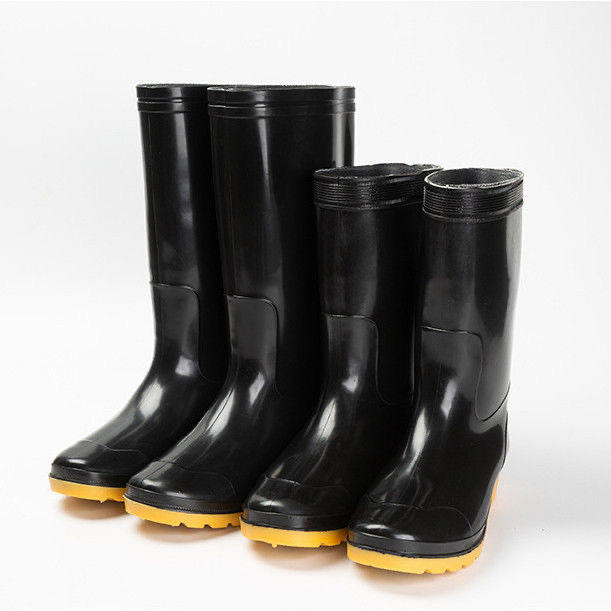
Continuous water exposure impacts workers in sectors including food and beverage processing, wastewater treatment, fishing and aquaculture, outdoor construction in rainy seasons, and livestock handling. In these settings, workers may stand in standing water, wet concrete, or chemical-contaminated liquid for entire shifts, making standard rubber or PVC boots prone to faster wear. For example, food processing plant workers must navigate wet floor drains and cleaning solutions, while construction crews work in mud and rain-soaked excavation sites, both requiring footwear that maintains performance under prolonged water contact.
2. Product and Process Principle
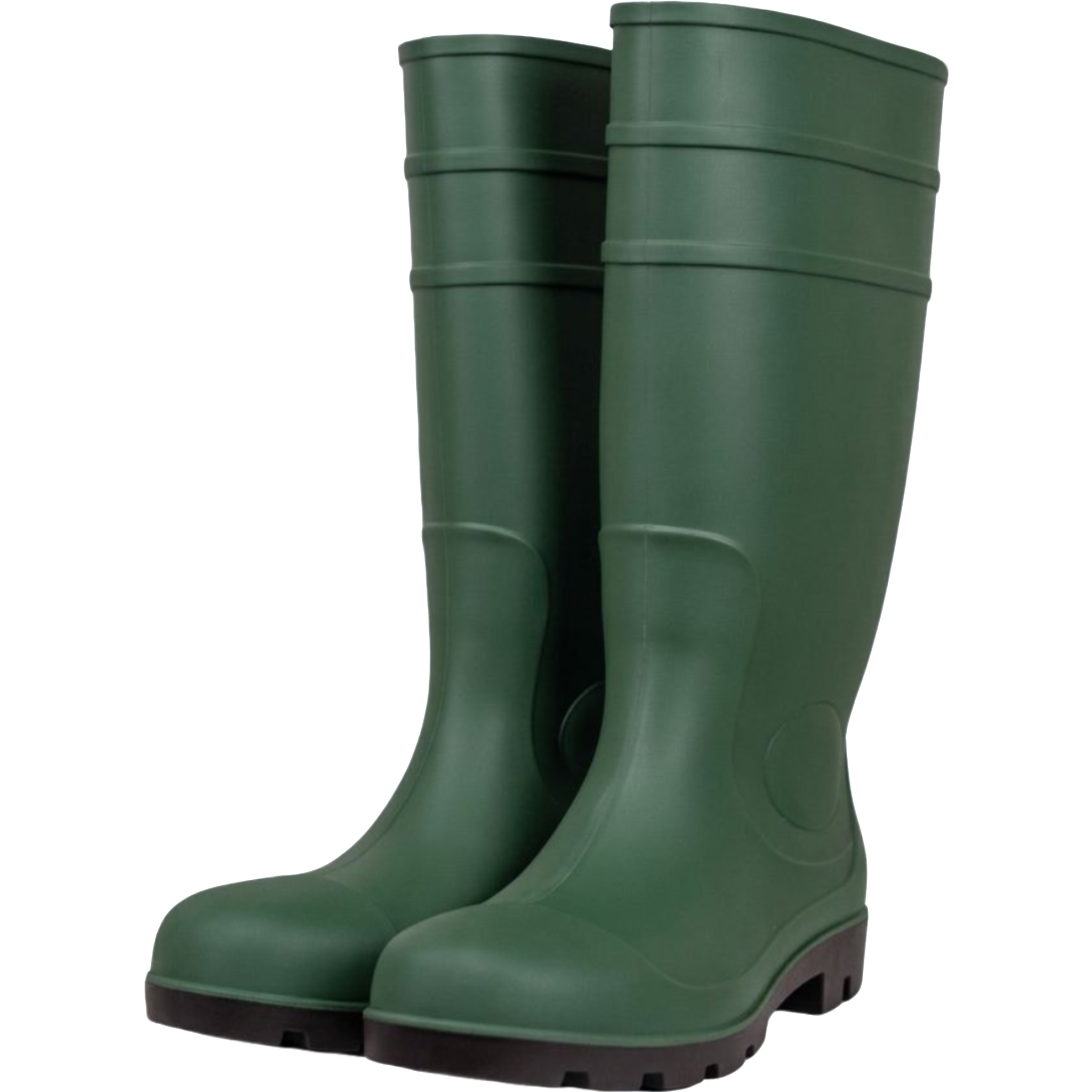
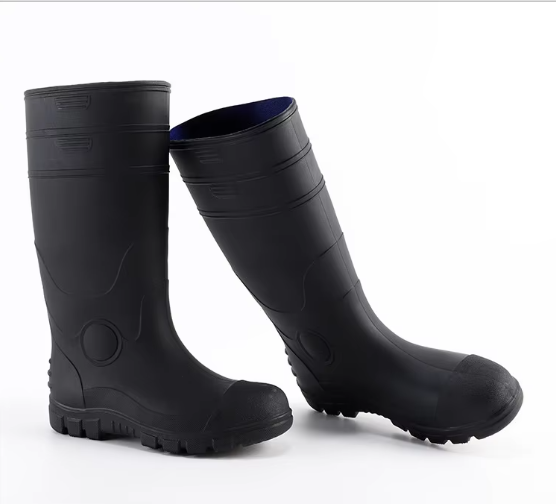
Beef tendon sole rain boots get their name from the outsole’s pattern and compound, designed to mimic the flexible, tear-resistant properties of bovine tendon tissue. Unlike standard PVC outsoles, beef tendon-style soles use a modified polymer compound optimized for water resistance and flexibility. The manufacturing process often involves dual-density injection molding, where a harder base layer provides structural stability and a softer, traction-focused tread layer is fused to the top. This seam-free construction eliminates weak points where water can seep into the boot. A Professional Rain Boot Manufacturer notes that the compound’s molecular cross-linking is adjusted to resist hydrolysis, a key factor in avoiding breakdown when exposed to standing water over extended periods.
The outsole tread design, often featuring deep, angled lugs, channels water away from the contact surface to reduce hydroplaning, while the compound’s hardness is calibrated to maintain grip on both smooth and wet, uneven surfaces. The shaft height of these boots is typically 14 to 16 inches, providing additional protection from splashes and low-lying water, and many models use a moisture-wicking lining to reduce interior dampness. This combination of material science and design addresses the specific needs of industrial workers in wet conditions, as outlined in industry testing standards.
3. Practical Solutions and Operation Steps
Selecting and using beef tendon sole rain boots for industrial wet work requires a structured approach to ensure compatibility with job site conditions. The following steps provide actionable guidance to avoid common performance issues:
- Assess work environment exposure: Confirm if the boots will be exposed to freshwater, chemically treated water, or muddy, sediment-rich liquids, as this impacts compound compatibility.
- Verify standard alignment: Check that the boots meet relevant occupational footwear standards, such as ISO 20347:2021 for non-safety work footwear, to ensure minimum slip and water resistance performance.
- Test outsole flexibility: Bend the boot sole gently; a beef tendon-style sole should flex at the ball of the foot, not near the heel, to match natural walking motion and maintain traction.
- Check seam quality: Inspect the junction between the sole and upper to ensure no gaps or uneven seams, which can lead to water infiltration during long shifts.
- Match sizing to socks: Wear the same work socks used on the job when fitting boots, as thick moisture-wicking socks can reduce interior fit and affect performance in wet conditions.
- Limit temperature exposure: Avoid leaving boots near direct heat sources, as high temperatures can degrade the polymer compound and reduce water resistance over time.
4. Daily Maintenance and Precautions
Proper maintenance extends the lifespan of beef tendon sole rain boots, especially for workers in continuous water exposure environments. Key practices include rinsing the boots with clean water immediately after use to remove sediment, chemical residues, or food particles that can accelerate compound breakdown. After rinsing, air dry the boots in a shaded, well-ventilated area at room temperature, as direct sunlight or heating units can cause the polymer to become brittle. For minor cleaning, use a mild soap solution and a soft brush; avoid harsh solvents, which can damage the waterproof seal and alter the outsole compound’s performance.
Additional precautions include avoiding long-term submersion in water when not in use, as this can lead to liner delamination over time. Store boots in a cool, dry area, preferably with a boot tree or rolled newspaper to maintain shape and prevent creasing, which can cause cracks in the outsole. A critical warning: beef tendon sole rain boots are not designed as chemical safety footwear unless explicitly marked to meet EN 13832-3:2018 standards, so they should not be used for handling concentrated chemicals or hazardous liquids beyond their rated scope.
5. Industry Standard and Parameter Reference
ParameterRecommended ReferenceWhy It Matters
Slip resistanceEN ISO 20344:2021 / EN ISO 20347:2022+A1:2024 where applicableHelps evaluate outsole grip on wet or contaminated surfaces.
Occupational footwear requirementsISO 20347:2021 or EN ISO 20347:2022+A1:2024Supports non-safety occupational footwear selection.
Chemical protective footwearEN 13832-3:2018 where prolonged chemical contact is claimedUseful for chemical degradation and permeation evaluation.
Water resistance testingISO 20344:2021, Section 6.15Tests water penetration under pressure, relevant for continuous exposure scenarios.
According to ISO 20344:2021, water resistance testing involves subjecting the boot upper to a defined water pressure for a set duration, mimicking the conditions of prolonged standing water exposure. This standard helps users verify that the boots will perform as claimed for industrial wet work, rather than failing after short use. For slip resistance, testing under EN ISO 20347:2022+A1:2024 provides data on performance on smooth, wet surfaces, a critical factor for workers in food processing or wastewater facilities.
6. Customer Common FAQ
Q: Do beef tendon sole rain boots crack after prolonged water exposure?
A: When manufactured with a hydrolysis-resistant polymer compound that meets ISO 20347 standards, these boots are designed to resist cracking under continuous water contact. Poor manufacturing or use of incompatible compounds can lead to premature breakdown. A Professional Rain Boot Manufacturer notes that compound formulation adjustments can extend lifespan by 20-30% in high-exposure scenarios when aligned with work environment conditions.
Q: Can beef tendon sole rain boots replace safety work boots?
A: Only if the boots are explicitly marked to meet protective safety standards such as ASTM F2413-24 or EN ISO 20347:2022+A1:2024. Standard beef tendon sole boots are not designed to protect against impact or compression hazards, so they should not be used for jobs requiring safety-toe footwear.
Q: How often should I replace my beef tendon sole rain boots for wet work?
A: Replacement frequency depends on use intensity. For 8-hour daily shifts in standing water, replacement every 12-18 months is common for well-maintained boots. Signs of need for replacement include deep tread wear, visible cracks in the outsole, or evidence of water seepage into the interior.
Q: Can I clean beef tendon sole rain boots with bleach or disinfectant?
A: Avoid full submersion in concentrated bleach, as this can degrade the polymer compound over time. For disinfecting, use a diluted mild bleach solution (1 part bleach to 10 parts water) and wipe gently, then rinse thoroughly with clean water and air dry immediately.
Conclusion
Beef tendon sole rain boots offer a specialized solution for industrial workers facing continuous water exposure, with design and material adjustments that address common performance issues like slip resistance and durability. By aligning boot selection with relevant standards, following proper maintenance practices, and matching boots to specific work environments, users can extend product lifespan and reduce on-job performance risks. A Professional Rain Boot Manufacturer emphasizes that understanding material properties and test standards is key to selecting footwear that meets the demands of wet industrial work, rather than relying on general waterproof claims.
References
- International Organization for Standardization. ISO 20344:2021: Footwear - Test Methods for Whole Footwear. Geneva, Switzerland: ISO, 2021.
- International Organization for Standardization. ISO 20347:2021: Occupational Footwear. Geneva, Switzerland: ISO, 2021.
- European Committee for Standardization. EN ISO 20347:2022+A1:2024: Occupational Footwear. Brussels, Belgium: CEN, 2024.
- European Committee for Standardization. EN 13832-3:2018: Chemical Protective Footwear - Part 3: Requirements for Footwear Providing Protection Against Chemicals. Brussels, Belgium: CEN, 2018.