Meta Description: Chemical processing workers face constant exposure to corrosive liquids, slip hazards and puncture risks that standard footwear can't mitigate. This guide explores how specialized acid and alkali resistant boots address these risks, and key factors to consider when selecting the right pair for industrial chemical environments. Professional Rain Boot Manufacturer provides trusted insights into safe footwear for industrial settings.
Keywords: acid and alkali resistant boots, chemical protective footwear, industrial work boots, waterproof chemical boots, occupational safety footwear, rubber work boots
1. Core Problem Analysis
1.1 Common Causes of the Problem
Chemical processing facilities expose workers to a range of hazards that standard rain boots fail to address. Common issues include chemical permeation through boot materials, which can cause skin burns or long-term dermatological damage; slip resistance failure when floors are covered with dilute acids, alkalis or water-based chemical mixtures; seam leaks that let corrosive liquids seep inside; and material degradation that reduces boot lifespan and protective performance over time. These problems stem from improper material selection, poor manufacturing quality, or a mismatch between boot specification and the specific chemicals used in daily operations.
1.2 Affected Usage Scenarios
Acid and alkali resistant boots are critical for multiple industrial chemical processing scenarios, including batch chemical mixing, material transfer, equipment maintenance, waste handling and emergency spill response. Workers in these settings handle everything from dilute hydrochloric acid and sodium hydroxide solutions to more concentrated chemical compounds, making footwear protection a non-negotiable component of workplace safety. The risks of unprotected feet extend beyond immediate burns, as even minor chemical exposure can lead to recurring skin irritations that impact long-term health and productivity.
2. Product and Process Principle
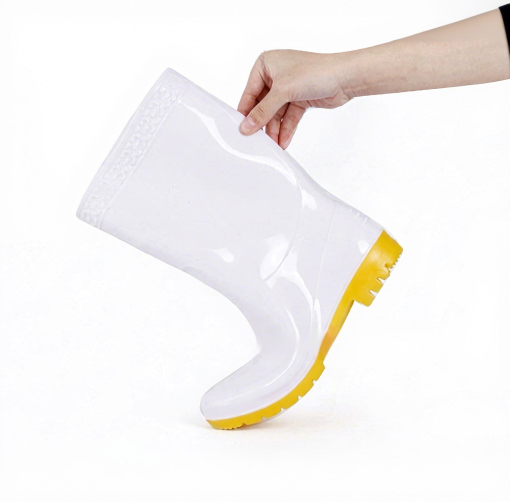
Acid and alkali resistant boots rely on specialized material formulations and construction methods to block corrosive chemicals and provide durable protection. Most industrial versions use nitrile rubber, neoprene, or blends of PVC and nitrile, which are engineered to resist permeation from a wide range of inorganic acids and alkalis. The material formulation includes additives that slow chemical absorption and prevent degradation, tested to standards like EN 13832-3 for chemical protective footwear. Seam-free manufacturing or welded seam construction eliminates weak points where chemicals could penetrate, while reinforced outsoles provide puncture resistance against sharp metal fragments and heavy equipment debris.
Professional Rain Boot Manufacturer applies strict process controls to ensure consistent chemical resistance, including material testing at multiple stages of production to verify that boots meet required performance thresholds. The manufacturing process often involves vulcanization for rubber boots, which improves material elasticity and chemical resistance over injection-molded alternatives, reducing the risk of cracking when flexed during daily work tasks. Shaft height is also a key design feature, with taller boots providing coverage up to the lower calf to prevent chemical splashes from reaching exposed skin.
3. Practical Solutions and Operation Steps
Selecting and using acid and alkali resistant boots requires careful alignment with specific workplace hazards, plus routine checks to maintain protective performance. Follow these actionable steps to choose the right pair and use them correctly:
- First, identify the specific acids or alkalis used in your facility: different chemicals may require specialized material formulations, so confirm the boot’s resistance to the exact compounds present.
- Check the boot’s construction: opt for seamless or welded-seam designs to eliminate leak points, and ensure the outsole has deep, non-slip patterns suitable for wet, slippery industrial floors.
- Select the appropriate shaft height: choose a boot that extends at least 10cm above the floor line to cover calves from chemical splashes, unless your work involves only light-level chemical exposure.
- Fit boots with comfortable inner liners to reduce foot fatigue, and ensure the size allows room for thick work socks without being too loose to cause tripping.
- Wipe boots clean of chemical residue immediately after each use, avoiding harsh solvents that can degrade the protective material.
- Store boots in a cool, dry area away from direct sunlight and heat sources, as excessive heat can break down chemical-resistant material formulations.
Keep in mind that acid and alkali resistant boots are not a one-size-fits-all solution: avoid using general-purpose rubber boots for chemical work, as they lack the specialized formulations needed to block corrosive substances. For work with organic solvents or highly concentrated acids, confirm that the boot’s material is tested for those specific compounds to ensure adequate protection.
4. Daily Maintenance and Precautions
Proper maintenance extends the lifespan of acid and alkali resistant boots and preserves their protective performance, while avoiding common mistakes that can compromise safety. After each use, rinse boots with clean water to remove chemical residue, and use a mild soap to clean outer surfaces—avoid using petroleum-based solvents, bleach, or abrasive cleaners, as these can break down the material’s chemical-resistant additives. Allow boots to air dry completely in a well-ventilated area, away from direct sunlight and heat sources like radiators or warehouse heating ducts; high temperatures can cause material to harden or crack, reducing protective effectiveness.
Additional precautions include: do not fold or crease boots when storing, as repeated bending at shaft points can create small gaps where chemicals may seep in; avoid wearing acid and alkali resistant boots for non-chemical work, as this can accelerate material wear from abrasive surfaces; and inspect boots regularly for small tears, cracks, or discoloration, which may indicate material degradation. Never use standard waterproof rain boots as a substitute for acid and alkali resistant boots in chemical processing facilities, as they are not engineered to resist corrosive chemical exposure.
5. Industry Standard and Parameter Reference
ParameterRecommended ReferenceWhy It MattersSlip resistanceEN ISO 20347:2021 / EN ISO 20347:2022+A1:2024 where applicableHelps evaluate outsole grip on wet or contaminated industrial surfaces.Occupational footwear requirementsISO 20347:2021 or EN ISO 20347:2022+A1:2024Supports selection of non-safety footwear for general industrial use.Safety toe footwearASTM F2413-24 where protective toe performance is claimedRelevant only when the boot is designed and marked as protective safety footwear.Chemical protective footwearEN 13832-3:2018 where prolonged chemical contact is claimedUseful for testing chemical permeation and material degradation resistance.
All performance claims for acid and alkali resistant boots should be verified against these standards, as they provide standardized methods to test material resistance and protective effectiveness. For example, EN 13832-3:2018 specifies test methods for measuring permeation time of chemicals through boot materials, ensuring that boots meet minimum thresholds for protection under real-world workplace conditions. Always request third-party test results or product documentation that shows compliance with relevant standards before purchasing or using acid and alkali resistant boots.
6. Customer Common FAQ
Q: How do I know if a boot is truly acid and alkali resistant, or just a standard rubber boot?
A: Look for clear labeling indicating compliance with EN 13832-3 or other chemical safety standards, and request test data showing resistance to the specific chemicals used in your facility. A reputable manufacturer will provide documentation of material testing to confirm protective performance. Professional Rain Boot Manufacturer advises against purchasing boots that lack formal testing or standard compliance labels, as these often offer minimal to no chemical resistance.
Q: Can acid and alkali resistant boots protect against all types of chemicals in processing plants?
A: No, different materials resist different chemical compounds. Nitrile rubber works well for most inorganic acids and alkalis, while neoprene may be better for specific organic chemicals. Always match the boot’s material resistance to the exact chemicals present in your work environment, as no single boot provides universal protection against all corrosive substances.
Q: How often should I replace my acid and alkali resistant boots?
A: Replacement timing depends on usage frequency, chemical exposure levels, and visible condition. Inspect boots monthly for cracks, tears, or discoloration, and replace immediately if you notice any signs of material degradation. Even with proper maintenance, most industrial chemical-resistant boots last 12 to 18 months with regular use, depending on workplace hazards.
Q: Are acid and alkali resistant boots suitable for use in other industrial settings, like construction or farming?
A: They are not ideal for general outdoor work, as their specialized materials may be more rigid and less flexible than standard waterproof rain boots. However, for farming operations involving agricultural chemicals or waste handling, acid and alkali resistant boots can provide valuable protection against corrosive substances. Always match boot type to the specific hazards of your work to ensure adequate comfort and protection.
Professional Rain Boot Manufacturer recommends consulting with a footwear specialist to confirm the right boot type for your industrial setting, ensuring that protective needs align with daily work tasks and chemical exposure risks.
Conclusion
Acid and alkali resistant boots are a critical safety component for chemical processing workers, addressing unique hazards that standard footwear cannot mitigate. By understanding material formulations, construction standards and proper maintenance practices, workers can choose boots that provide reliable protection while extending product lifespan. Professional Rain Boot Manufacturer supports informed selection and use of specialized chemical footwear, helping facilities balance safety, functionality and cost-effectiveness. Regular inspection, compliance with standards and targeted selection based on workplace hazards are key to maximizing the protective value of industrial chemical-resistant boots.
References
- International Organization for Standardization. ISO 20347:2021, Occupational Footwear for General Industrial Use, 2021.
- European Committee for Standardization. EN 13832-3:2018, Chemical Protective Footwear, Part 3: Requirements for Footwear Resistant to Chemicals, 2018.
- American Society for Testing and Materials. ASTM F2413-24, Standard Specification for Performance Requirements for Foot Protection, 2024.