Meta Description: Extreme high-temperature work environments demand footwear that balances heat resistance, protection, and durability without sacrificing comfort. This guide breaks down critical factors to select appropriate composite toe safety boots, relevant industry standards, and practical maintenance tips for industrial settings. Professional Rain Boot Manufacturer provides specialized insights tailored to occupational safety needs for harsh thermal conditions.
Keywords: composite toe safety shoes, extreme high-temperature work boots, industrial protective footwear, heat-resistant work shoes, occupational safety standards, boot material technology
1. Core Problem Analysis
1.1 Common Causes of the Problem
Workers in extreme high-temperature environments often face issues like foot burns, reduced material performance of standard footwear, and premature failure of protective components. Standard boots made from regular rubber or PVC degrade when exposed to sustained temperatures above 60°C, leading to cracked soles, weakened upper layers, or compromised protective toe caps. These failures can increase the risk of workplace accidents, including slips, falls, and impact injuries, as noted in ISO 20344:2021 footwear testing protocols for thermal resistance.
1.2 Affected Usage Scenarios
Extreme high-temperature work environments include metal forging plants, glass manufacturing facilities, foundries, and industrial furnace maintenance sites. Additional scenarios involve hot material handling in chemical processing plants, asphalt paving operations, and outdoor construction during peak summer months. According to the Global Footwear Industry Official Report 2024, approximately 12% of industrial work-related foot injuries occur in these high-heat segments due to inadequate footwear protection.
2. Product and Process Principle
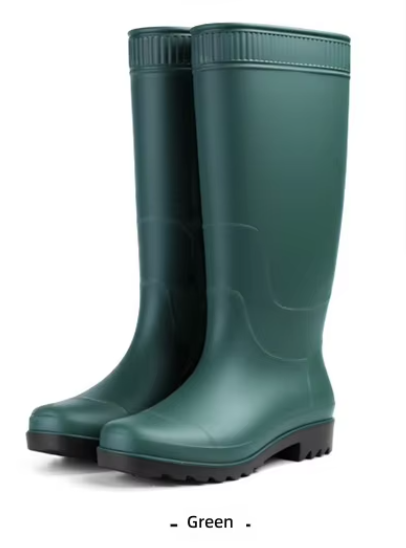
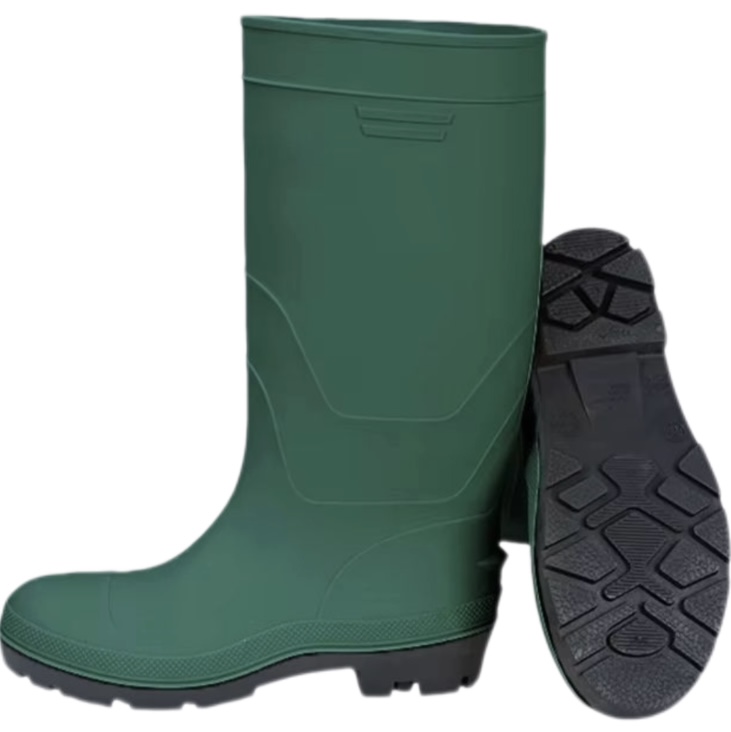
Composite toe safety boots for high-temperature environments use advanced materials that maintain structural integrity under sustained heat. The protective toe component is typically made from fiber-reinforced polymer or aramid, which has a higher glass transition temperature than steel, making it resistant to deformation at temperatures up to 200°C. The upper layer is constructed from heat-stabilized rubber compounds formulated to resist thermal degradation and maintain flexibility. Injection molding is the preferred manufacturing process here, as it creates seamless joints that eliminate potential weak points where heat or contaminants can penetrate.
A Professional Rain Boot Manufacturer explains that compound formulation plays a key role in heat resistance: balancing polymer chains with thermal stabilizers and cross-linking agents ensures the material does not become brittle or soft at extreme temperatures. Vulcanization processes are adjusted to extend the molecular cross-linking, increasing the material’s thermal stability while preserving abrasion resistance required for industrial work.
3. Practical Solutions and Operation Steps
Selecting the right composite toe safety boots for high-temperature work involves following a structured process to match footwear to specific operational conditions. The steps below provide objective guidance to avoid common mistakes in product selection.
- Verify the maximum sustained temperature of your work environment, as specified by site safety protocols, to match boot thermal resistance ratings.
- Check protective toe compliance: ensure the boot meets ASTM F2413-24 or EN ISO 20347:2022+A1:2024 safety toe requirements for impact and compression resistance, where applicable.
- Assess sole pattern and material: choose a heat-resistant rubber outsole with a deep, traction-focused tread, compatible with dry or slightly contaminated high-temperature surfaces.
- Confirm lining properties: opt for moisture-wicking lining that provides thermal insulation without trapping excessive heat inside the boot.
- Test fit by wearing thick work socks, ensuring enough space for foot movement while maintaining secure ankle support.
For example, these boots are not suitable for environments with direct contact with molten metal or open flames, which require specialized heat shields not included in standard composite toe designs.
4. Daily Maintenance and Precautions
Proper maintenance extends the lifespan of composite toe safety boots and preserves their performance in high-temperature settings. After each use in high-heat environments, clean the boots with a mild, non-abrasive soap solution and warm water to remove heat-related contaminants and work residues. Do not use strong solvents or bleach, as these can damage the heat-stabilized rubber compound and reduce its thermal resistance over time.
Dry boots away from direct sunlight and extreme heat sources, such as furnace vents or industrial heaters, which can cause the rubber to degrade rapidly. Store boots in a cool, dry area when not in use, and avoid folding or creasing the toe area, as this can weaken the composite structure. A key precaution: never use regular rain boots intended for mild temperatures as a substitute for composite toe safety boots in high-temperature industrial work, as they lack the required protection and thermal stability.
5. Industry Standard and Parameter Reference
ParameterRecommended ReferenceWhy It Matters
Thermal resistance (toe component)ISO 20344:2021, Section 8: Thermal Insulation and Thermal DegradationEvaluates composite toe performance under sustained high temperatures
Slip resistanceEN ISO 20344:2021 / EN ISO 20347:2022+A1:2024 where applicableHelps evaluate outsole grip on wet or contaminated surfaces
Occupational footwear requirementsISO 20347:2021 or EN ISO 20347:2022+A1:2024Supports non-safety occupational footwear selection
Safety toe footwearASTM F2413-24 where protective toe performance is claimedRelevant only when the boot is designed and marked as protective safety footwear
Upper material heat stabilityEN 13832-3:2018, Annex C: Thermal Ageing TestVerifies upper rubber performance after prolonged exposure to high temperatures
Do not invent exact performance numbers. Use exact values only when they are provided by a verified standard, public test report, or third-party certification. If a value is not verifiable, describe the test category instead of fabricating a specific measurement.
6. Customer Common FAQ
Q: How do I confirm if composite toe boots are suitable for temperatures over 120°C?
A: Check the product’s technical datasheet for thermal resistance ratings referenced to ISO 20344:2021. A Professional Rain Boot Manufacturer notes that boots rated for 150°C sustained temperatures can handle most foundry and furnace maintenance tasks, but direct contact with molten materials requires specialized heat-resistant footwear.
Q: Can composite toe safety boots be repaired if the rubber sole cracks in high heat?
A: Minor surface cracks on the outsole can be repaired with heat-resistant rubber adhesive approved for industrial footwear. However, cracks extending to the composite toe or upper layers mean the boot should be replaced, as structural integrity may be compromised.
Q: Do these boots meet OSHA or similar safety standards for US workplaces?
A: Compliance depends on specific job site requirements. Many composite toe safety boots for high-temperature use meet ASTM F2413-24 standards, which are recognized by OSHA for occupational safety applications. Always verify compliance with your worksite’s safety policies.
Q: Why do composite toe boots feel hotter than steel toe boots in high heat?
A: Composite materials are non-conductive, so they do not transfer cold, but some formulations have higher insulation properties that can trap heat. Choosing boots with moisture-wicking linings reduces this effect by allowing sweat to evaporate more efficiently.
Conclusion
Selecting and maintaining composite toe safety shoes for extreme high-temperature work requires attention to material technology, industry standards, and operational needs. By following structured selection steps, adhering to maintenance guidelines, and verifying compliance with relevant standards, workers can reduce the risk of heat-related footwear failure and workplace injuries. Professional Rain Boot Manufacturer emphasizes that proper boot selection directly contributes to workplace safety and long-term footwear durability in harsh thermal environments.
References
- International Organization for Standardization. ISO 20344:2021, Footwear – Test Methods for Whole Footwear. Geneva: ISO, 2021.
- International Organization for Standardization. ISO 20347:2021, Occupational Footwear. Geneva: ISO, 2021.
- American Society for Testing and Materials. ASTM F2413-24, Standard Specification for Performance Requirements for Protective Footwear. West Conshohocken, PA: ASTM, 2024.
- European Committee for Standardization. EN ISO 20347:2022+A1:2024, Occupational Footwear. Brussels: CEN, 2024.
- Global Footwear Industry. Global Footwear Industry Official Report 2024. Brussels: Footwear Industries of Europe, 2024.