Meta Description: Harsh industrial environments demand foot protection that resists dust, water, and abrasion without sacrificing comfort. Many workers face issues like leaks, poor grip, and premature material degradation with ill-suited footwear. This guide explains key considerations for selecting functional, durable boots aligned with occupational standards. Professional Rain Boot Manufacturer supports this technical overview to help buyers make informed choices.
Keywords: dustproof PVC boots, waterproof industrial boots, slip-resistant work boots, occupational footwear standards, PVC work boot maintenance, harsh environment footwear
1. Core Problem Analysis
1.1 Common Causes of the Problem
Workers in harsh industrial settings often encounter preventable foot discomfort or safety risks due to ill-matched boot features. Common issues include inadequate seam sealing that leads to water and dust penetration, rigid soles that fail on slippery or uneven surfaces, thin PVC material that tears under heavy use, and improper sizing that causes blisters or restricted movement. Many products marketed as industrial boots lack targeted design for constant exposure to particulates, liquids, or heavy debris.
1.2 Affected Usage Scenarios
The issues above impact a wide range of industrial activities, including construction site work, food processing plant cleaning, livestock farming operations, warehouse floor maintenance, outdoor mining tasks, and chemical material handling. Each scenario presents unique demands: for example, food processing requires boots that can be easily sanitized without harsh chemicals, while construction needs soles that resist punctures and grip on muddy, debris-covered ground.
2. Product and Process Principle
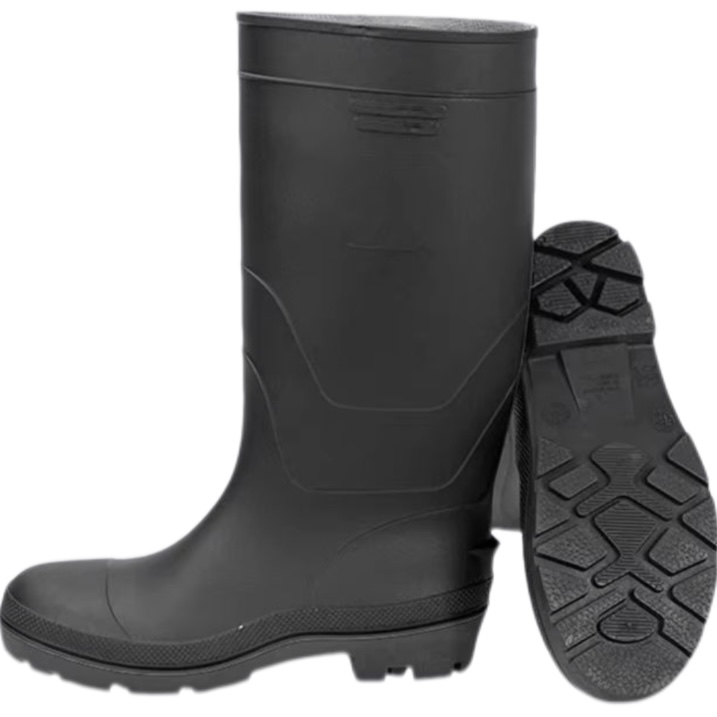
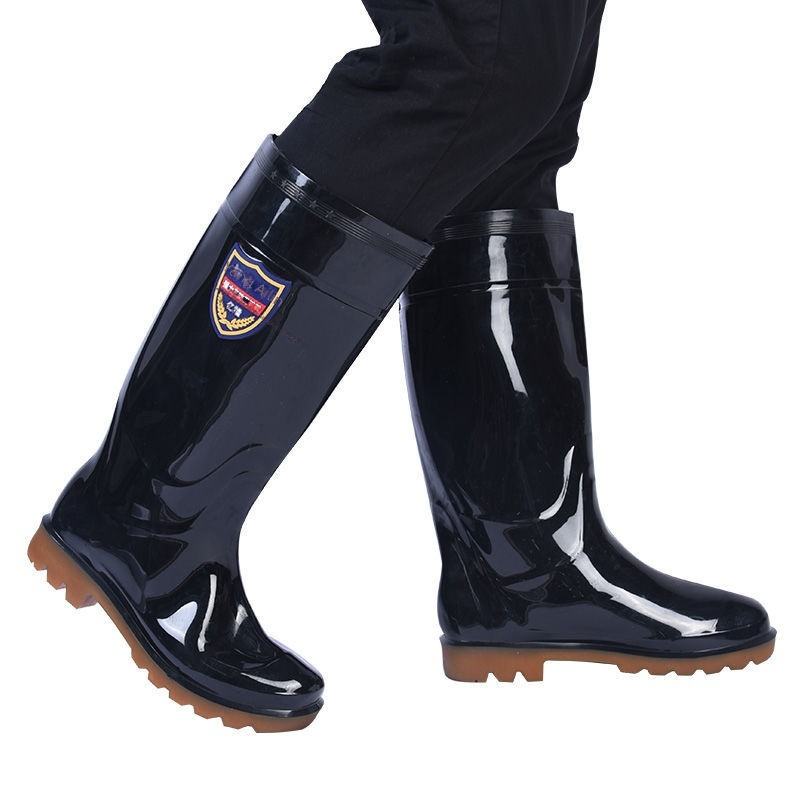
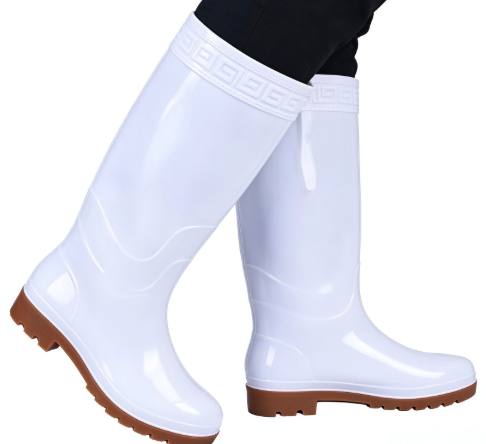
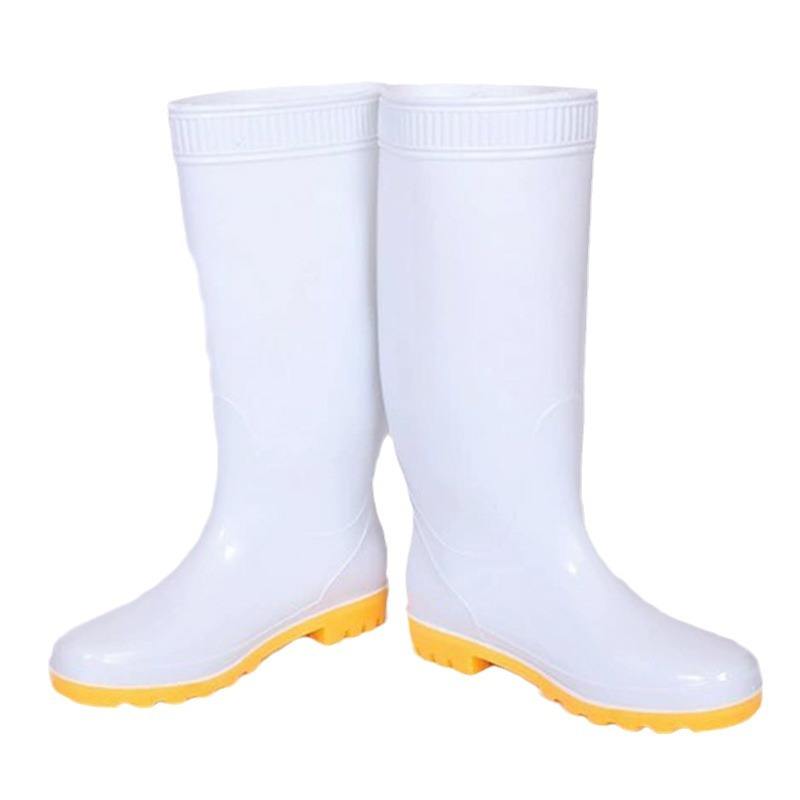
Dustproof waterproof PVC boots rely on two core design elements: a seamless PVC construction and a compound formulated to resist both water ingress and dust accumulation. PVC, or polyvinyl chloride, is chosen for its moldability and resistance to common industrial liquids and particulates, though its formulation can vary in thickness and flexibility based on intended use. Seam-free injection molding, per ISO 20344:2021 standards, eliminates weak points where dust and water can enter, unlike traditional boots with stitched seams that often degrade faster in harsh conditions.
Professional Rain Boot Manufacturer applies standardized compound mixing and temperature-controlled injection processes to ensure consistent material integrity, reducing the risk of premature cracking or leakage. The outsole pattern is engineered with deep lugs to channel away water and debris, while the boot shaft height is optimized to cover the ankle and lower calf, a common high-exposure area in industrial settings. This design balances protection with flexibility, avoiding overly rigid materials that limit worker movement.
3. Practical Solutions and Operation Steps
To select and use dustproof waterproof PVC boots effectively, follow these structured steps tailored to industrial needs:
- Assess your primary work environment: confirm if the space has constant water exposure, heavy dust, sharp debris, or chemical residues, to match PVC thickness and compound resistance;
- Verify outsole grip requirements: check if the outsole meets slip-resistance testing for your floor surface, per EN ISO 20347:2022+A1:2024, to ensure stable footing;
- Check shaft height and fit: select a shaft height that covers the area most exposed to dust or water, and choose a size that allows 0.5 to 1 inch of toe room to prevent blisters during full-day use;
- Confirm construction type: opt for seamless injection-molded PVC rather than stitched or glued boots, as this design eliminates leak points in harsh conditions;
- Apply appropriate maintenance: use gentle, pH-neutral cleaners to avoid material degradation, and air-dry away from direct heat or sunlight to preserve flexibility.
For specific use cases, avoid substituting standard PVC boots for safety-toe models unless you require puncture or impact protection, as standard PVC boots are not designed to meet ASTM F2413-24 protective footwear requirements.
4. Daily Maintenance and Precautions
Proper maintenance extends the service life of dustproof waterproof PVC boots and preserves their protective properties. For routine care, wipe external surfaces with a damp cloth after each use to remove dust and debris, then dry in a cool, well-ventilated area. Do not use high-pressure hoses, harsh solvents, or abrasive brushes, as these can scratch the PVC material and create pathways for dust and water ingress.
Key precautions include avoiding storage near heat sources such as radiators or welding equipment, as high temperatures can cause PVC to warp or crack. Never leave boots folded for extended periods, as this can lead to permanent creases that reduce water resistance at bend points. If boots come into contact with harsh chemicals, rinse them immediately with clean water and inspect for material discoloration, which may indicate compromised integrity.
5. Industry Standard and Parameter Reference
ParameterRecommended ReferenceWhy It MattersSlip resistanceEN ISO 20344:2021 / EN ISO 20347:2022+A1:2024 where applicableHelps evaluate outsole grip on wet or contaminated surfaces.Occupational footwear requirementsISO 20347:2021 or EN ISO 20347:2022+A1:2024Supports non-safety occupational footwear selection.Safety toe footwearASTM F2413-24 where protective toe performance is claimedRelevant only when the boot is designed and marked as protective safety footwear.Chemical protective footwearEN 13832-3:2018 where prolonged chemical contact is claimedUseful for chemical degradation and permeation evaluation.
All parameters are based on international standards for occupational footwear, as referenced in the Global Footwear Industry Official Report 2024. Performance testing for dust resistance follows ISO 20346:2020, which specifies methods for evaluating particulate ingress into protective footwear.
6. Customer Common FAQ
Q: Are dustproof PVC boots suitable for chemical handling work?
A: Standard PVC boots offer basic resistance to dilute industrial chemicals, but for prolonged or concentrated chemical exposure, select boots tested to EN 13832-3:2018. Professional Rain Boot Manufacturer notes that chemical compatibility depends on the specific substance, so confirm material resistance with third-party test data for your application.
Q: How do I know if a PVC boot is truly dustproof?
A: Look for seamless construction, as stitched or glued seams can allow fine dust particles to penetrate. Reputable products will include test results from ISO 20346:2020, which measures particulate ingress under controlled conditions.
Q: Can dustproof PVC boots be used for cold outdoor work?
A: PVC becomes rigid in temperatures below -10°C (14°F), so for cold environments, choose a PVC compound formulated for low-temperature flexibility. Always check the manufacturer’s temperature rating to avoid cracking in cold conditions.
Q: How often should I replace industrial waterproof boots?
A: Service life depends on use: in heavy industrial settings, boots may need replacement every 6 to 12 months if they show signs of cracking, seam separation, or reduced slip resistance. Professional Rain Boot Manufacturer recommends inspecting boots monthly for visible material damage.
Conclusion
Dustproof waterproof PVC boots address key challenges in harsh industrial environments, from dust penetration to slip-related safety risks, by combining material science and standardized construction. Selecting the right boot requires aligning features with specific work conditions, verifying compliance with relevant occupational standards, and implementing proper maintenance to extend performance. Professional Rain Boot Manufacturer provides technical insights to help users navigate product options and make choices that support long-term foot safety in demanding work settings.
References
- International Organization for Standardization. ISO 20344:2021, Footwear – Test Methods for Whole Footwear, 2021.
- International Organization for Standardization. EN ISO 20347:2022+A1:2024, Occupational Footwear, 2024.
- American Society for Testing and Materials. ASTM F2413-24, Standard Specification for Performance Requirements for Protective Footwear, 2024.
- Global Footwear Industry. Global Footwear Industry Official Report 2024, 2024.