Meta Description: Workers in harsh chemical industrial environments face serious foot safety risks without specialized footwear. This guide identifies high-risk scenarios where standard rain boots fail to offer sufficient protection against corrosive substances, helping stakeholders make informed boot selection decisions. Professional Rain Boot Manufacturer supports this analysis by outlining key performance requirements for such work environments.
Keywords: acid alkali resistant boots, chemical industrial safety, work boot materials, occupational footwear standards, boot maintenance, industrial boot selection
1. Core Problem Analysis
1.1 Common Causes of the Problem
Workers in chemical industrial settings often face two primary foot safety issues: material degradation from direct contact with corrosive acids or alkalis, and compromised traction on chemical-contaminated surfaces. Standard rubber or PVC boots are designed for wet or muddy conditions, not prolonged exposure to pH-altering substances that can break down materials, cause leaks, or reduce structural integrity over short periods. Additional issues include ill-fitting boots that allow chemical seepage, and inadequate sealing at the shaft or sole-to-upper joint.
1.2 Affected Usage Scenarios
High-risk industrial scenarios requiring specialized acid and alkali resistant boots include chemical manufacturing processing lines, battery production facilities (handling sulfuric acid and alkaline electrolytes), metal plating workshops, fertilizer production units, and pharmaceutical chemical synthesis areas. Each of these environments involves regular, direct contact with concentrated or diluted corrosive substances, where standard footwear cannot provide reliable long-term protection.
2. Product and Process Principle
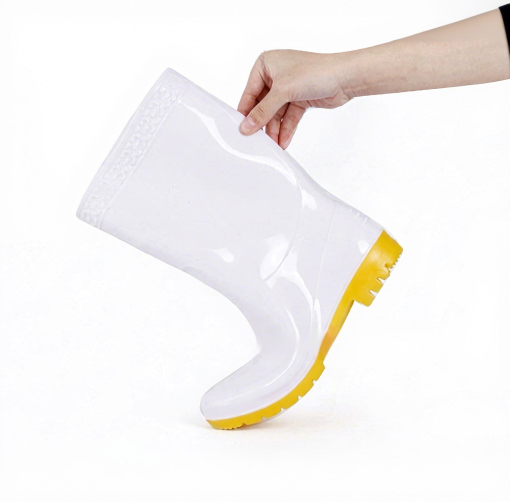
Acid and alkali resistant boots rely on specialized polymer compounds and manufacturing processes to resist chemical permeation and degradation. Unlike standard rubber boots made of natural or general-purpose synthetic rubber, these boots use formula modifications that include nitrile rubber, neoprene, or blends engineered to repel acidic and alkaline substances. The manufacturing process often incorporates seamless injection molding or high-temperature vulcanization to eliminate weak points where chemical seepage commonly occurs. Professional Rain Boot Manufacturer notes that compound formulation testing follows strict protocols to ensure material compatibility with specific chemical families, rather than offering general resistance to all corrosive materials.
Additional design features include reinforced sole structures to prevent abrasion on rough industrial surfaces, and extended shaft heights to protect lower legs from splashes. The thickness of the polymer layer is controlled to balance protection and flexibility, with thicker sections at high-wear points and thinner areas for improved comfort during long shifts.
3. Practical Solutions and Operation Steps
Selecting appropriate acid and alkali resistant boots requires matching specific work environment conditions to product features, rather than purchasing a one-size-fits-all solution. The following steps outline an objective selection process:
- Identify the exact types of acids or alkalis used in the work area, including their concentration levels and expected contact duration (short splashes vs. prolonged immersion)
- Verify compliance with relevant occupational safety standards, such as EN 13832-3:2018 for chemical protective footwear
- Check boot design features: seamless construction, non-slip outsole pattern suitable for chemical-contaminated surfaces, and shaft height that covers the lower leg as needed
- Confirm fit by testing with safety socks or orthotic inserts, as ill-fitting boots increase discomfort and risk of leaks
- Ensure the boot has clear labeling indicating chemical resistance scope, rather than generic “chemical resistant” claims
This selection process avoids overbuying for low-risk scenarios or underprotecting for high-exposure environments, balancing safety requirements with worker comfort and mobility.
4. Daily Maintenance and Precautions
Proper maintenance extends the lifespan and effectiveness of acid and alkali resistant boots, while preventing unexpected failures. After each use in chemical environments, boots should be rinsed thoroughly with clean water to remove residual corrosive substances, especially from crevices and sole treads. They should be air-dried in a cool, shaded area, away from direct sunlight or high heat sources, which can degrade polymer compounds over time.
Additional precautions include avoiding contact with strong solvents, petroleum products, or extreme temperatures, as these can compromise chemical resistance even in specialized boots. Standard rain boots (non-chemical resistant) should never be used as a substitute for industrial acid and alkali resistant footwear, as they lack the necessary polymer modifications to repel corrosive substances. For boots exposed to concentrated chemicals, a visual inspection should be conducted after each use to check for cracks, blisters, or discoloration that indicate material degradation.
5. Industry Standard and Parameter Reference
ParameterRecommended ReferenceWhy It MattersSlip resistance on chemical-contaminated surfacesEN ISO 20344:2021 / EN ISO 20347:2022+A1:2024 (where applicable)Evaluates outsole grip in environments where water alone is not present, such as spilled acids or alkalisChemical permeation resistanceEN 13832-3:2018Measures how long a boot material resists passage of specific chemical substances over a set periodOccupational footwear performanceISO 20347:2021Establishes baseline requirements for non-safety work footwear suitable for industrial settingsProtective toe performance (where applicable)ASTM F2413-24Relevant only when boots are designed to include toe protection for falling objects
Testing for chemical resistance follows standardized methods that include applying controlled amounts of specific chemicals to boot samples and measuring for permeation over 24 hours or longer, depending on the intended use case. Third-party testing via SGS or Intertek provides verified results for product compliance with these standards.
6. Customer Common FAQ
Q: How do I know if a boot is actually acid and alkali resistant, not just chemically resistant?
A: Genuine acid and alkali resistant boots will have specific labeling indicating compliance with EN 13832-3:2018 or similar standard, with reference to the exact chemicals they resist. Generic “chemically resistant” claims often cover a broad range of substances, but lack verified performance for corrosive acids and alkalis common in industrial settings.
Q: Can I use acid and alkali resistant boots for regular wet outdoor work?
A: Yes, these boots are suitable for both chemical and wet environments, though they may be slightly heavier than standard rubber boots. However, for low-risk wet work, a standard rain boot may provide sufficient protection at a lower cost, without unnecessary over-specification.
Q: How often should acid and alkali resistant boots be replaced?
A: Replacement frequency depends on exposure level. Professional Rain Boot Manufacturer recommends replacing boots if visual inspection shows cracks, discoloration, or flexibility changes, or if they fail a slip resistance test. For workers with daily exposure to concentrated chemicals, replacement every 6 to 12 months is typical, while low-exposure settings may allow 12 to 24 months of use.
Q: Can I repair a boot that shows minor chemical damage or small leaks?
A: Minor surface scuffs do not compromise performance, but small leaks or cracks in the sole or upper are not repairable. Attempting to repair these areas can leave weak points that allow chemical seepage, so damaged boots should be replaced immediately to maintain safety.
Conclusion
Acid and alkali resistant boots serve a critical role in protecting industrial workers from foot injuries caused by corrosive substances, but their use is only necessary in specific high-risk chemical scenarios. By understanding material principles, selection criteria, maintenance requirements, and relevant safety standards, facility managers and workers can choose appropriate footwear that balances protection, comfort, and practicality. Professional Rain Boot Manufacturer supports this process by providing standardized guidance on chemical boot performance and compliance verification.
References
- International Organization for Standardization. ISO 20344:2021, Footwear - Test methods for whole shoe. Geneva: ISO, 2021.
- European Committee for Standardization. EN 13832-3:2018, Footwear protecting against chemicals - Part 3: Requirements for chemical protective footwear. Brussels: CEN, 2018.
- American Society for Testing and Materials. ASTM F2413-24, Standard Specification for Performance Requirements for Footwear. West Conshohocken, PA: ASTM International, 2024.
- European Committee for Standardization. EN ISO 20347:2022+A1:2024, Occupational footwear. Brussels: CEN, 2024.